AA Boeing 787 Diverts to Dublin After Crew Sickness
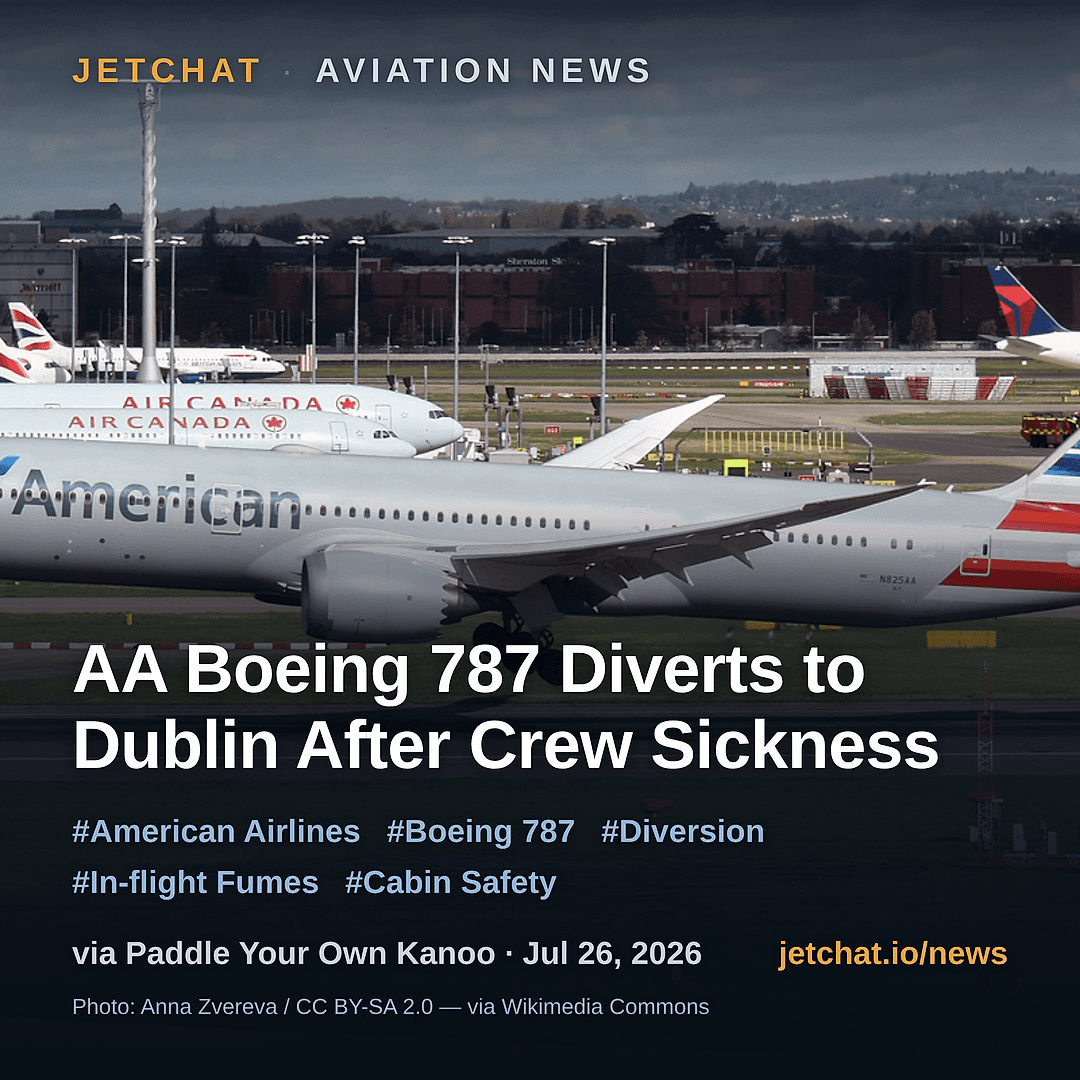
Photo: Anna Zvereva / CC BY-SA 2.0 — via Wikimedia Commons (CC BY-SA 2.0) · source
An American Airlines Boeing 787-9 traveling from Rome to Philadelphia diverted to Dublin on Saturday when six flight attendants simultaneously reported dizziness and general illness. The aircraft was over the Atlantic Ocean roughly three hours into the flight before pilots initiated the diversion due to the medical emergency. With no replacement crew available in Ireland, the transatlantic leg was canceled. For flight crews, this incident highlights the subtle onset of environmental anomalies in flight and the importance of monitoring physiological symptoms among active crew members.
Read the full take
The sudden diversion of a widebody jet over mass crew illness immediately raises questions about aircraft environmental control systems. In most modern airliners, simultaneous dizziness among cabin crew points toward a potential bleed air contamination or fume event. However, the Boeing 787 Dreamliner architecture makes this highly improbable. The 787 utilizes dedicated electrical compressors to draw fresh air directly from the outside, entirely bypassing the engine compressor stages where oil seal leaks typically originate. Therefore, investigators will likely look past traditional fume event profiles. A more plausible technical culprit is a partial malfunction of the air conditioning packs. If the cabin altitude rises slightly or oxygen circulation degrades, active flight attendants moving heavy carts will experience mild hypoxia much faster than seated passengers or stationary flight deck crew. Symptoms like lightheadedness and disorientation perfectly match this scenario. Another distinct possibility involves unsecured chemical cleaning agents reacting in an enclosed space. A nearly identical diversion occurred in 2018 when a spilled industrial galley cleaner incapacitated crew members on a transatlantic routing. For pilots, this event serves as a crucial reminder to trust crew feedback regarding physical symptoms. When multiple cabin crew members report simultaneous dizziness, the flight deck must assume an environmental hazard is present, even without EICAS warnings or distinct odors. Securing oxygen masks and initiating a diversion is the safest protocol when facing an unexplained physiological threat in the cabin.