American Airlines Debuts Retrofitted Boeing 777-300ER With Flagship Suites
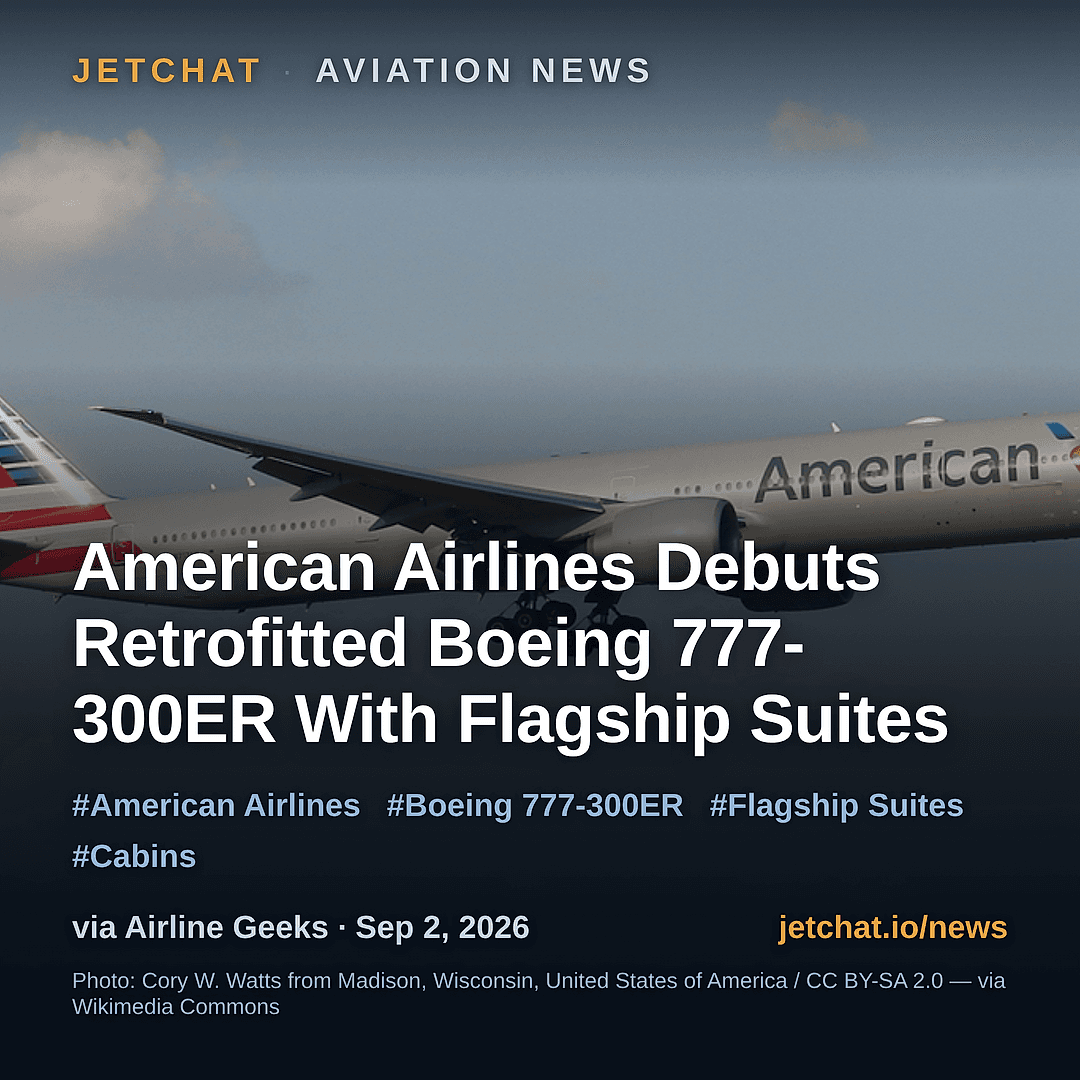
Photo: Cory W. Watts from Madison, Wisconsin, United States of America / CC BY-SA 2.0 — via Wikimedia Commons (CC BY-SA 2.0) · source
American Airlines has unveiled its newly retrofitted Boeing 777-300ER, marking a significant shift in its long-haul cabin strategy. The updated widebody aircraft now features 70 individual Flagship Suites and 44 premium economy seats, officially phasing out the carrier's traditional international first class product. For aspiring airline pilots, understanding these cabin reconfigurations provides valuable insight into evolving airline economics and the industry's pivot toward high-density business class layouts over exclusive first class sections.
Read the full take
American Airlines is reshaping its long-haul fleet strategy with the debut of its newly retrofitted Boeing 777-300ER, signaling the end of an era for traditional international first class. By installing 70 enclosed Flagship Suites and 44 premium economy seats, the Fort Worth-based carrier is aligning itself with a broader industry trend. Airlines are increasingly abandoning ultra-exclusive, low-density first class cabins in favor of expansive, highly profitable business class products that offer privacy doors and lie-flat beds. For the aviation community, particularly aspiring airline pilots and industry analysts, this interior overhaul is a clear lesson in modern airline economics. Aircraft interiors dictate fleet utilization, route viability, and ultimately, pilot bases and flying schedules. High-density premium configurations allow carriers to maximize revenue per square foot on lucrative transatlantic and transpacific routes without sacrificing the privacy that corporate travelers demand. This strategic shift also standardizes the premium experience across the widebody fleet, streamlining operations and making aircraft swaps less disruptive. As American continues to roll out these extensive retrofits across its remaining 777 airframes and prepares for incoming Boeing 787 deliveries, industry observers will be watching closely. The transition highlights a highly pragmatic approach to airline management, proving that operational efficiency and scalable luxury now drive the future of long-haul aviation.