American Airlines Restores Seatback Screens to Chase Premium Market
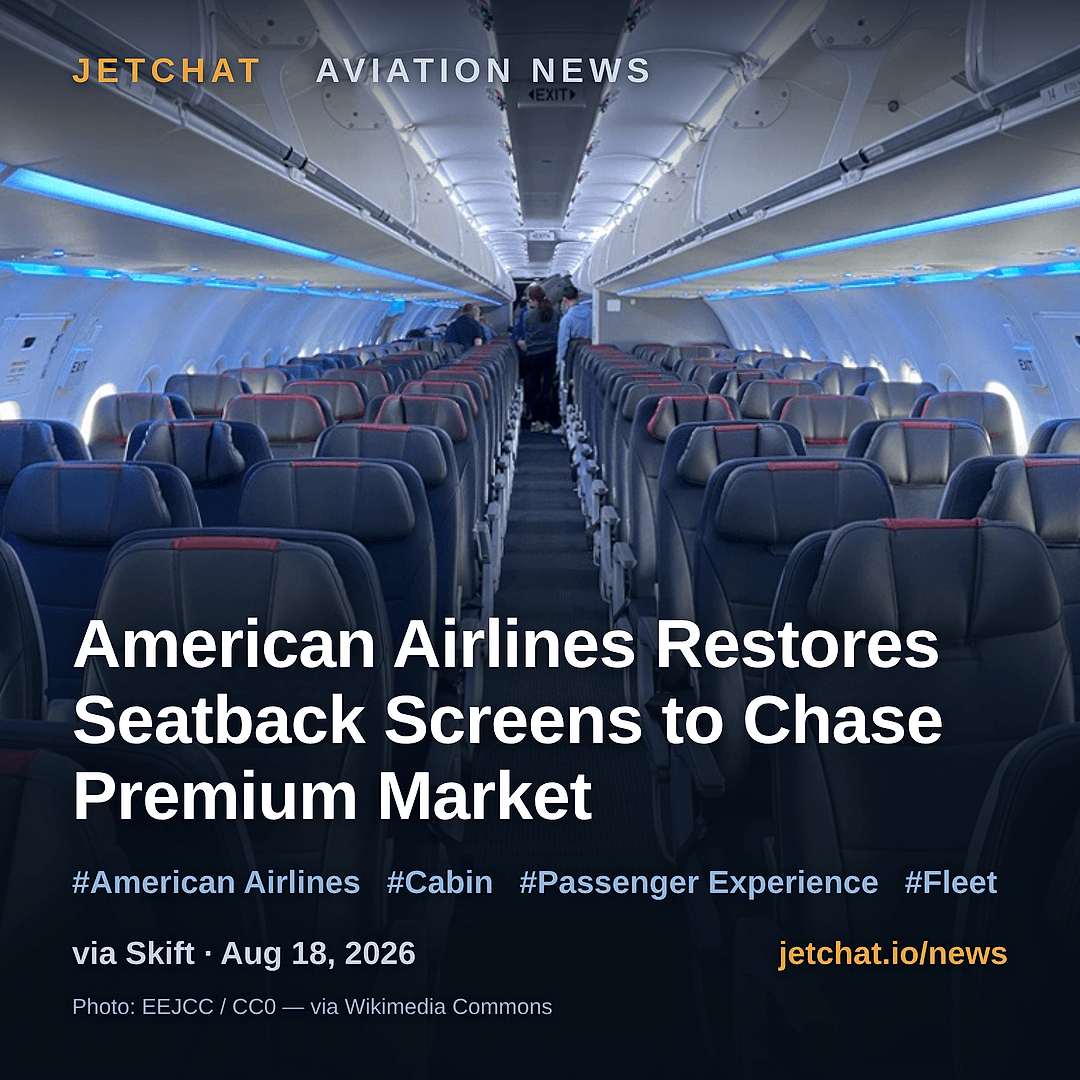
Photo: EEJCC / CC0 — via Wikimedia Commons (CC0) · source
American Airlines is reversing its previous cost-cutting decision by reinstalling seatback screens across its fleet. The move is designed to attract high-paying premium passengers and keep pace with competitors like Delta Air Lines and United Airlines, which have heavily invested in in-flight entertainment. For aspiring airline pilots, this strategic pivot highlights how major carriers balance operational costs with cabin upgrades to maintain market share in an increasingly competitive industry.
Read the full take
Several years ago, American Airlines made headlines by stripping seatback screens from its narrowbody aircraft, citing a shift toward bring-your-own-device streaming and a desire to reduce fuel-burn by shedding excess cabin weight. While the decision looked good on the balance sheet, it left the carrier at a distinct disadvantage. As travelers returned to the skies post-pandemic with a willingness to pay for premium experiences, rivals Delta Air Lines and United Airlines doubled down on seatback entertainment, creating a noticeable gap in passenger comfort. Now, management at American is changing course to capture those lucrative premium fares. The reintroduction of seatback monitors signals a broader industry trend where passenger experience often dictates airline profitability just as much as route networks or schedule frequency. For the aviation community, especially those looking toward a future on the flight deck of a major carrier, this development offers a valuable lesson in airline economics. The pendulum swing between austere cost-cutting and premium cabin investments directly impacts an airline's bottom line. When carriers successfully attract premium traffic, it bolsters revenue stability, which in turn secures fleet expansion plans, stabilizes pilot hiring, and funds better labor contracts. As American works to close the gap with its legacy peers, observers will be watching closely to see if these interior retrofits can successfully claw back the premium market share they lost.