Arrest prompts mandatory pilot drug screening at Malaysia Airlines
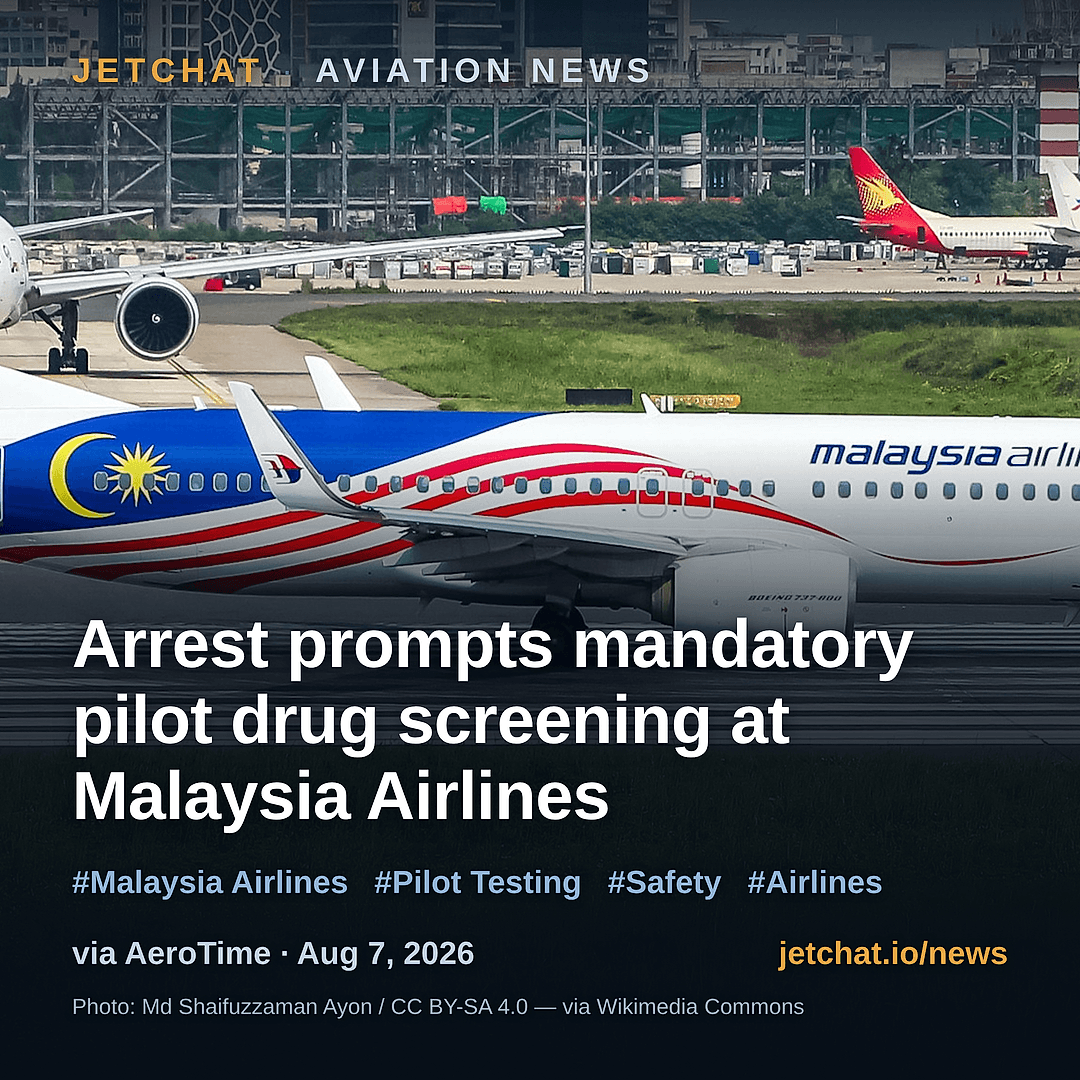
Photo: Md Shaifuzzaman Ayon / CC BY-SA 4.0 — via Wikimedia Commons (CC BY-SA 4.0) · source
Malaysia Airlines is initiating mandatory drug screenings for its entire roster of 1,260 pilots following the arrest of a second officer in Indonesia on suspected smuggling charges. Authorities in Jakarta allege the off-duty pilot, who was traveling in the jumpseat, carried 25 kilograms of illicit substances in his luggage. The testing program will eventually extend to all cabin crew members as well. For professional aviators, this incident underscores how individual off-duty conduct can instantly trigger sweeping, fleet-wide policy changes and heightened regulatory scrutiny across an entire airline.
Read the full take
The recent arrest of a Malaysia Airlines second officer in Jakarta has sent shockwaves through the Southeast Asian aviation community, prompting the carrier’s parent company to launch an immediate, mandatory drug screening initiative for all 1,260 of its active pilots. This rapid corporate response highlights a critical vulnerability in global airline operations: the reliance on professional integrity for those utilizing crew privileges. According to Indonesian authorities, the pilot allegedly transported 25 kilograms of ecstasy and methamphetamine while riding as an observer in the cockpit jumpseat. Although the aviator had been off duty and was not operating the flight, the exploitation of jumpseat access for alleged criminal activity strikes at the heart of aviation security. Flight deck jumpseat privileges are built on a foundation of absolute trust and stringent vetting. When that trust is breached, the fallout inevitably impacts the entire pilot group. Moving forward, the focus shifts to regulatory oversight. Malaysia’s Civil Aviation Authority is currently investigating how such a massive quantity of contraband could clear crew security checkpoints at Kuala Lumpur International Airport. For airline pilots and aspiring first officers watching this unfold, the incident is a stark reminder that crew screening protocols could become significantly more burdensome. The era of expedited crew security checks relies heavily on a pristine collective track record. Malaysia Aviation Group plans to roll out these mandatory screenings beyond the flight deck to include cabin crew as well, signaling a zero-tolerance posture. Industry observers should watch closely to see if other regional carriers adopt similar defensive testing measures, or if civil aviation authorities mandate stricter physical baggage searches for commuting and jumpseating flight crews across the board.