Aviation Crews Show Elevated Mortality Rates from Radiation-Linked Cancers
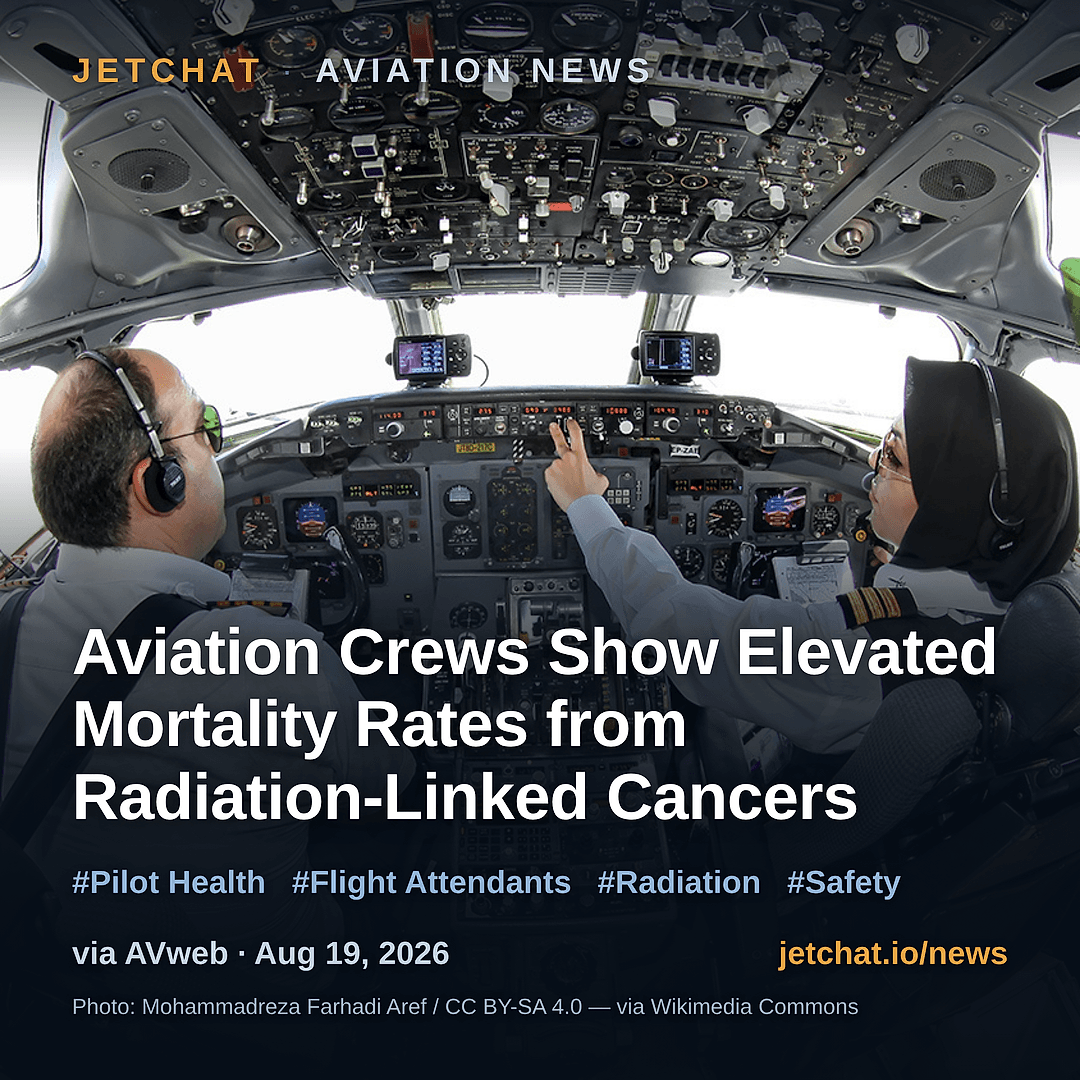
Photo: Mohammadreza Farhadi Aref / CC BY-SA 4.0 — via Wikimedia Commons (CC BY-SA 4.0) · source
A recent analysis of U.S. mortality data published in JAMA Internal Medicine reveals that commercial flight crews suffer the highest mortality rates from radiation-linked malignancies across hundreds of professions. Reviewing millions of records from 2020 to 2024, researchers discovered that pilots face a significantly higher probability of dying from diseases like melanoma and leukemia compared to the average worker. For career aviators spending thousands of hours at high altitudes, these findings emphasize the critical need to prioritize aggressive preventative health screenings and routine dermatological checks.
Read the full take
While the hazards of cosmic radiation have long been a known variable in the flight levels, this latest medical review shifts the focus from simple cancer diagnoses to actual mortality outcomes. The dataset is massive, encompassing millions of occupational records, making the conclusions difficult for the aviation community to ignore. The research indicates that commercial aviators carry a mortality risk from radiation-linked cancers that is roughly a third higher than the general workforce. It is important to recognize that the data does not definitively isolate cosmic radiation as the sole culprit. The modern airline schedule itself is a grueling physiological challenge. Years of crossing time zones, chronic jet lag, and degraded sleep quality profoundly disrupt human circadian rhythms, which is a known independent risk factor for oncological disease. For aspiring airline pilots and current professionals logging heavy hours in the flight deck, this study serves as a stark reminder that physiological health requires active management. While crews cannot change the atmospheric physics that reduce radiation shielding at cruising altitudes, they can control their preventative care. The medical community is increasingly recommending that flight crews adopt proactive screening schedules. This means scheduling routine dermatological exams to catch melanomas early, engaging in age-appropriate cancer screenings, and aggressively managing off-duty rest to mitigate the impacts of irregular schedules. As the industry evolves, prioritizing long-term crew health will be just as crucial as managing immediate flight safety.