Bahamas Grounds Flamingo Air After Fatal Cessna 402 Crash
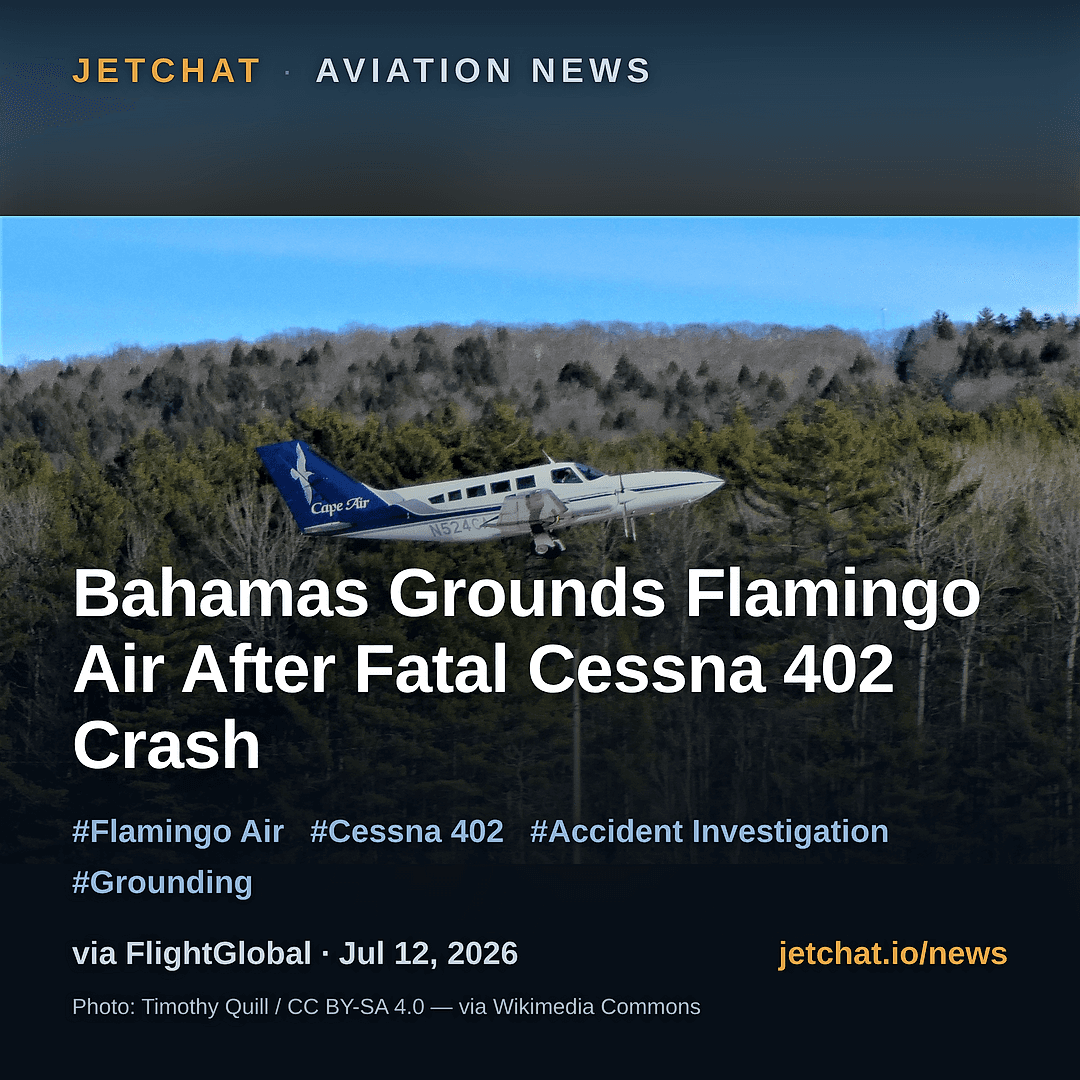
Photo: Timothy Quill / CC BY-SA 4.0 — via Wikimedia Commons (CC BY-SA 4.0) · source
The Civil Aviation Authority Bahamas has temporarily suspended Flamingo Air’s operating certificate following a fatal Cessna 402 crash near San Andros on July 10. The twin-engine aircraft went down in heavy brush and caught fire during its approach from Nassau, resulting in the loss of all ten people on board. Bahamian investigators are currently documenting the wreckage and gathering evidence to determine the sequence of events, serving as a sobering reminder for pilots about the critical risks associated with low-altitude emergencies during the approach phase.
Read the full take
The grounding of an entire commercial carrier is a drastic regulatory step, but the Civil Aviation Authority Bahamas enacted the measure after Flamingo Air suffered two separate safety incidents on a single day, culminating in a devastating loss of life. For the aviation community, this accident underscores the persistent hazards of operating legacy light twin-engine aircraft in scheduled passenger service. The Cessna 402 was reportedly on approach to San Andros when it encountered unspecified difficulties, ultimately crashing short of the runway and becoming consumed by a post-crash fire. For student pilots and flight instructors, the approach phase remains one of the most statistically dangerous segments of any flight. When a multi-engine aircraft experiences a power loss or mechanical failure close to the ground, the margin for error effectively vanishes. Pilots must manage airspeed, configuration, and potentially asymmetric thrust while simultaneously searching for a survivable off-airport landing site if the runway cannot be reached. Moving forward, safety inspectors will focus heavily on the operator's maintenance records, pilot training protocols, and organizational safety culture. The Bahamian authorities have emphasized that the suspension of Flamingo Air’s operating certificate is a precautionary measure to protect the traveling public while the investigation unfolds. The aviation community will be watching closely for the preliminary accident report, which should provide crucial details regarding the aircraft's final moments. Understanding whether this tragedy stemmed from mechanical failure, environmental factors, or operational procedures will yield valuable lessons for all pilots navigating the complex environment of commercial flight operations.