Delta 757 Evacuates at Atlanta Following Cockpit Smoke Reports
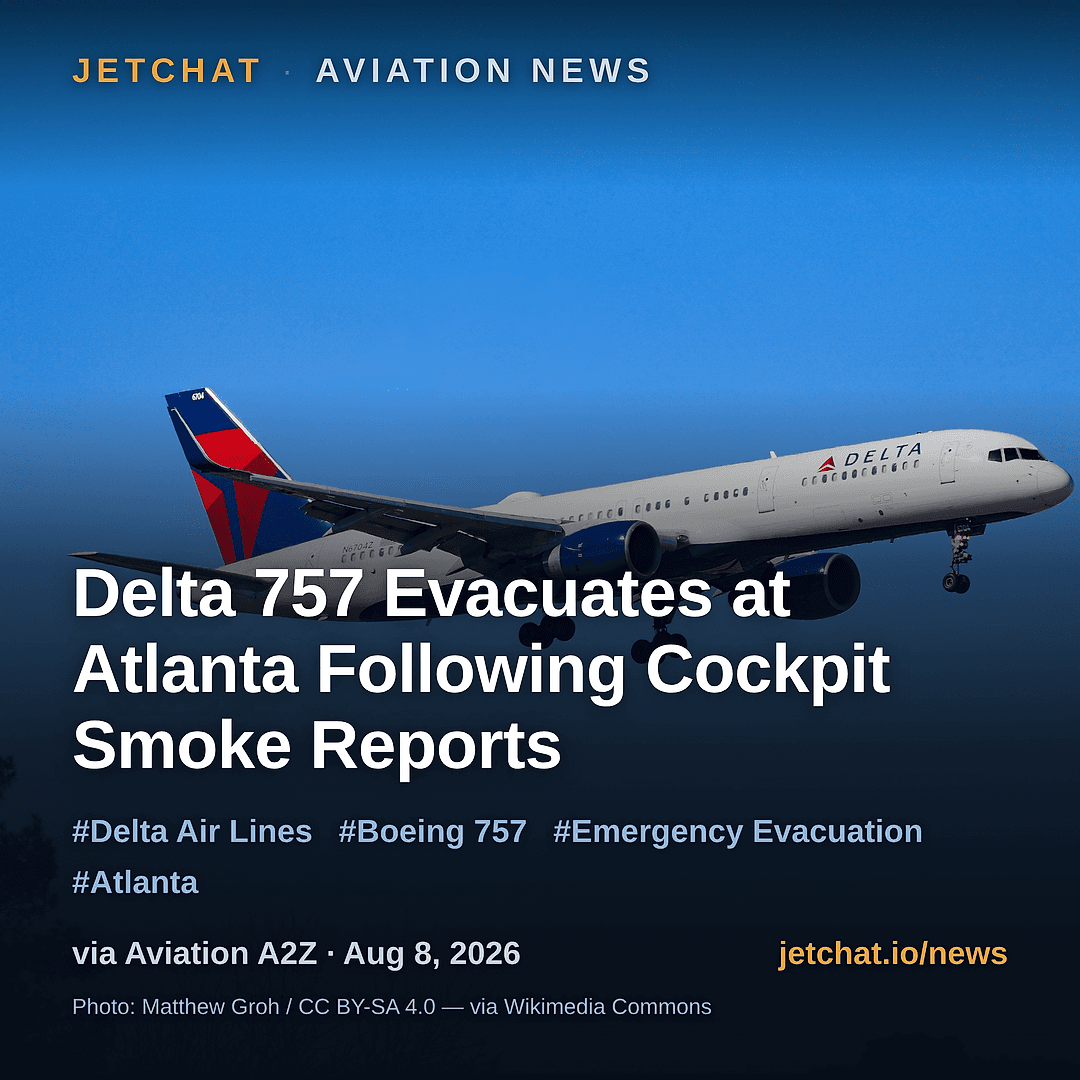
Photo: Matthew Groh / CC BY-SA 4.0 — via Wikimedia Commons (CC BY-SA 4.0) · source
A Delta Air Lines Boeing 757 bound for Orlando returned to Atlanta shortly after departure when the flight crew detected fumes and smoke on the flight deck. Peaking at an altitude of roughly 9,000 feet, the pilots declared an emergency and executed a safe landing. Although the crew initially planned to taxi to the terminal following a clean external inspection, reports of cabin smoke prompted an immediate slide evacuation on the taxiway. This highlights the importance of pilot adaptability when evolving conditions demand a sudden change in operational plans.
Read the full take
The sudden evacuation of Delta Flight 2204 offers a textbook example of dynamic decision-making during an inflight emergency. Smoke and fume events remain one of the most critical hazards a flight crew can face, rapidly deteriorating situational awareness and requiring immediate reliance on emergency oxygen systems. The muffled radio transmissions noted during the return to Hartsfield-Jackson Atlanta International Airport indicate the crew effectively utilized their quick-donning masks, a standard and vital response to securing a breathable environment while managing the aircraft. What makes this specific sequence notable for aviators is the pivot in the post-landing phase. After successfully returning to the airport and touching down safely on Runway 9L, the pilots held on a taxiway for an initial assessment. Aircraft rescue and firefighting teams found no external evidence of thermal damage, leading the crew to anticipate a normal taxi to the gate. However, the situation escalated when cabin crew reported smoke in the aft section of the aircraft. This rapid shift from a contained threat to an active evacuation scenario emphasizes why checklists and standard operating procedures are designed with built-in flexibility. The pilots immediately aborted the taxi, secured the engines, and ordered a slide evacuation. For student pilots and seasoned airline transport pilots alike, this event serves as a crucial reminder that an emergency does not end when the main gear touches the pavement. The safe outcome for all one hundred ninety-nine passengers and six crew members hinged entirely on the crew continually evaluating their environment and acting decisively when the threat parameters changed. Investigators will now focus on the root cause of the environmental system failure or electrical fault responsible for the fumes.