Delta Challenges Alaska Airlines by Restoring 2020 Asian Route
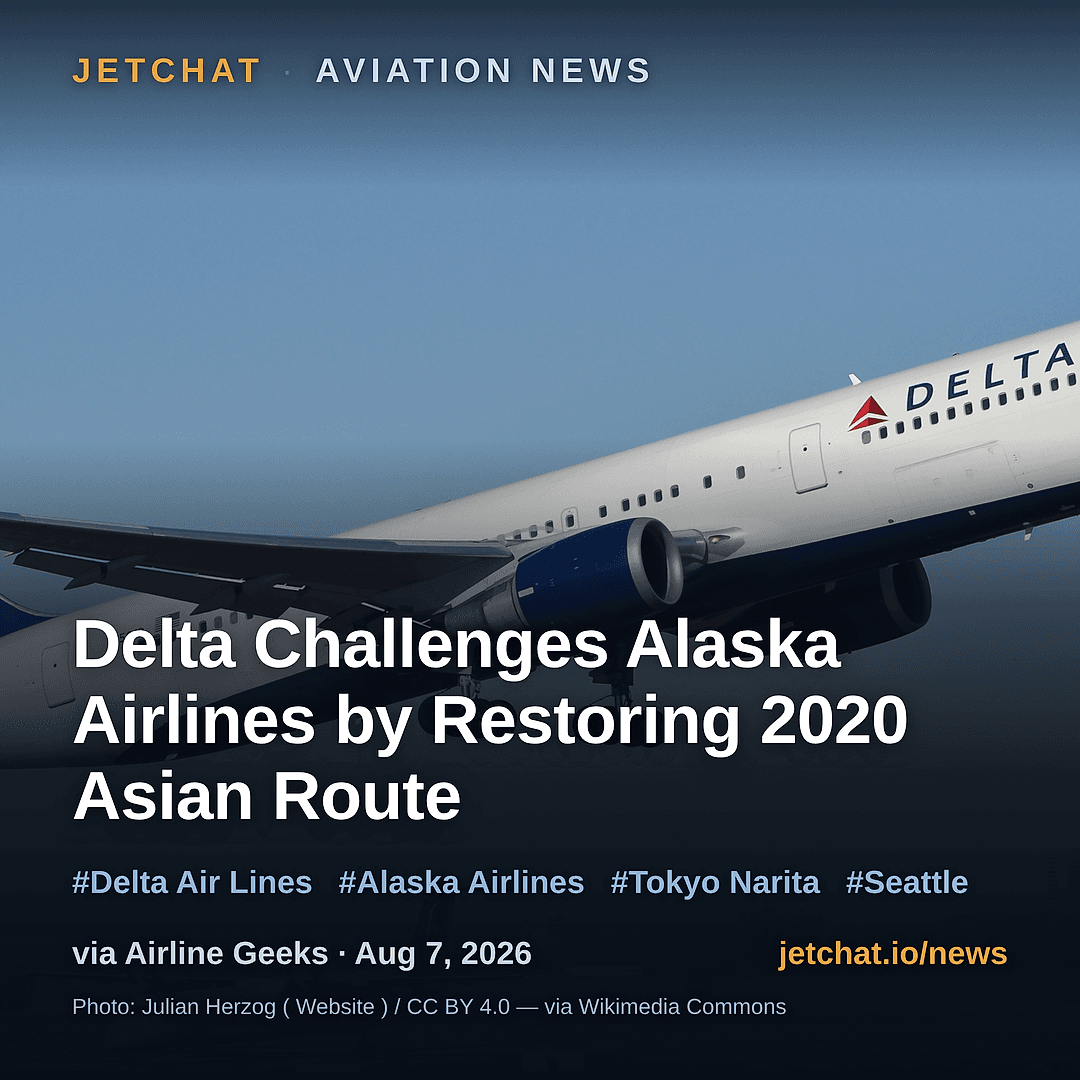
Photo: Julian Herzog ( Website ) / CC BY 4.0 — via Wikimedia Commons (CC BY 4.0) · source
Delta Air Lines is officially restoring a transpacific flight that has remained dormant since the onset of the pandemic in 2020. The decision to bring this Asian market back into the network serves as a strategic maneuver to apply pressure on competitor Alaska Airlines. As legacy carriers continue to rebuild their long-haul footprints, this move signals a stabilizing international market. For aspiring airline pilots, expanding widebody routes translate directly into broader upgrade opportunities and increased demand for flight deck crews on the international side.
Read the full take
The restoration of this long-dormant Asian route represents more than just a return to pre-pandemic normalcy for Delta Air Lines; it underscores a calculated strategy to capture high-yield international traffic in a fiercely competitive market. While Alaska Airlines operates primarily within the Americas, it relies heavily on its Oneworld alliance partners to feed transpacific passengers into its domestic network. By injecting its own heavy jets back into this specific market, Delta is leveraging its operational scale to bypass alliance handoffs, offering passengers a seamless, single-carrier experience. For the aviation workforce, the steady return of transpacific flying is a strong positive indicator. Widebody flying was arguably the hardest hit during the 2020 downturn, and its slow recovery has occasionally bottlenecked fleet strategies and pilot progressions. Bringing a heavy jet route back online requires significant flight crew resources, driving movement at the top of the seniority list and creating a vacuum that pulls junior first officers upward. It also highlights the continuing demand for pilots qualified on widebody equipment. Looking ahead, industry observers and pilots alike should watch how this competitive posturing affects capacity and yield. If Delta successfully captures the intended market share, it could prompt competitors to deepen their international partnerships or accelerate their own Pacific expansions. For aspiring aviators, every restored international segment is a tangible reminder of the complex, interconnected global network they are training to join.