Emirates president rejects early-build Boeing 777-9s over storage delays
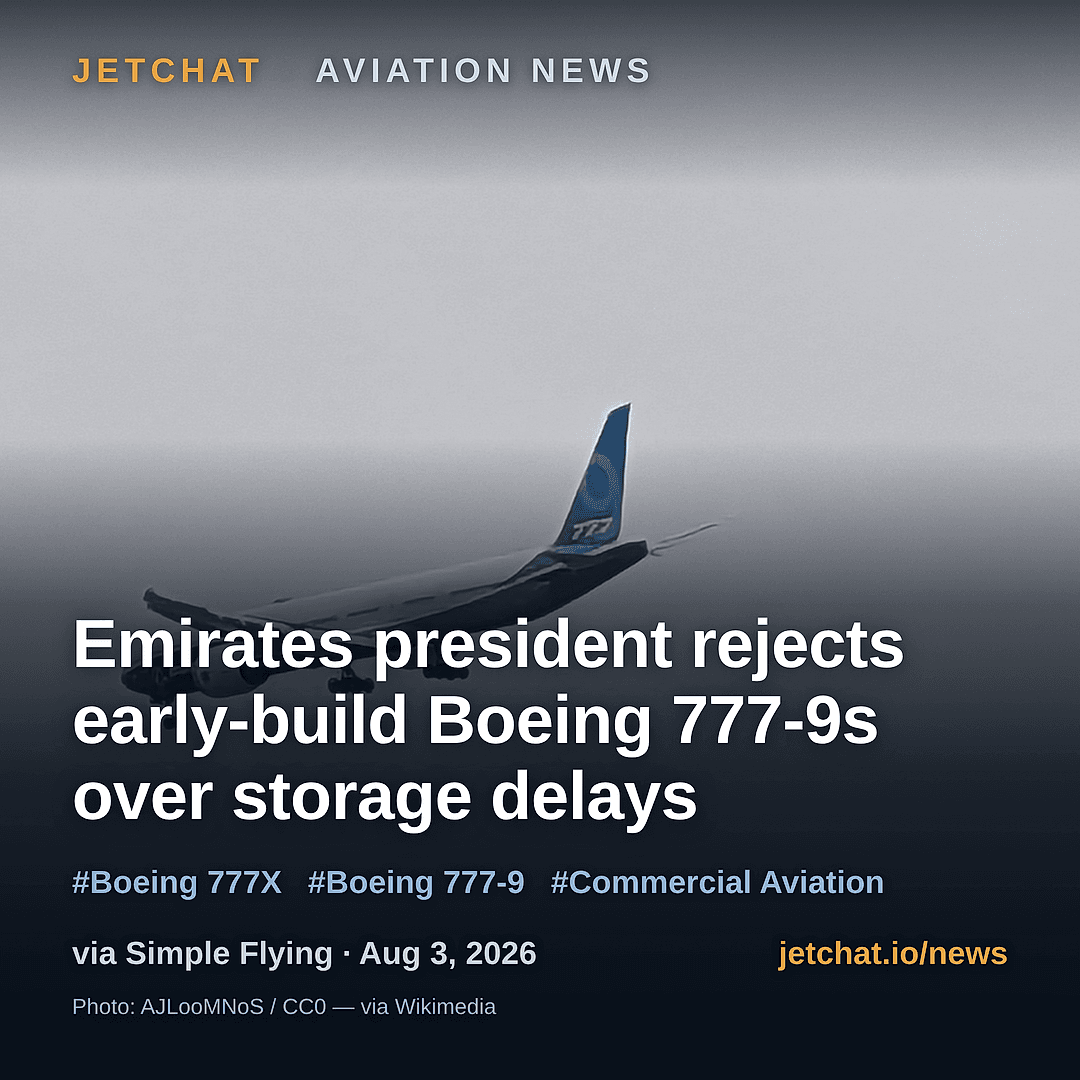
Photo: AJLooMNoS / CC0 — via Wikimedia (CC0) · source
Emirates is refusing to accept the first ten Boeing 777-9s produced for the airline between 2019 and 2020. Due to prolonged certification and delivery delays pushing the program into late this decade, the carrier considers these stored airframes financially obsolete. Airline leadership completely dismissed the aging planes, suggesting they be repurposed as scrap metal. For aspiring airline pilots, this standoff highlights how severe aircraft certification delays can directly impact fleet modernization and future hiring waves.
Read the full take
The standoff over these early-production Boeing widebodies underscores the massive financial risks tied to modern aircraft certification timelines. Aircraft values are intrinsically linked to their manufacturing date and usable lifespan. Because these initial jets have been sitting on the tarmac in Washington state for over half a decade, their book value has severely depreciated before they have ever carried a paying passenger. For international carriers, integrating heavily depreciated assets into a brand-new flagship fleet makes little economic sense, as it disrupts maintenance schedules and lease financing models. This situation reflects a broader industry challenge where regulatory scrutiny and manufacturing bottlenecks stretch delivery schedules far beyond original projections. The flagship widebody program has faced continuous hurdles, pushing its anticipated service entry years past the initial target. As the manufacturer works to secure final regulatory approval for the type, the fate of these already-built airframes remains entirely uncertain. They may require extensive retrofitting, heavy discount negotiations, or alternative buyers willing to accept older manufacturing plates. For aviation professionals watching the industry, this highlights the fragility of fleet planning. When aircraft programs stall, airlines are forced to extend the life of older legacy jets. This ultimately delays the introduction of next-generation flight decks and alters the trajectory of pilot transition training and seat upgrades. The resolution of this dispute will set a crucial precedent for how manufacturers and operators handle aging inventory that has never officially left the factory.