FAA Awards $870 Million for Nationwide Airport Infrastructure Upgrades
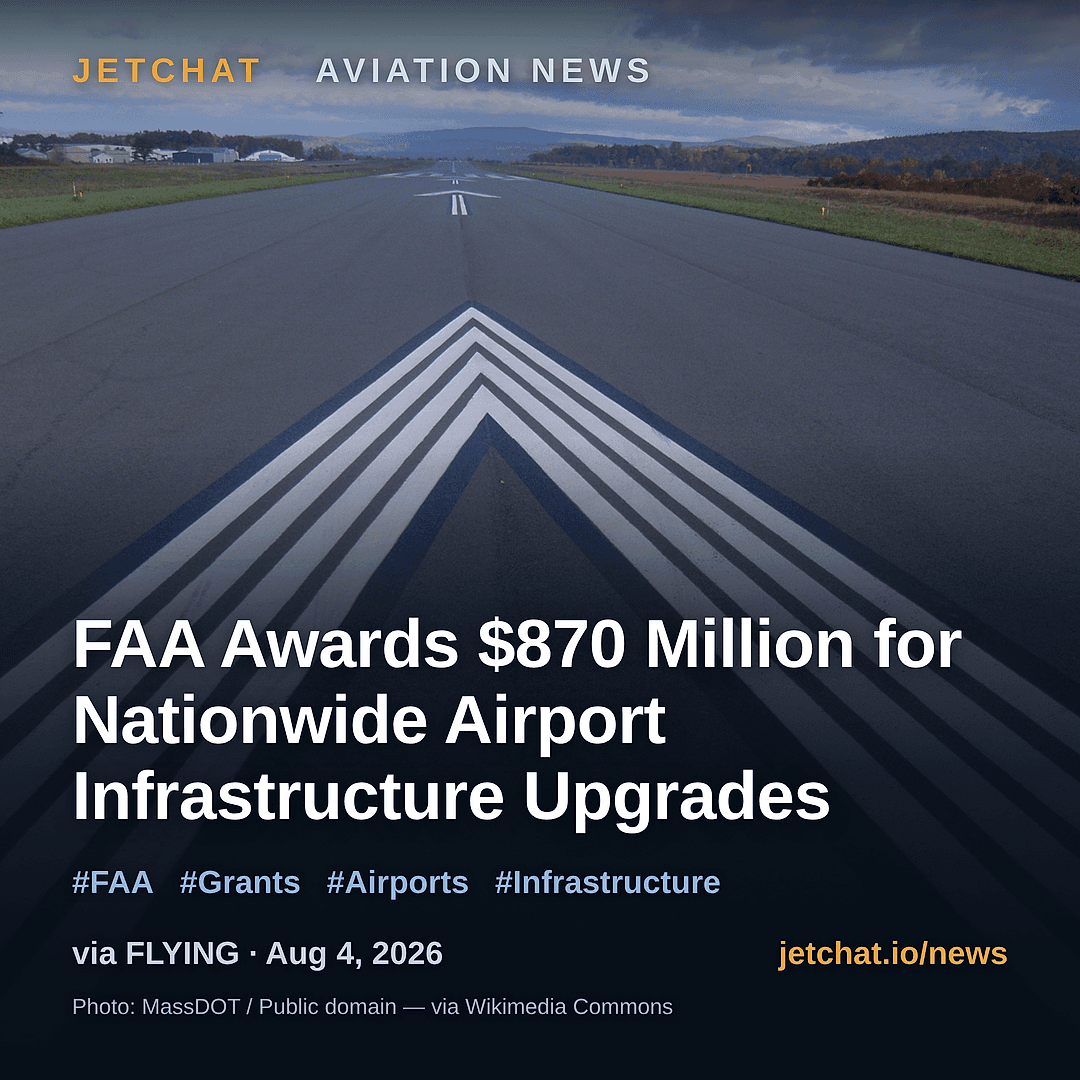
Photo: MassDOT / Public domain — via Wikimedia Commons (Public domain) · source
The Federal Aviation Administration is distributing $870 million across 339 grants to fund infrastructure projects at airports in 44 states and territories. This allocation represents the latest tranche of the $14.5 billion Airport Infrastructure Grants program, which sunsets in fiscal year 2026. Funded projects range from a new terminal access road at Los Angeles International Airport to runway reconstruction at Texas’s Sugar Land Regional Airport. For pilots, these federal investments mean smoother taxiways, modernized facilities, and improved operational safety at both major hubs and regional airfields.
Read the full take
The recent $870 million distribution highlights the final phase of the Federal Aviation Administration's massive $14.5 billion Airport Infrastructure Grants initiative, initially launched under the 2022 infrastructure legislation. As the program enters its terminal phase in fiscal year 2026, the agency is focusing heavily on pushing remaining funds out to facilities that urgently require structural and operational modernization. While commercial passengers will directly notice terminal expansions and new baggage systems, the broader aviation community stands to gain significantly from the airside improvements. Major financial injections, such as the $3.5 million earmarked for runway reconstruction at Sugar Land Regional Airport, directly impact the daily operations of corporate and general aviation pilots. Furthermore, regional airports operating in challenging climates are securing vital resources, exemplified by the $4.2 million allocated to Juneau International Airport for updated snow removal fleets. Looking ahead, the aviation industry will be watching how Congress addresses ongoing funding needs once the current infrastructure grants and the companion Airport Terminal Program officially expire. While traditional Airport Improvement Program grants will continue to shoulder much of the financial burden, lawmakers are currently debating future transportation spending bills to maintain momentum. Simultaneously, the agency is funneling parallel investments into a sweeping $12.5 billion overhaul of the national airspace system. This parallel track aims to modernize radar installations, replace aging air traffic control towers, and implement predictive management tools. For flight crews navigating increasingly congested airspace, the successful execution of these combined infrastructure and technological upgrades will be critical for maintaining safety and efficiency over the next decade.