FAA proposes Boeing 787 cowl fix to prevent dual-engine shutdown
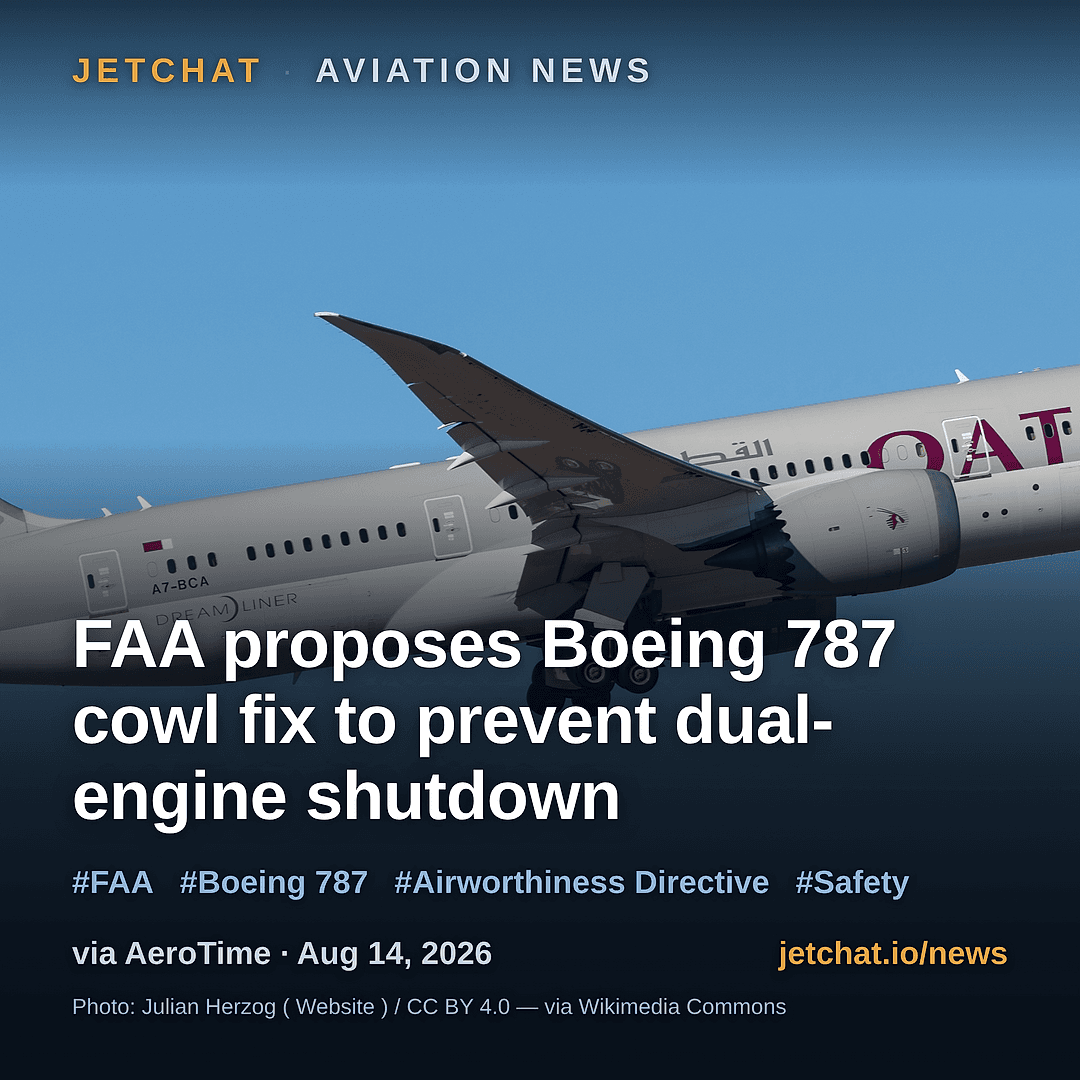
Photo: Julian Herzog ( Website ) / CC BY 4.0 — via Wikimedia Commons (CC BY 4.0) · source
The FAA is proposing a new airworthiness directive for Boeing 787 Dreamliners equipped with Rolls-Royce Trent 1000 engines to address a shielding vulnerability. Boeing discovered that an uncontained failure in the left engine could launch debris into the right engine's oil lines, potentially triggering a catastrophic dual-engine shutdown. The rule would mandate inspections and part modifications for 22 affected US-registered aircraft. For pilots, this underscores the vital importance of system redundancy and the intense engineering scrutiny required to maintain safety in twin-engine operations.
Read the full take
While a dual-engine shutdown is a nightmare scenario for any flight crew, the genesis of this proposed Airworthiness Directive is actually a testament to modern aviation's proactive safety culture. The issue did not emerge from a harrowing mid-air emergency or a tragic accident. Instead, it was identified by Boeing during a routine engineering and certification review. The vulnerability is highly specific, affecting only Boeing 787-8, 787-9, and 787-10 variants powered by Rolls-Royce Trent 1000 engines. Boeing engineers realized that the left fan cowl on the right-hand engine did not provide sufficient armor for critical oil lines. In the rare event of an uncontained rotor failure on the left engine, high-speed shrapnel could theoretically traverse the distance between the powerplants and strike those exposed lines on the right engine, knocking out the aircraft's only remaining thrust source. For aspiring airline pilots and current professionals, this situation highlights the strict design philosophies underlying transport category aircraft. Federal regulations dictate that a catastrophic failure in one powerplant cannot cascade and compromise the other, as absolute redundancy is the bedrock of modern extended twin-engine operations. The fix itself involves a relatively straightforward paperwork audit or visual inspection to verify part numbers, followed by the modification or replacement of the vulnerable cowlings. With only 22 aircraft affected on the US registry, the domestic operational impact will be minimal. The FAA will collect industry feedback on the proposal through late September 2026 before issuing a final mandate. Ultimately, this regulatory action serves as a prime example of how constant system evaluation keeps the global airspace remarkably safe, addressing theoretical hazards long before they become actual emergencies on the flight deck.