FAA Warns of Major East Coast Flight Delays Amid Storms
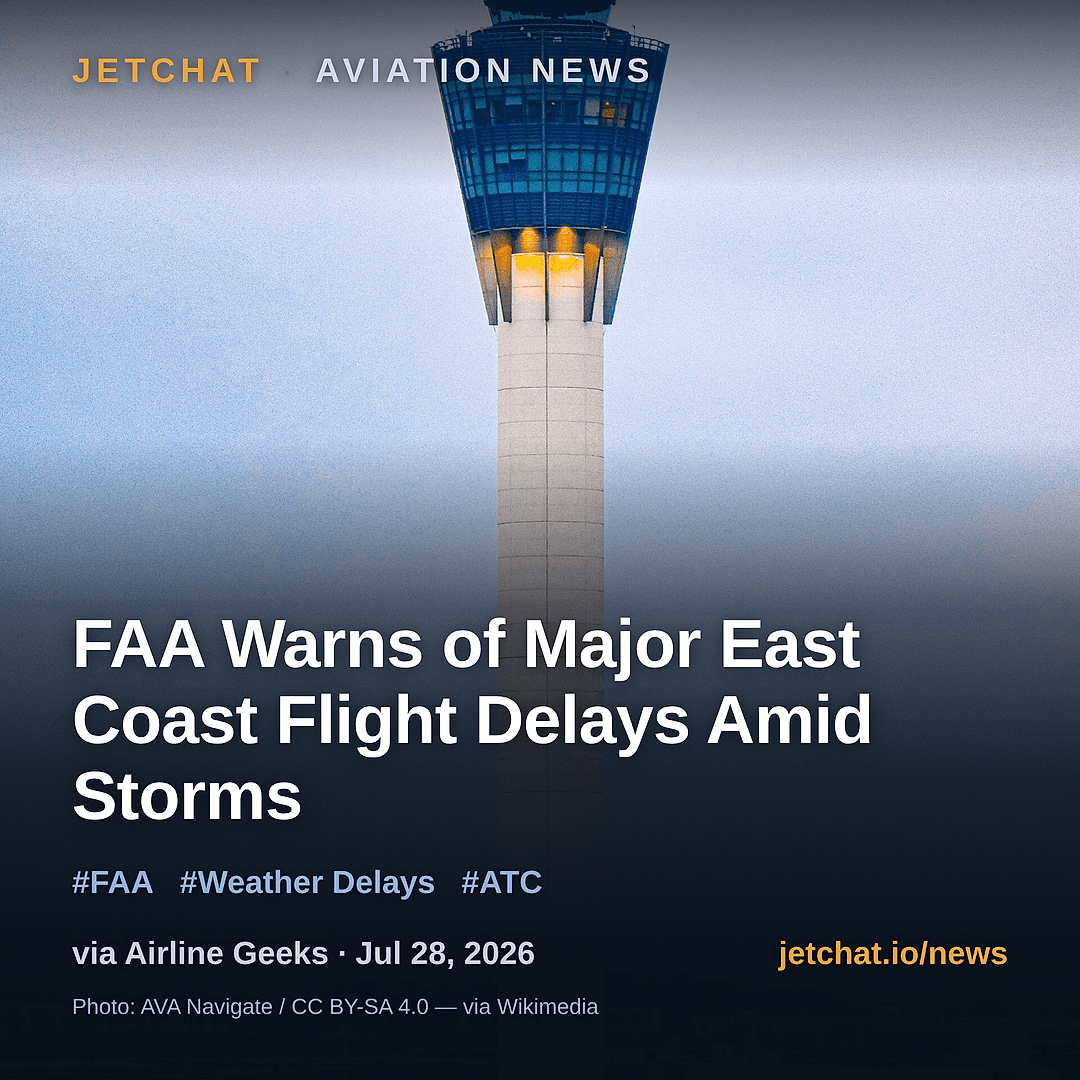
Photo: AVA Navigate / CC BY-SA 4.0 — via Wikimedia (CC BY-SA 4.0) · source
Severe weather sweeping across the eastern United States has prompted the Federal Aviation Administration to issue widespread alerts regarding anticipated flight delays and cancellations. The agency is strongly urging passengers to verify their itineraries with carriers before heading to the airport as convective activity disrupts major routing structures. For pilots navigating these congested corridors, this airspace compression highlights the importance of carrying extra holding fuel and thoroughly reviewing alternate airport options before departure.
Read the full take
When thunderstorms batter the eastern seaboard, the ripple effects stretch across the entire national airspace system. The FAA relies heavily on traffic management initiatives, such as ground stops and severe weather avoidance plans, to keep aircraft safely separated when primary jet routes become unusable. For aspiring airline pilots and current flight instructors, observing how the agency manages these massive convective systems offers a masterclass in aeronautical decision making and system-wide logistics. Air traffic controllers often have to reroute thousands of flights through narrow, weather-free corridors, which rapidly leads to sector saturation. As a result, pilots must be prepared for unexpected airborne holding, reroutes that significantly alter fuel burn calculations, and potential diversions. Student pilots can use these weather events as practical learning opportunities by monitoring live air traffic control audio and studying how dispatchers coordinate with flight crews to amend clearances on the fly. Looking ahead, aviation professionals should watch how the ongoing implementation of modernized air traffic control technologies might eventually streamline rerouting during such intense weather events. Until those systems are fully realized, handling these complex meteorological disruptions will continue to rely heavily on the immediate coordination between the flight deck, dispatch, and air traffic control. Proper preflight planning and a solid understanding of convective forecasts remain an aviator's best defense against getting caught in the operational bottleneck.