Frontier Airlines Selects Starlink for Fleet Connectivity Upgrades
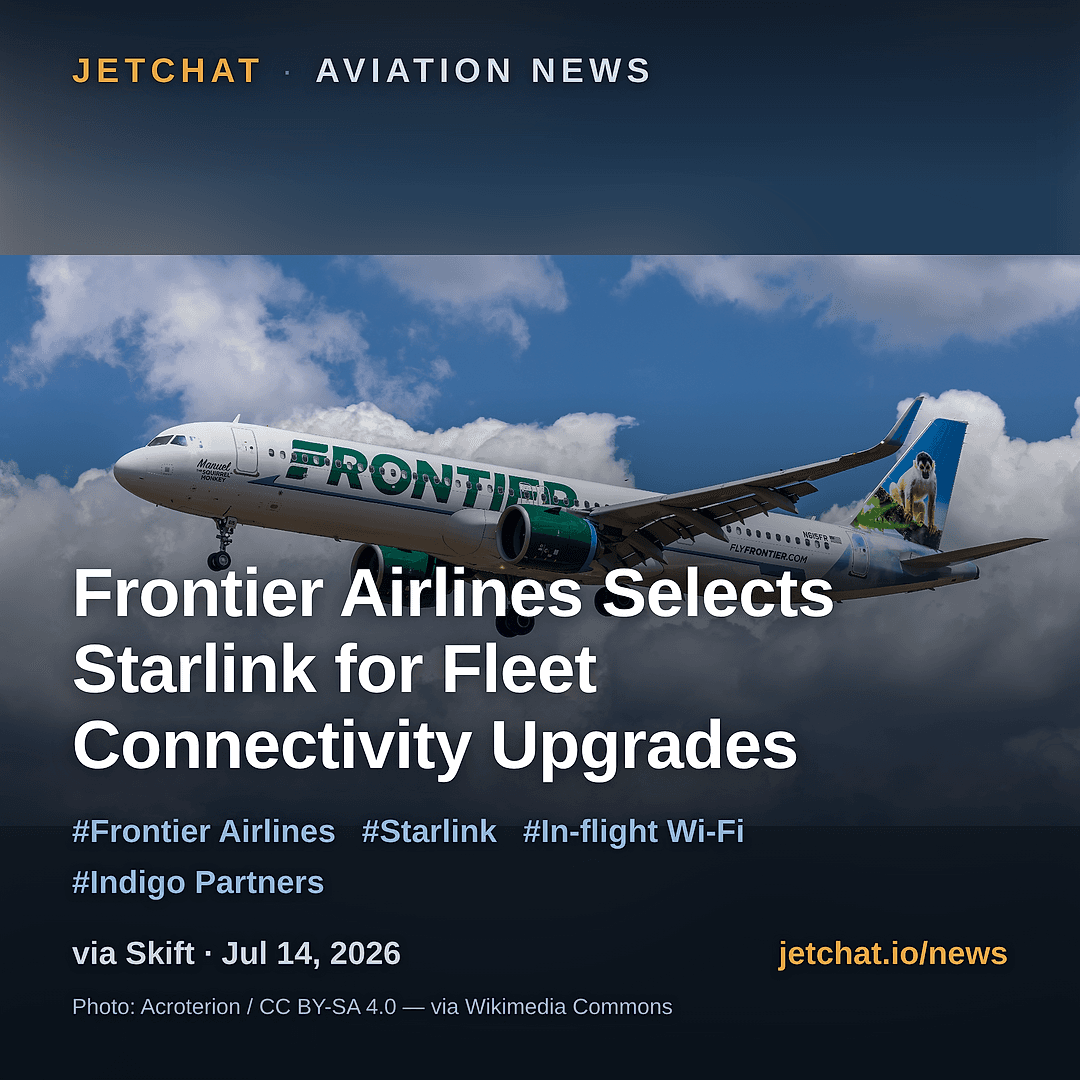
Photo: Acroterion / CC BY-SA 4.0 — via Wikimedia Commons (CC BY-SA 4.0) · source
Ultra-low-cost carrier Frontier Airlines is preparing to equip its aircraft with Starlink satellite internet, departing from its historical lack of onboard connectivity. The move highlights a broader industry shift where even budget airlines are investing in premium cabin amenities to capture a larger share of travel revenue. For aspiring airline pilots, this signals a continuing evolution of the ultra-low-cost business model as carriers balance operational frugality with rising passenger expectations.
Read the full take
Typically, the ultra-low-cost carrier business model relies on stripping away every conceivable non-essential amenity to keep base fares as low as possible. By deciding to introduce Starlink internet across its fleet, Frontier is acknowledging a fundamental shift in the commercial aviation market. Passengers increasingly view reliable inflight connectivity not as a luxury, but as a basic necessity. Starlink low-earth orbit satellites have been rapidly gaining traction among major global carriers, offering low-latency, high-speed connections that traditional providers struggle to match. For career-minded pilots keeping an eye on the industry, this strategic pivot is a prime example of how the lines between legacy carriers and budget operators are continuing to blur. Over the past year, the budget sector has faced significant financial pressure, with travelers showing a stronger preference for premium seating and upgraded experiences offered by the major network airlines. By investing in high-quality internet, Frontier aims to attract business travelers and digital nomads who might otherwise avoid a discount airline. As you track hiring trends and airline financial health, pay close attention to how these carriers adapt their cabin products to stay competitive. The successful integration of these technologies could stabilize revenue streams for budget operators, ultimately leading to more robust fleet expansion and reliable pilot recruitment in the years ahead.