IT Outage Prompts Brief American Airlines Nationwide Ground Stop
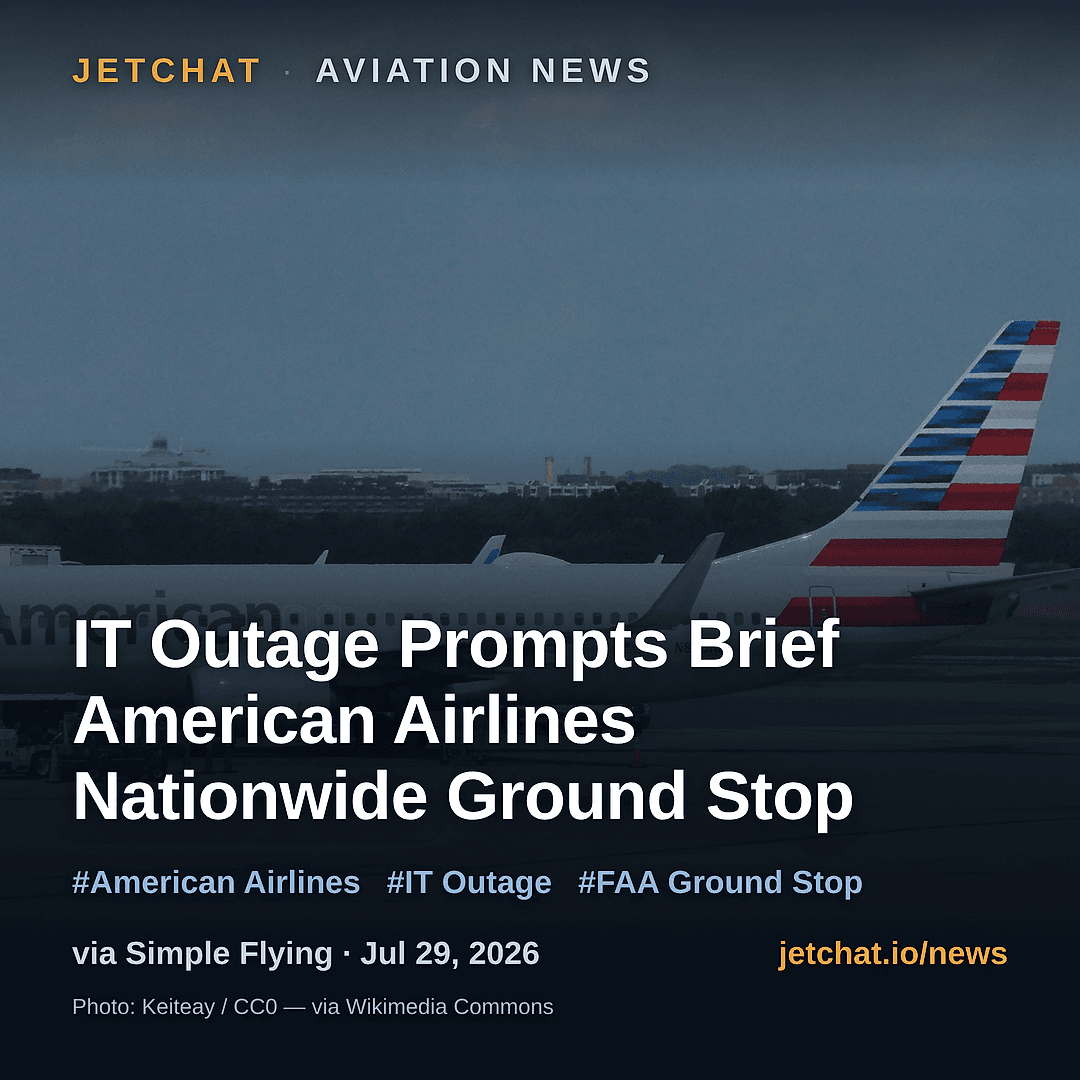
Photo: Keiteay / CC0 — via Wikimedia Commons (CC0) · source
On Tuesday evening, American Airlines requested a nationwide ground stop for all departing flights following an internal technology failure. The Federal Aviation Administration implemented the pause just before half past six Eastern Time, holding all of the carrier's outbound traffic at the gate while network systems were restored. For flight crews and operations staff, this serves as a potent reminder of how heavily modern dispatch and flight release procedures rely on uninterrupted digital infrastructure.
Read the full take
While the Tuesday evening disruption at American Airlines was relatively short-lived, it highlights a persistent vulnerability in modern commercial aviation. The pause in departures, initiated at the carrier's own request and enforced by the Federal Aviation Administration, underscores the absolute dependence on interconnected digital systems for everything from weight and balance calculations to weather routing and crew scheduling. When a core IT network goes dark, dispatchers cannot legally or safely release aircraft, bringing even the largest fleets to a standstill. For professional pilots and aspiring aviators, understanding the operational cascade of a network outage is critical. Even a brief ground stop creates a massive logistical backlog. Aircraft occupy gates that inbound flights need, crews risk timing out under strict rest regulations, and connecting passengers miss their downstream legs. The recovery phase often lasts much longer than the outage itself, requiring dispatchers and flight crews to recalculate fuel loads, adjust alternate airports, and navigate saturated departure queues. Industry professionals should watch how major carriers address these IT bottlenecks going forward. As airlines continue to modernize their backend infrastructure, the transition periods often expose legacy system fragilities. Recognizing how to manage the human element during these delays, such as keeping passengers informed, managing crew rest limits, and coordinating effectively with air traffic control, remains an essential skill for any pilot on the flight deck. Ultimately, technology failures are an inevitable operational hazard, and managing the resulting ripple effect is a fundamental part of flying the line.