Late weather radar detection leads to severe A320 turbulence injuries
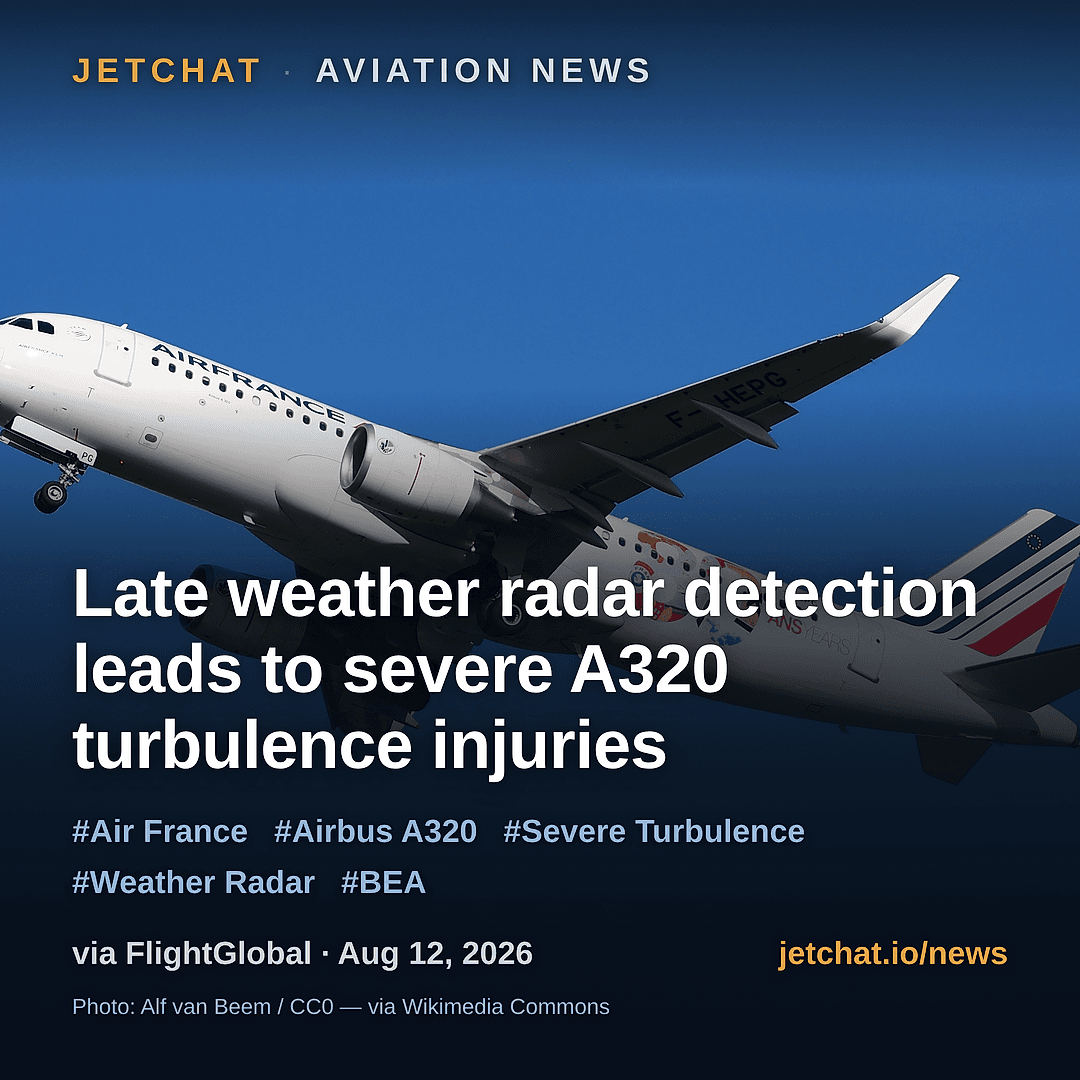
Photo: Alf van Beem / CC0 — via Wikimedia Commons (CC0) · source
An Air France A320 descending into Corsica struck unexpected hail and severe turbulence, causing bone fractures in three flight attendants and two passengers. French safety investigators determined the crew faced a high workload and had a benign forecast, which likely degraded their active weather radar monitoring and manual tilt adjustments. By the time the pilots spotted the rapidly building storm cell, they had no time to maneuver. This incident underscores the importance of continuous radar tilt management and remaining vigilant despite favorable weather forecasts.
Read the full take
The French BEA investigation into this turbulence event highlights a classic trap for flight crews: the intersection of high workload, rapid weather development, and a false sense of security. Because the initial forecast over the Mediterranean was benign, investigators suggest the crew’s active weather radar monitoring decreased. During the descent—a phase saturated with frequency changes, performance calculations, and approach briefings—the pilots were also managing a passenger requiring medical attention. Operating airborne weather radar, particularly systems requiring manual tilt adjustments, is an active task. The captain had adjusted the tilt downward to investigate a distant return. Upon raising the tilt back up, the navigation display immediately painted yellow and red echoes, quickly turning entirely red. The pilots were boxed in, flying into hail and severe turbulence less than a minute after illuminating the seatbelt sign. The sudden rough air caught flight attendants out of their jumpseats, resulting in serious bone fractures. This event is highly instructive for pilots due to the storm’s rapid evolution. The cell lingered below 23,000 feet before exploding vertically just six minutes before the encounter. The crew simply ran out of time to deviate. Furthermore, while the crew had an enhanced weather application on their electronic flight bags, these tools suffer from data latency and cannot replace real-time onboard radar for tactical maneuvering. This accident serves as a stark reminder that clear forecasts do not guarantee clear skies. Air traffic control also failed to warn the flight about the developing cell, underscoring that the flight crew remains the final line of defense. Diligent radar tilt management and maintaining situational awareness—even when the weather is supposed to be perfect—are critical to passenger safety.