Major Carriers Drain Regional Flight Decks, Grounding 500 Aircraft
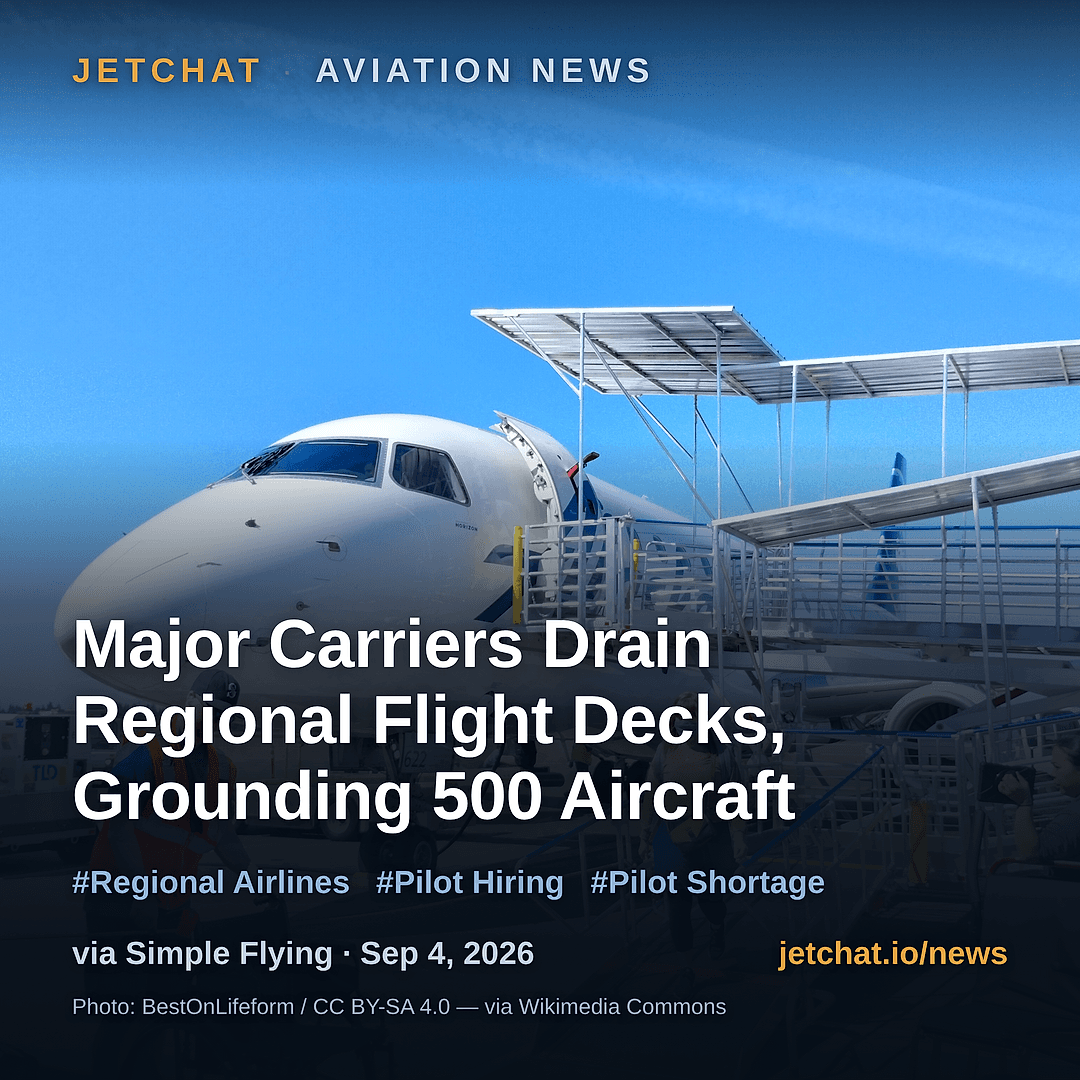
Photo: BestOnLifeform / CC BY-SA 4.0 — via Wikimedia Commons (CC BY-SA 4.0) · source
Across the United States, regional airlines have been forced to ground more than 500 perfectly serviceable airplanes due to a severe lack of flight crews. Legacy carriers are heavily recruiting experienced aviators from the regional sector to backfill their own rosters, leaving smaller operators unable to train replacements quickly enough to maintain their schedules. For aspiring airline pilots, this dynamic creates an unprecedented opportunity to upgrade to the left seat in record time as regional carriers scramble to fill empty captain chairs.
Read the full take
The current situation in the regional airline sector represents a massive shift in the traditional aviation career progression. Historically, pilots might spend years occupying the right seat of a regional jet before accumulating enough seniority and flight time to upgrade to captain. Today, the rapid attrition of experienced regional captains to mainline carriers has completely upended that timeline. Because the legacy airlines are vacuuming up qualified aviators at breakneck speed, regional operators are struggling to maintain sufficient crew levels, resulting in hundreds of grounded aircraft despite strong passenger demand and active mainline contracts. For flight instructors and commercial students building their hours, this environment offers a fascinating paradox. While the regionals are parking jets due to a lack of command-qualified pilots, they are simultaneously desperate for new first officers who can eventually plug the captain deficit. Consequently, new hires are experiencing historically fast upgrade times, often achieving pilot-in-command status within a year and a half of their initial class date. However, this hyper-accelerated career path also demands that new pilots master advanced jet operations and crew resource management faster than previous generations. Moving forward, the industry will be closely watching how regional carriers balance the need to rapidly train new captains with the necessity of maintaining stringent safety standards. For anyone currently logging cross-country time in a trainer aircraft, the message is clear: the airlines need you, and the path to the left seat has never been shorter.