Max 10 delays force United to rethink lie-flat seats
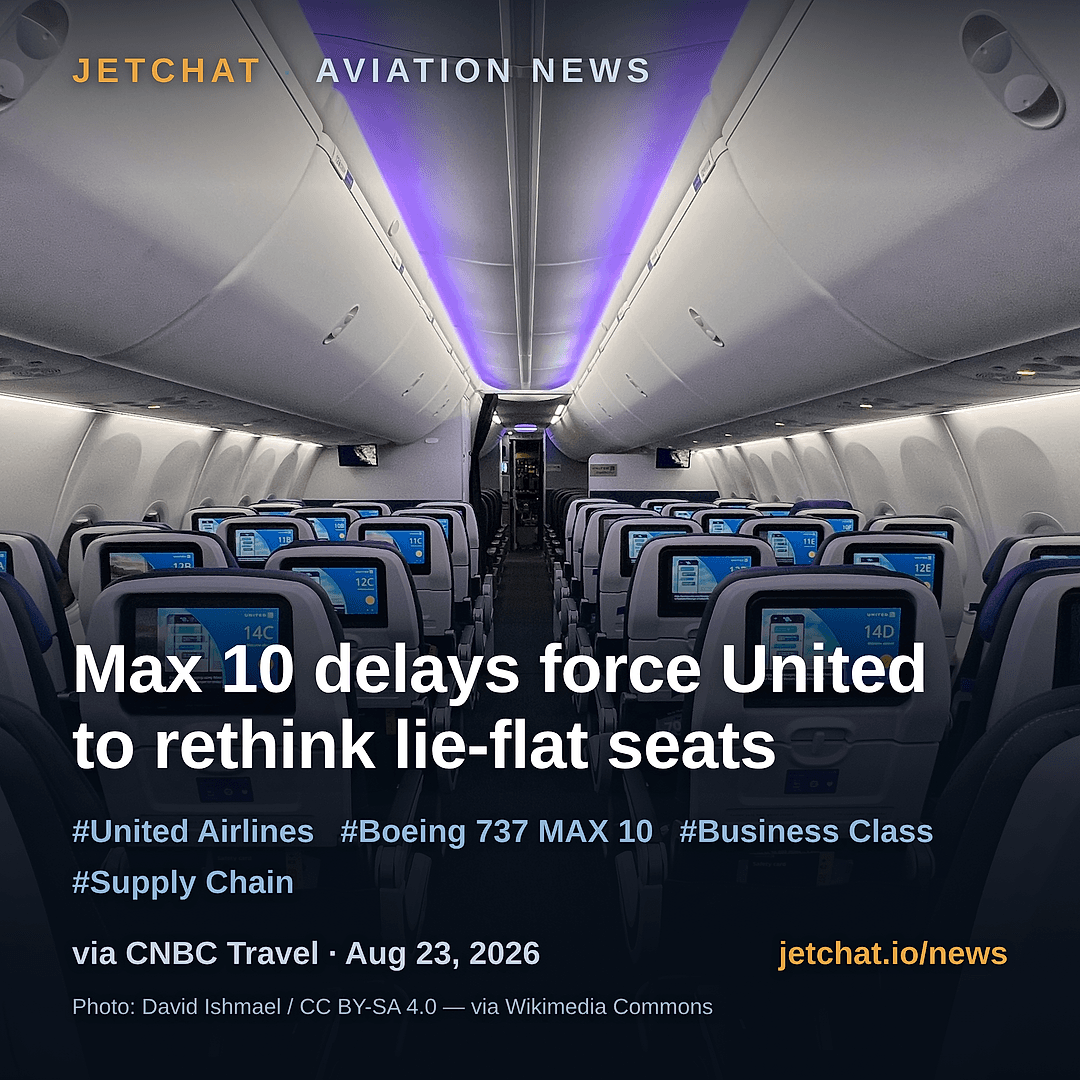
Photo: David Ishmael / CC BY-SA 4.0 — via Wikimedia Commons (CC BY-SA 4.0) · source
United Airlines is facing a logistical hurdle regarding its upcoming Boeing 737 Max 10 fleet due to prolonged certification delays. The carrier had originally planned to equip the highly anticipated narrowbody aircraft with premium lie-flat seats, which were ordered well in advance. With the timeline for the Max 10 entering service pushed back by several years, the airline must now decide how to handle the grounded interior hardware. For pilots eyeing airline careers, this delay highlights how ongoing manufacturer bottlenecks directly impact fleet strategies and route planning.
Read the full take
The ongoing saga of the Boeing 737 Max 10 certification continues to send ripples through airline business models, and United Airlines is feeling the pinch in its passenger cabin strategy. Years ago, the carrier made a bold bet on the largest variant of the Max family, intending to deploy the jets on premium-heavy transcontinental routes. To support this strategy, United ordered luxurious lie-flat seats to match the high-yield passenger expectations on those specific flights. However, with the Federal Aviation Administration heavily scrutinizing Boeing following recent quality control crises, the Max 10 certification has slipped considerably, leaving the airline with expensive cabin hardware and no airframes to put it in. This situation leaves airline executives weighing whether to store the seats at a cost, install them on alternative aircraft like the older Boeing 757 or newer Airbus A321neo, or attempt to modify their supplier contracts. For aspiring airline pilots and aviation enthusiasts tracking fleet dynamics, this scenario illustrates the massive domino effect that regulatory delays have on airline operations. When an aircraft program stalls, it does not just delay pilot training pipelines and route expansions; it creates massive supply chain bottlenecks for interior components. Watching how United pivots will provide valuable insight into how legacy carriers manage capacity and passenger experience when their primary fleet modernization tools are abruptly taken off the table. The resolution could shift which airframes ultimately dominate the premium transcontinental market over the next decade.