Missing locking pin tied to Lufthansa 787 gear collapse
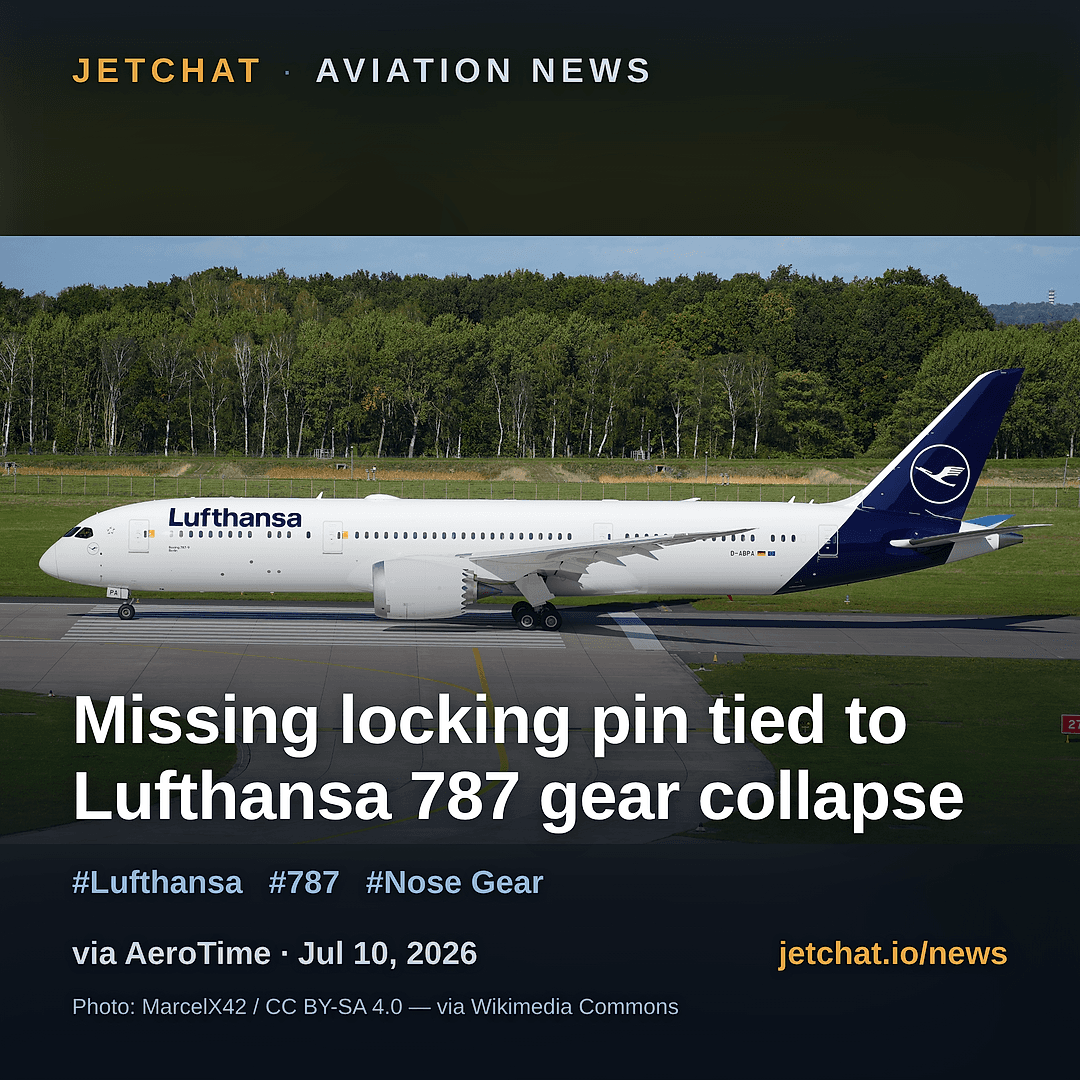
Photo: MarcelX42 / CC BY-SA 4.0 — via Wikimedia Commons (CC BY-SA 4.0) · source
German investigators have determined that a nose gear locking pin was left in its storage box before a Lufthansa Boeing 787-9 collapsed on the tarmac at Frankfurt Airport this past June. Maintenance personnel were troubleshooting a separate landing gear door fault that required moving the gear lever to the retracted position, but without the safety pin installed, the nose slammed into the pavement. Several crew members sustained injuries during the drop. This incident underscores the critical importance of rigorous adherence to basic safety checklists during ground maintenance operations.
Read the full take
The interim findings from Germany's Federal Bureau of Aircraft Accident Investigation provide a stark reminder of how a single overlooked step on the ramp can result in severe aircraft damage and personnel injury. During preparations for a departure to Los Angeles, maintenance teams were running a diagnostic on the main gear doors. This specific troubleshooting sequence required the flight deck gear selector to be placed in the up position. While the technicians successfully secured the main gear assemblies with their respective lockout pins, they somehow bypassed the nose gear safety pin, which remained securely stowed in its storage box. Consequently, when the system was cycled, the front gear retracted exactly as commanded, dropping the nearly brand-new airframe onto the Frankfurt apron. For aviation professionals, this scenario highlights the enduring threat of human error during routine line maintenance. Ground operations are inherently susceptible to distraction, especially when teams are rushing to clear faults before a scheduled long-haul departure. Interestingly, this event echoes a previous British Airways Dreamliner collapse in London where engineers inadvertently inserted a pin into an adjacent, incorrect hole that provided false tactile feedback. However, the Lufthansa investigation points to a complete omission rather than a tool misplacement. As the aviation community waits for the final official report, flight crews and maintenance technicians alike should view this as a sobering case study. Safety protocols, specifically the mandatory visual confirmation of critical lockout devices marked by high-visibility warning flags, must never be treated as secondary items. A visual walkaround and cross-check could have easily prevented a multi-million dollar repair bill and saved multiple crew members from an unexpected trip to the hospital.