NetJets Crew Refuses Las Vegas Go-Around Citing Low Fuel
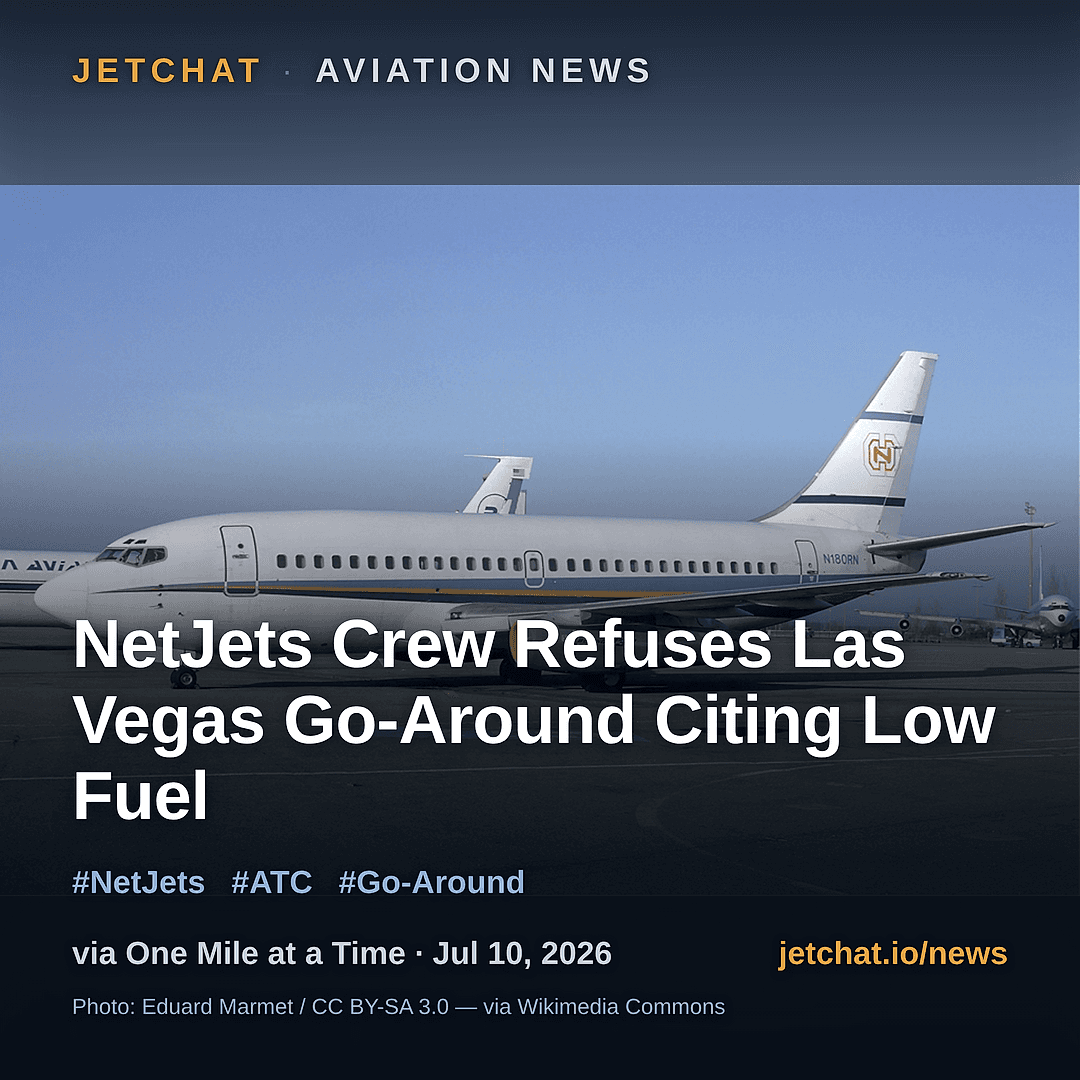
Photo: Eduard Marmet / CC BY-SA 3.0 — via Wikimedia Commons (CC BY-SA 3.0) · source
A NetJets flight crew on approach to Las Vegas rejected an air traffic control instruction to go around, stating they were unable due to low fuel. The crew had not previously declared a minimum fuel state, which forced controllers to quickly clear the business jet to land and instead order a trailing Alaska Airlines widebody to execute a missed approach. This incident underscores the critical necessity of proactive fuel state communication to prevent unexpected sequencing conflicts on final approach.
Read the full take
The recent interaction at Las Vegas Airport involving a NetJets Cessna Citation Latitude and an Alaska Airlines Airbus A330 raises significant procedural questions regarding both flight deck communication and air traffic sequencing. According to audio captures, the local controller instructed the corporate jet to execute a go-around due to purported runway traffic. The flight crew immediately declined the instruction, citing insufficient fuel, despite never having formally declared minimum or emergency fuel on frequency. Caught off guard, the controller rescinded the go-around, cleared the Citation to land on Runway 8R, and subsequently broke off the trailing A330. For professional aviators, this scenario presents multiple instructional takeaways. Standard operating procedures dictate that crews must notify ATC the moment their fuel state reaches a level where any undue delay could compromise a safe landing. Failing to declare minimum fuel deprives controllers of the situational awareness required to prioritize sequencing. Furthermore, the absence of a Brasher warning from the tower suggests a potential breakdown in standard post-incident deviation protocols, though investigations often occur off-frequency. Equally notable is the controller's initial rationale. While runway incursions or slow-clearing traffic routinely necessitate missed approaches, radar data suggests the tower may have been attempting to artificially create spacing for the faster, heavier commercial trailing aircraft. If true, utilizing a fabricated traffic conflict to force a go-around circumvents established flow management techniques like speed assignments or vectors. Ultimately, this event serves as a stark reminder that robust safety margins rely on absolute transparency between the cockpit and the tower. Expect both regulatory authorities and fleet operators to scrutinize these communication lapses.