Passenger Pulled Through Window After Ryanair Engine Failure
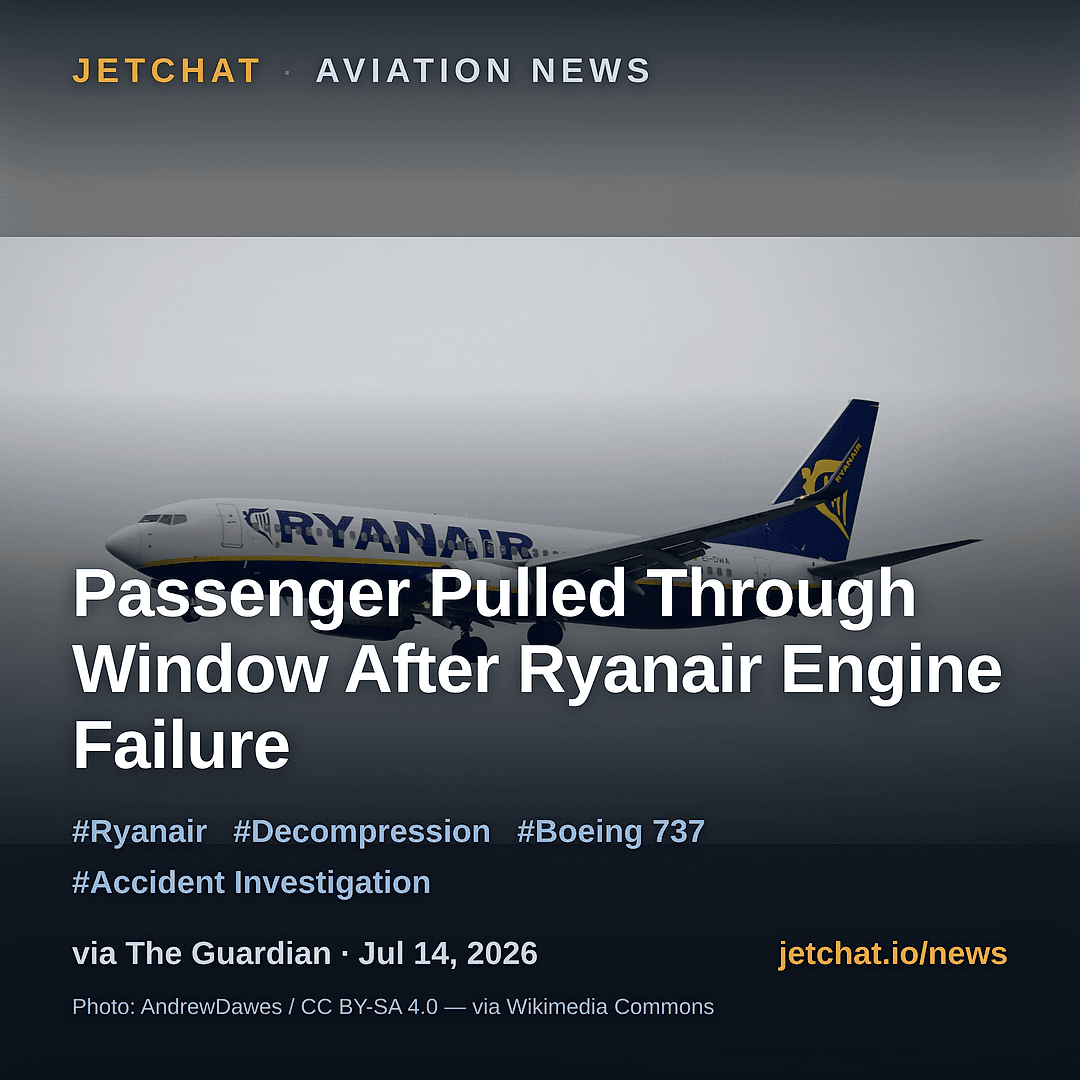
Photo: AndrewDawes / CC BY-SA 4.0 — via Wikimedia Commons (CC BY-SA 4.0) · source
An uncontained engine failure aboard a Ryanair flight recently shattered a cabin window, resulting in rapid decompression that partially pulled a male passenger outside the aircraft. His spouse successfully anchored him by his legs for approximately two minutes during the emergency descent before he could be brought fully back into the cabin. This harrowing event underscores the extreme physical forces of high-altitude pressurization loss and reminds flight crews why immediate oxygen mask usage and rapid descent protocols are critical lifesavers.
Read the full take
The explosive decompression event aboard this Ryanair flight serves as a stark reminder of the sheer physical forces at play during a high-altitude structural breach. When an engine failure sends debris through the fuselage and breaches a window, the pressure differential between the artificial cabin environment and the thin upper atmosphere equalizes violently. For flight crews, the immediate cockpit indications will include a loud bang, a sudden rush of air, fogging in the cabin due to temperature drops, and a cacophony of pressurization warnings. Standard operating procedures dictate that pilots must instantly don their supplemental oxygen masks and establish crew communications before taking any further action. Only then can the flight deck initiate an emergency descent to a breathable altitude, typically ten thousand feet or the lowest safe altitude for the surrounding terrain. This specific incident highlights how rapidly a routine flight can devolve into a catastrophic survival situation, emphasizing why preflight briefings regarding emergency equipment are never merely procedural. Furthermore, aviation maintenance professionals and regulatory agencies will closely examine the engine components involved to determine if a specific fan blade or casing failure led to the uncontained debris. For the broader aviation community, this investigation could prompt emergency airworthiness directives mandating accelerated inspection schedules for similar powerplants. As investigators piece together the telemetry and cockpit voice recorder data, flight instructors should use this scenario to reinforce the uncompromising necessity of situational awareness and immediate, rote execution of decompression checklists among student pilots.