Qantas A380 Crosses Pacific With Work Light Left in Wing
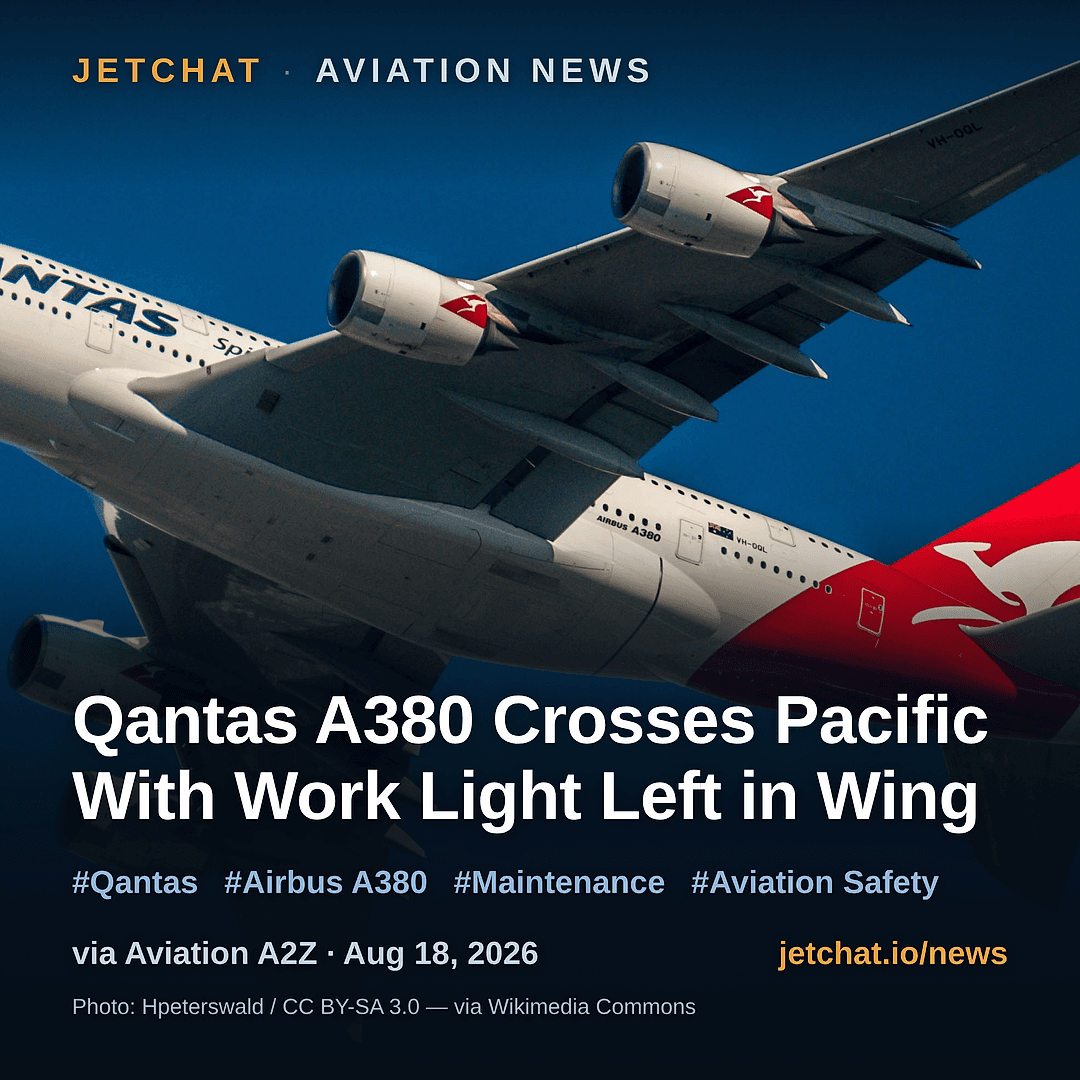
Photo: Hpeterswald / CC BY-SA 3.0 — via Wikimedia Commons (CC BY-SA 3.0) · source
Australian investigators revealed that a Qantas Airbus A380 completed a round trip between Sydney and Dallas-Fort Worth with a 33-centimeter work lamp forgotten inside its wing structure. Maintenance crews inadvertently abandoned the equipment following air conditioning repairs in early January, only realizing the discrepancy two days after the superjumbo returned to Australia. Although the aircraft sustained no damage, the oversight highlights how easily foreign object debris can compromise complex aircraft systems, reminding flight crews why rigorous preflight inspections and meticulous maintenance logging are vital.
Read the full take
The discovery of a forgotten maintenance lamp inside an Airbus A380 wing underscores a persistent threat in aviation: foreign object debris originating from within the hangar rather than the tarmac. While the Australian Transport Safety Bureau confirmed this particular tool caused no structural damage during the long-haul flights across the Pacific, the event exposes vulnerabilities in traditional inventory protocols. Relying entirely on human memory to track equipment after grueling maintenance shifts is a known hazard. When technicians face tight turnaround schedules, the likelihood of misplaced gear rises. This incident is particularly notable because it represents the second time recently that Qantas crews have left substantial hardware inside a superjumbo. In late 2023, a four-foot nylon turning tool spent multiple international sectors inside an outboard engine nacelle before being discovered. In response to these lapses, the Australian flag carrier has proactively implemented mandatory pre-clearance audits. Mechanics must now verify that every piece of hardware is physically accounted for before a jet is released for line operations. The carrier also launched a dedicated working group to overhaul tool accountability. For the broader aviation community, this serves as a stark reminder that safety management systems must engineer human error out of the equation. Modern tool control requires robust fail-safes such as shadowed toolboxes, electronic tagging, and secondary physical inspections so that a missing work lamp triggers a hard stop before the chocks are ever removed. Flight crews should also remain vigilant during preflight walk-arounds, keeping a sharp eye out for any anomalies that might hint at incomplete post-maintenance procedures.