Severe Runway Incursions Surge by 44 Percent in 2025
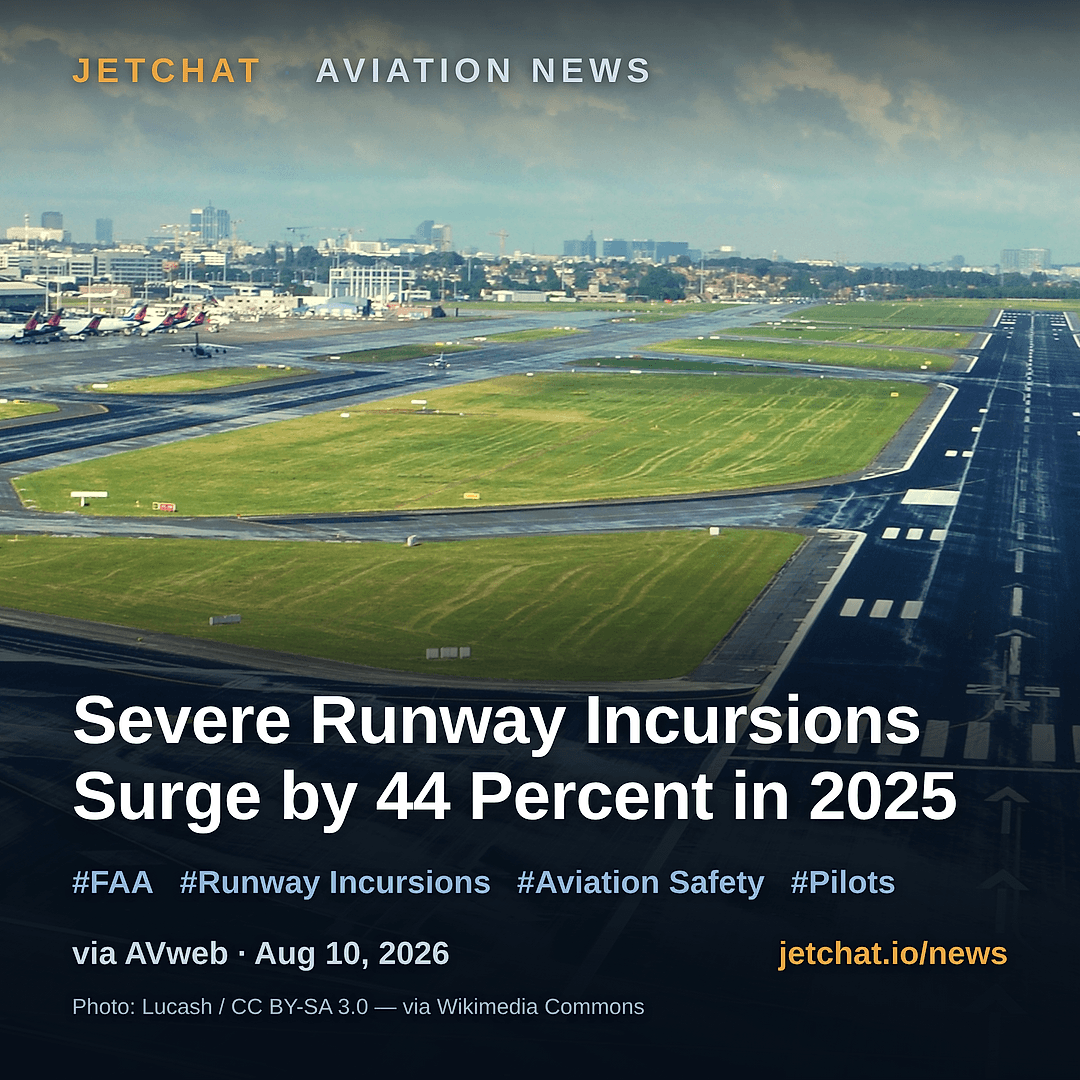
Photo: Lucash / CC BY-SA 3.0 — via Wikimedia Commons (CC BY-SA 3.0) · source
Despite a slight drop in total runway incursions over the past year, the FAA reports that the most dangerous close calls on the ground have jumped by 44 percent in 2025. While overall incidents fell by roughly one percent to just over 1,600 events, Category A and B incursions requiring evasive action or resulting in near-misses saw a sharp rise. This concerning trend underscores exactly why pilots must prioritize rigorous preflight taxi briefings and maintain absolute situational awareness when navigating complex airport environments.
Read the full take
The recent data shared by the FAA Safety Team highlights a troubling divergence in surface safety trends. While the aviation community has managed to slightly reduce the sheer volume of runway incursions, the severity of the incidents that do occur is escalating. A 44 percent increase in Category A and B events means that aircraft are coming much closer to actual collisions, often requiring immediate evasive maneuvers to prevent disaster. For context, federal data indicates there were nine of these severe events in the previous fiscal year, suggesting the 2025 count has climbed to roughly thirteen. This spike occurs against a backdrop of increasing scrutiny from the Department of Transportation. A recent watchdog audit revealed that the FAA struggles with a fragmented approach to analyzing these surface risks, often evaluating data on an airport-by-airport basis rather than identifying systemic nationwide hazards. The audit also highlighted that pilot deviations are the primary culprit, driving nearly two-thirds of all ground conflicts. For flight instructors, student pilots, and professional crews alike, these statistics are a stark reminder that the critical phases of flight begin and end on the pavement. Airport hotspots, complex taxiway geometries, and radio congestion demand undivided attention from every aviator. Moving forward, the industry will likely see a renewed push for technological interventions and stricter adherence to sterile cockpit rules during taxi operations to reverse this alarming trend in severe close calls.