TAP Air Portugal reports wider losses before privatization decision
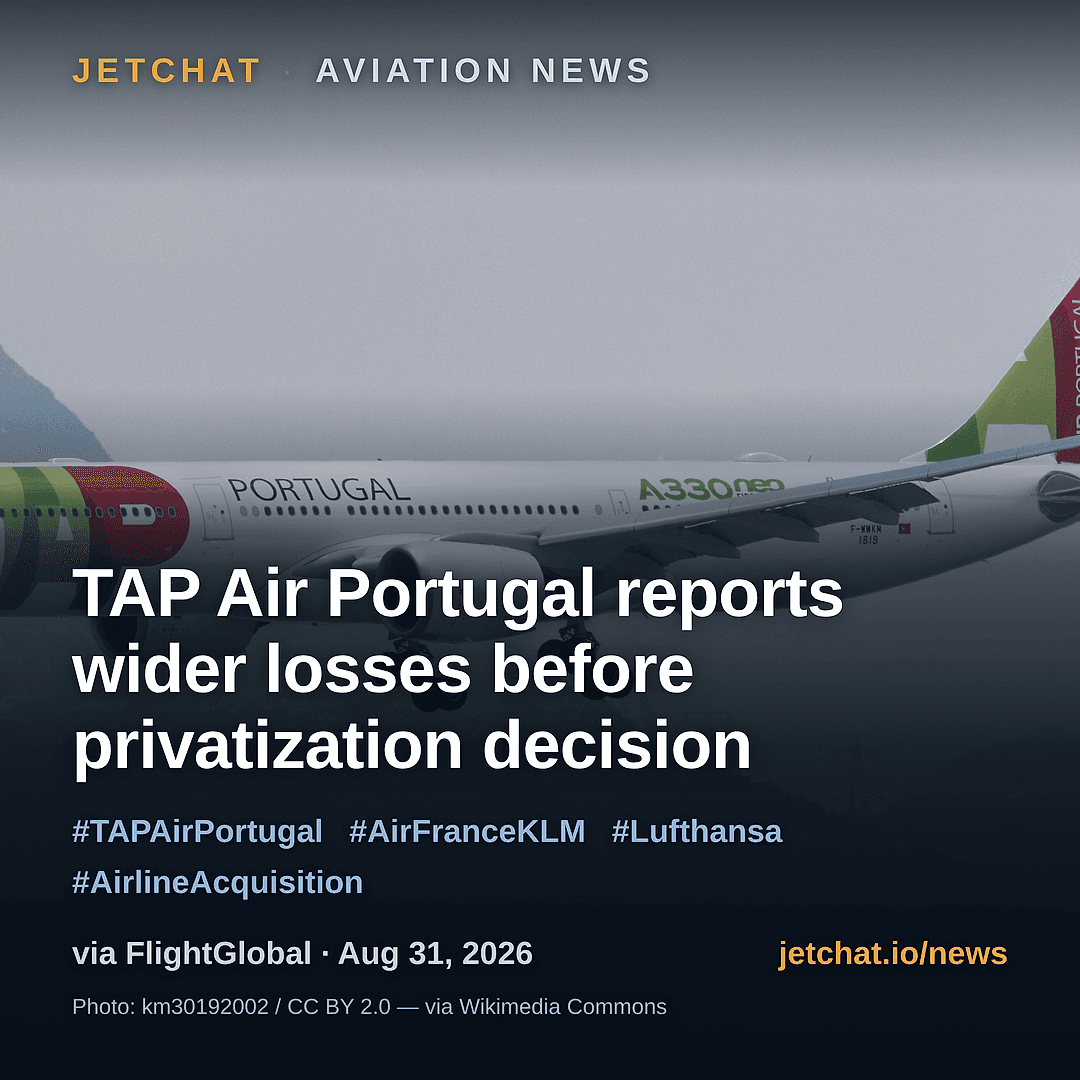
Photo: km30192002 / CC BY 2.0 — via Wikimedia Commons (CC BY 2.0) · source
TAP Air Portugal recorded a forty percent increase in its first-half losses for the year, reaching one hundred fifteen million dollars despite a slight bump in overall operating revenue. The European flag carrier struggled with sudden spikes in jet fuel costs that outpaced ticket sales, even as passenger demand across South American and European networks remained robust. As the Portuguese government evaluates binding minority stake offers from both Lufthansa Group and Air France-KLM, these financial pressures highlight the volatile economic landscape major carriers are navigating.
Read the full take
The financial turbulence at TAP Air Portugal serves as a stark reminder of how rapidly fuel market volatility can erode airline profit margins, even when passenger demand is strong. Despite bringing in over two billion dollars in operating revenue during the first half of the year, the carrier could not offset the immediate sting of soaring jet fuel prices tied to ongoing geopolitical conflicts. For aviation professionals monitoring industry health, this scenario demonstrates the delayed effect of revenue mitigation; airlines often lock in ticket prices months in advance, leaving them vulnerable to sudden operational cost spikes before they can adjust fares. The upcoming privatization decision adds another layer of complexity to the airline's future. The Portuguese government is currently weighing competing bids from two major European airline groups, Lufthansa and Air France-KLM. Both conglomerates are heavily motivated by the opportunity to integrate TAP's highly lucrative South American route network into their own global portfolios. While the state plans to retain majority control and reserve a small percentage of shares for employees, the introduction of a massive corporate partner will undoubtedly shift the strategic direction of the Lisbon-based carrier. For aspiring airline pilots and current crew members, the finalized acquisition could lead to significant fleet adjustments, revamped training protocols, and shifting route assignments as the new minority owner works to integrate TAP into a broader international alliance structure. Ultimately, the successful bidder will need to implement aggressive fuel hedging strategies and capacity adjustments to steer the historic airline back toward profitability.