Boeing Discounts 737 MAX Purchases Up to 60 Percent
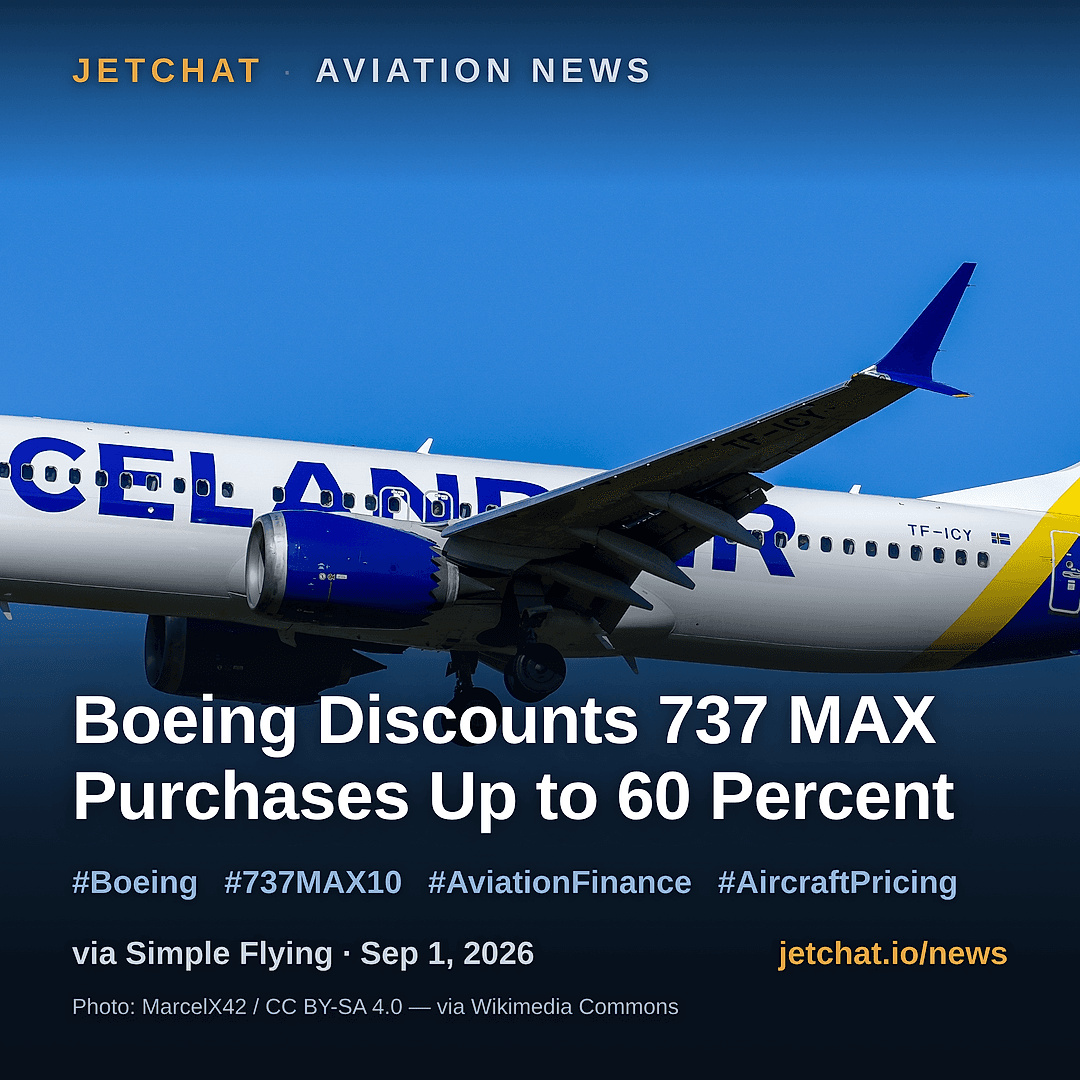
Photo: MarcelX42 / CC BY-SA 4.0 — via Wikimedia Commons (CC BY-SA 4.0) · source
Although Boeing has not updated its official price list since 2019, industry data reveals that major carriers rarely pay the sticker price for new jets. While the flagship 737 MAX 10 originally carried a valuation of nearly $135 million, bulk buyers typically secure discounts ranging from 40 to 60 percent. These steep price cuts depend heavily on carrier relationships and total order volume. For aspiring airline pilots, understanding these fleet acquisition economics sheds light on why airlines aggressively expand their rosters during market downturns.
Read the full take
The economics of commercial aircraft purchasing often mirror the complexity of airline ticket pricing, just on a scale of hundreds of millions of dollars. The general public often sees headlines featuring massive, multi-billion-dollar fleet orders based on published manufacturer sticker values. However, insiders know that those catalog numbers are merely a starting point for intense boardroom negotiations. Boeing last published official retail costs for its narrowbody lineup in 2019, pegging the entry-level MAX 7 at just under $100 million and the stretched MAX 10 variant at approximately $135 million. Fast forward to today, and the reality of commercial aviation procurement dictates that major carriers pay anywhere from 40 to 60 percent below those baseline figures. This dramatic reduction in actual capital expenditure is standard practice across the aerospace manufacturing duopoly. Significant savings are unlocked through bulk ordering, established customer loyalty, and strategic timing. A legacy carrier agreeing to purchase fifty or more airframes simultaneously will naturally command a vastly superior deal compared to a startup airline acquiring a handful of jets. Furthermore, maintenance contracts, pilot training packages, and future delivery slots are frequently bundled into these comprehensive agreements, blurring the lines of the raw per-unit cost. For professional aviators and industry watchers, these pricing dynamics provide crucial insight into airline route expansion and hiring trends. When airlines manage to negotiate highly favorable acquisition rates, they significantly lower their operating overhead for the next two decades. This financial efficiency ultimately trickles down to crew staffing, allowing carriers to expand operations, open new domiciles, and hire more flight crews with the capital saved during the procurement phase. Keeping an eye on true fleet costs gives pilots a better understanding of the long-term financial health and growth trajectory of prospective employers.