JetChat Newsjetchat.io ↗

Topic

#Boeing

← All briefs
industry

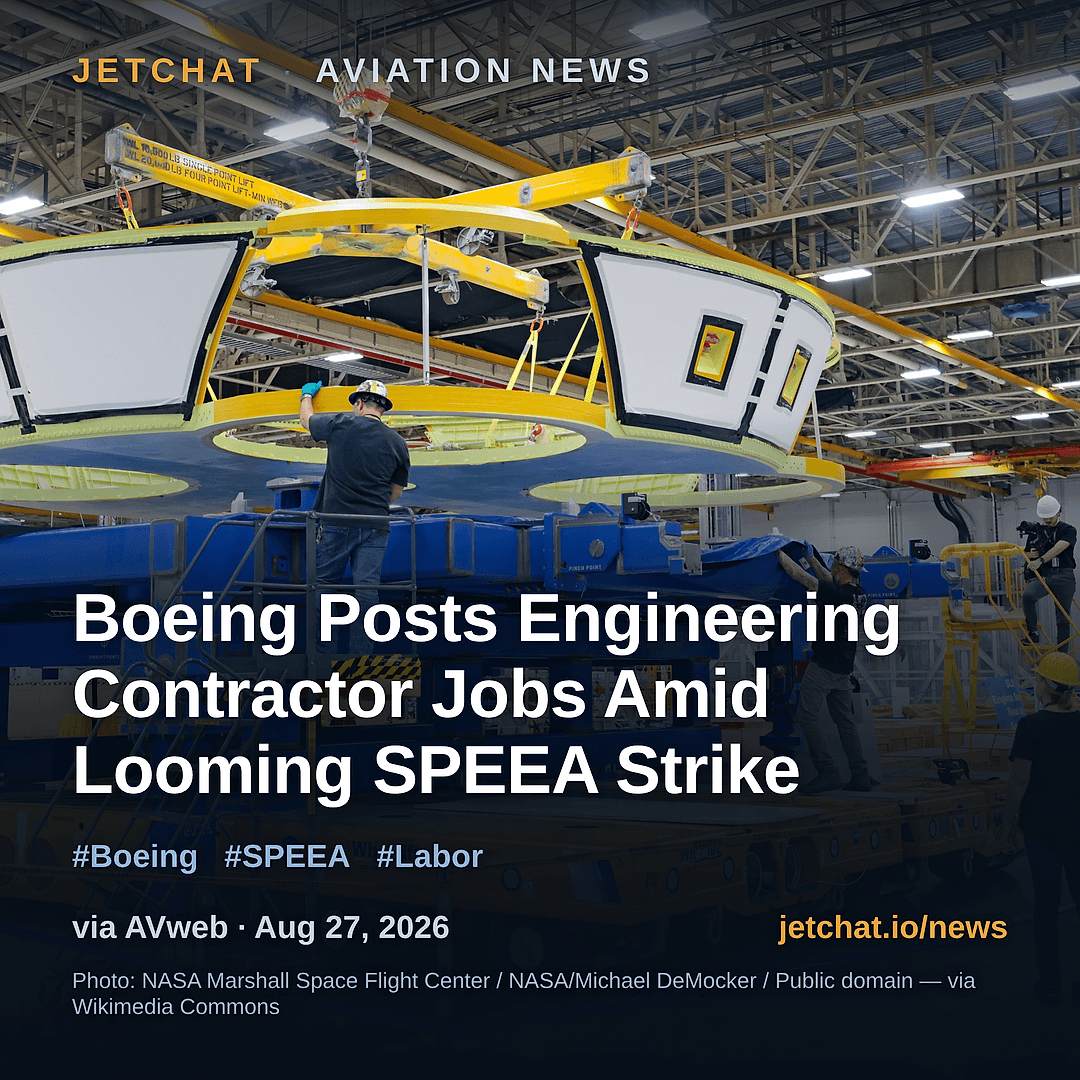
Boeing Posts Engineering Contractor Jobs Amid Looming SPEEA Strike

Boeing is actively recruiting engineering and technical contractors as a precaution against a potential strike by roughly 17,000 unionized professionals. Members of the Society of Professional Engineering Employees in Aerospace recently rejected a four-year contract offer and authorized a walkout that could begin as early as October 7. The manufacturer claims it is prioritizing business continuity and safety in its contingency planning. For aspiring airline pilots, another work stoppage could further delay the certification and delivery of aircraft like the 737 MAX 10, ultimately slowing airline hiring momentum.

industry

Boeing overtakes Airbus to dominate the widebody aircraft market

During the initial production struggles of the 787 Dreamliner over a decade ago, European manufacturer Airbus enjoyed a significant lead in twin-aisle aircraft orders. However, the market dynamics have shifted dramatically in recent years, leaving Airbus trailing as a distant second in the heavy jet sector. Boeing has steadily reclaimed its dominance in long-haul aircraft deliveries and new orders. For aspiring airline pilots charting their career paths, this shifting landscape highlights which manufacturer's flight decks they are most likely to occupy on future international routes.

industry

Traveled Work Continues to Hamper Boeing 737 Wichita Production

Out-of-sequence manufacturing, commonly known as traveled work, continues to present significant hurdles at the former Spirit AeroSystems facility in Wichita, Kansas. Boeing recently reacquired the plant to tighten quality control and stabilize the 737 assembly line, but workers report that out-of-order tasks remain a stubborn issue. Eliminating these manufacturing bottlenecks is essential for Boeing to safely increase its narrowbody production rates. For commercial pilots waiting on fleet expansions, these factory delays translate directly into slower delivery schedules and prolonged capacity constraints at major airlines.

industry

Boeing Could Require Second 737 North Production Line By 2028

Recent industry analysis indicates that Boeing may need to open a second 737 assembly line at its northern facilities as early as 2028 to keep up with surging demand. Prior to the protracted 2019 fleet grounding, the manufacturer had been strategizing significant manufacturing expansions, which are now becoming critical again as order backlogs swell. For aspiring airline pilots, sustained increases in narrowbody production signal long-term stability in commercial fleet growth, ensuring robust hiring and accelerated upgrade opportunities at major carriers.

industry

Boeing engineers reject contract offer and authorize potential strike

Members of the union representing roughly 17,000 Boeing engineers and technical workers have voted to reject a proposed four-year contract. In addition to turning down the deal, nearly 90 percent of voting members authorized union leaders to call a strike if upcoming negotiations fail to yield better terms. Workers cited lagging compensation, outsourced jobs, and concerns over corporate leadership prioritizing production schedules over engineering safety recommendations. A work stoppage could further complicate aircraft delivery schedules for aspiring airline pilots awaiting fleet expansions.

safety

FAA Orders Fuselage Inspections for 470 Boeing 737 MAXs

The Federal Aviation Administration has directed airlines to inspect over 470 Boeing 737 MAX aircraft following recent discoveries of fuselage cracking. Commencing next month, operators of three specific MAX variants must perform targeted structural examinations to ensure continued airworthiness. For professional aviators and mechanics, this latest regulatory directive underscores the ongoing necessity of vigilant preflight walkarounds and rigorous adherence to evolving maintenance protocols.

industry

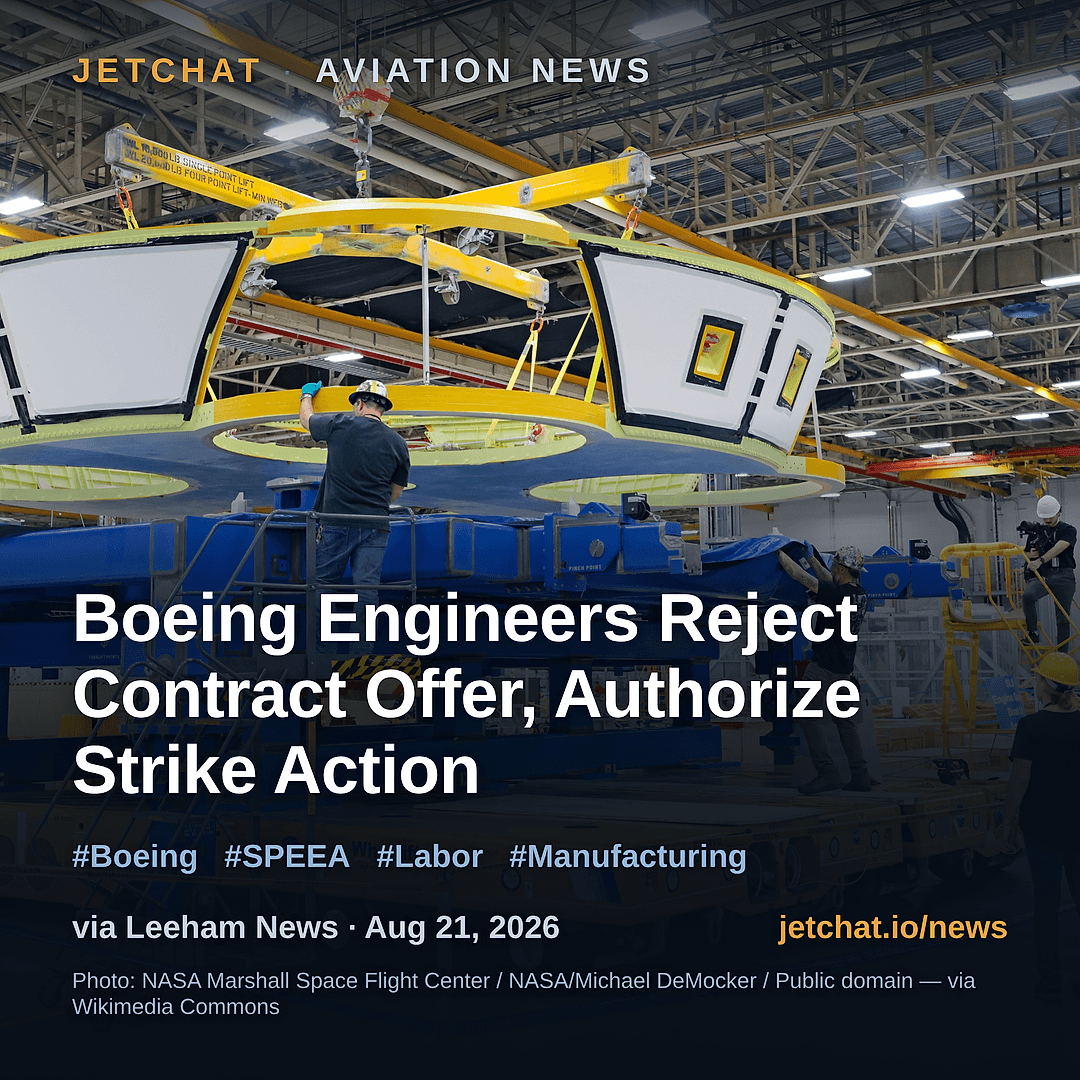
Boeing Engineers Reject Contract Offer, Authorize Strike Action

Technical staff and engineers at Boeing have voted down the company's "best and final" contract proposal, simultaneously granting their union leadership the authority to call a strike. The Society of Professional Engineering Employees in Aerospace (SPEEA) membership decisively rejected the deal, even though their own negotiating committee had unanimously recommended its approval. Both parties are now preparing to return to the bargaining table. For pilots and aviation professionals, a potential work stoppage could severely disrupt aircraft production schedules and delay fleet deliveries worldwide.

industry

Boeing Completes Natural Icing Flight Tests for 777X and 737-10

Boeing recently flew its upcoming 777-9 and 737-10 aircraft into supercooled clouds to evaluate handling characteristics during natural ice accumulation. Flight crews targeted up to two inches of buildup on critical aerodynamic surfaces, successfully verifying that both airframes maintain stable performance in adverse weather. Test pilots reported the aircraft flew so normally that the accretion was barely noticeable without onboard instrumentation. For aspiring airline crews, these milestones signal that next-generation flight controls are becoming increasingly resilient to hazardous atmospheric conditions.

industry

Boeing Faces Renewed 737 MAX Litigation Despite Norwegian Settlement

Boeing previously distributed roughly $212 million to resolve a legal conflict with Norwegian Air regarding the 737 MAX grounding, a deal that included the airline purchasing additional airframes. However, separate holding companies that actually own the affected jets claim they were excluded from that original agreement and are now pursuing their own litigation. This development signals that the manufacturer is still battling the long-term legal fallout of the MAX crisis, which continues to influence aircraft delivery schedules and corporate financial stability across the aviation industry.

airlines

Lufthansa Declines Earliest Production Boeing 777-9 Airframes

The German flag carrier has announced it will not accept some of the initial Boeing 777-9 airframes manufactured during the program's lengthy certification delays. Carrier leadership noted during a recent financial briefing that they are currently negotiating with the American aerospace manufacturer to determine which specific early-build jets will be completely declined and which might be updated to current specifications at Boeing's expense. For aspiring airline pilots, this highlights how aircraft certification hurdles can impact fleet integration timelines and future hiring waves at major international operators.

industry

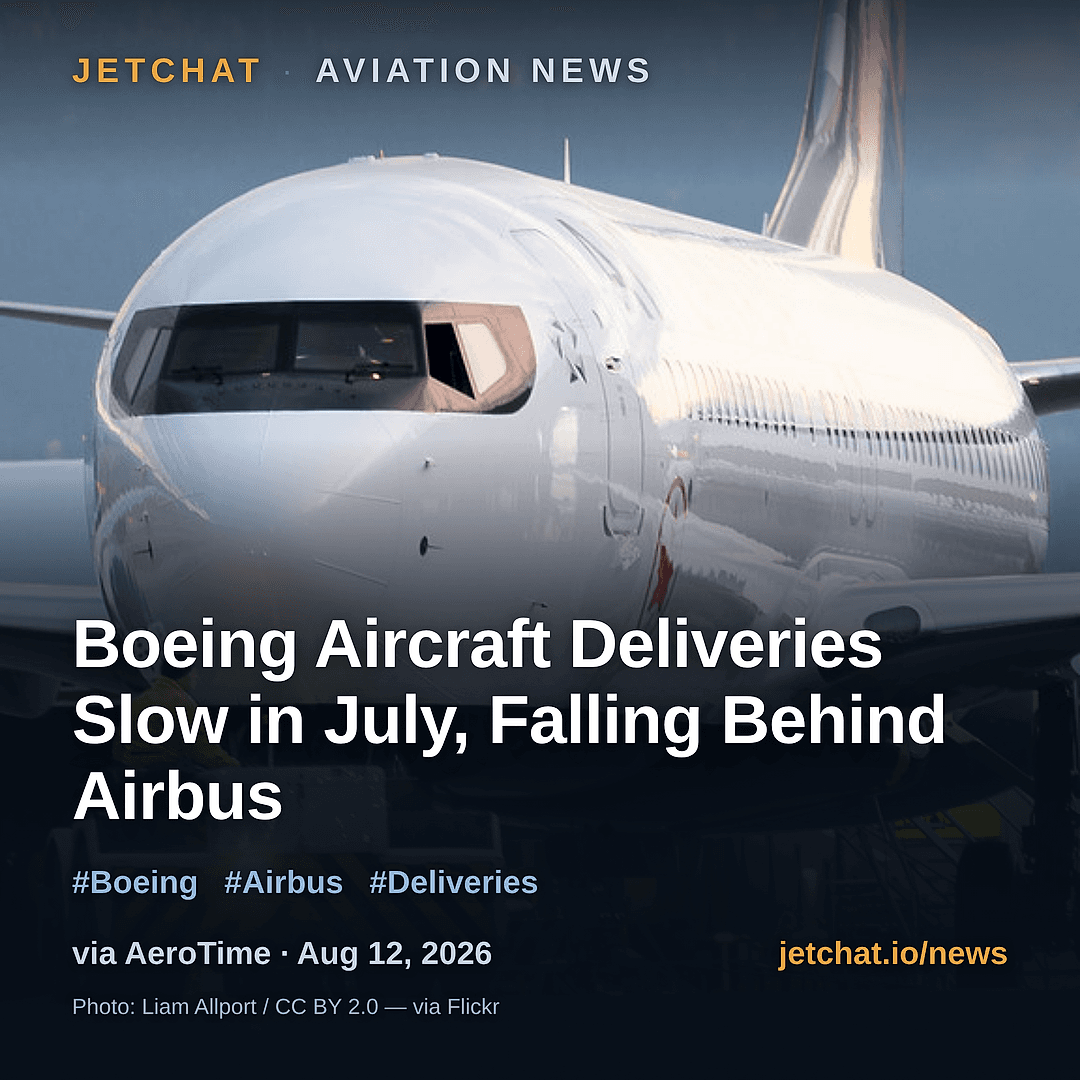
Boeing Aircraft Deliveries Slow in July, Falling Behind Airbus

Boeing handed over 53 commercial aircraft to customers in July 2026, marking a slowdown from its stronger output in May and June. The dip widens the manufacturer's gap with European competitor Airbus, which delivered 67 airframes during the same month. Despite the monthly drop, Boeing's year-to-date total of 367 deliveries outpaces its performance over the same period last year, tracking closely with industry recovery trends. For aspiring airline pilots, consistent widebody and narrowbody production remains a leading indicator of future hiring waves at major carriers.

industry

Manufacturers Struggle to Meet Soaring Widebody Aircraft Demand

As the aviation industry continues to rebound from the pandemic, airlines are facing a severe shortage of twin-aisle aircraft. While manufacturers are generally maintaining production rates for narrowbody jets despite engine supply chain issues, they are struggling to keep pace with the surging global demand for larger airliners. This growing gap between heavy jet requirements and factory output could slow international route expansion, which matters to aspiring airline pilots who are building time toward long-haul career opportunities.

safety

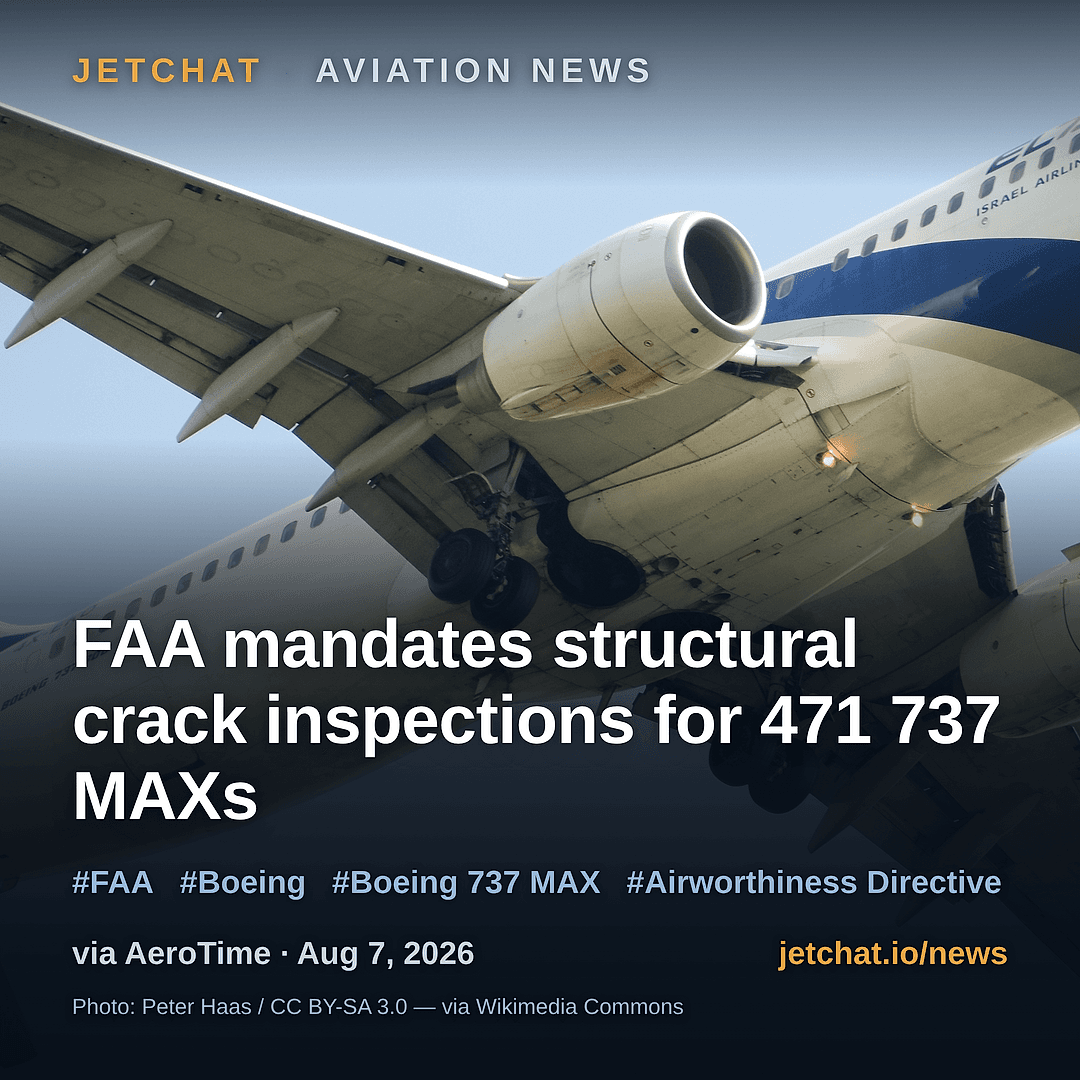
FAA mandates structural crack inspections for 471 737 MAXs

The Federal Aviation Administration has issued an airworthiness directive requiring operators to inspect 471 Boeing 737 MAX aircraft for potential structural cracking. Effective September 2026, the mandate targets the fuselage skin and bear strap near the forward galley door, addressing a vulnerability that could compromise the airframe under limit loads. For future and current airline crews, tracking fleet-wide airworthiness directives is a practical lesson in how regulatory oversight directly influences dispatch reliability and everyday line operations.

industry

Seventh Boeing 777X Completes First Flight for ETOPS Testing

Boeing has successfully flown its seventh 777X airframe for the first time as the manufacturer pushes toward final certification. This specific aircraft is slated to handle Extended-range Twin-engine Operations Performance Standards testing, alongside overall function and reliability evaluations. For commercial aviators tracking future fleet developments, this milestone signals steady progress toward bringing the massive twin-engine widebody onto the active flight line.

industry

Boeing 777-9 Hits 4,800 Test Hours, Begins ETOPS Certification

The seventh Boeing 777-9 flight test aircraft took to the skies in late July, pushing the heavily delayed 777X certification program past the 4,800-hour mark. This specific airframe will focus exclusively on Extended-range Twin-engine Operational Performance Standards testing, a crucial hurdle before the widebody can legally fly long-haul overwater routes. For aspiring airline pilots, the progress of this folding-wingtip giant signals that long-haul fleet modernization is finally advancing, eventually opening up heavy-jet seat opportunities.

industry

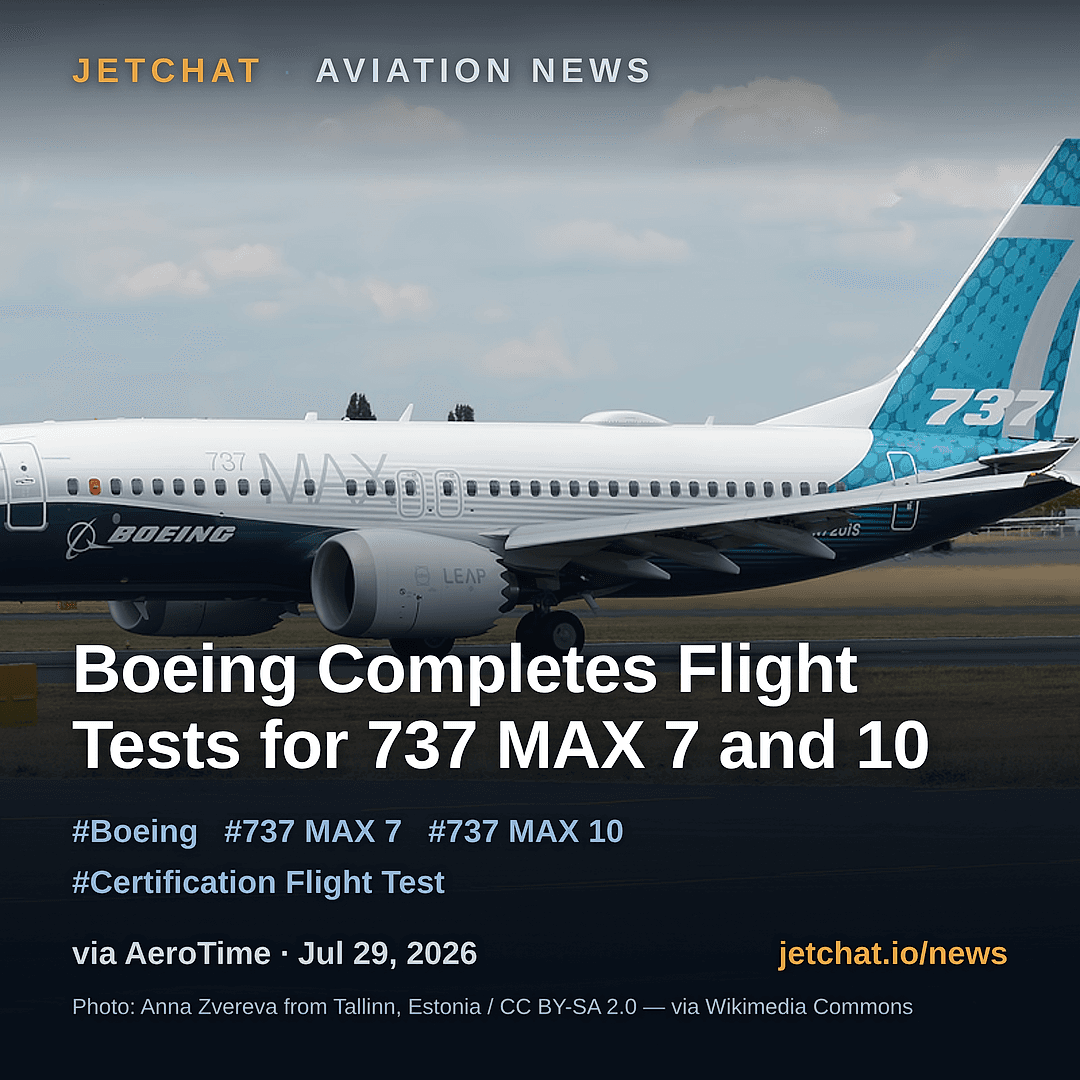
Boeing Completes Flight Tests for 737 MAX 7 and 10

Boeing has officially wrapped up its planned certification flight testing for the 737 MAX 7 and MAX 10 variants. The manufacturer logged over two thousand flight hours for the MAX 10, evaluating critical components like the enhanced angle of attack sensors and engine anti-ice solutions. The program now shifts to finalizing safety assessments for Federal Aviation Administration review. For aspiring airline pilots, this milestone keeps both narrowbodies on track for a 2026 certification, signaling continued fleet growth and future flight deck opportunities.

industry

Boeing Reaches Positive Cash Flow Amid Rising Q2 Deliveries

Boeing achieved a positive free cash flow of $631 million during the second quarter of 2026, driven by an eight percent revenue increase to over $24.5 billion. The aerospace manufacturer handed over 171 commercial jets during this period, marking its strongest quarterly output in eight years and significantly narrowing overall financial losses. For commercial aviation professionals, sustained manufacturing momentum signals robust future hiring demands as airlines finally receive long-delayed fleet additions.

industry

Boeing targets 2027 for Max 7 and 10 deliveries

Boeing chief executive Kelly Ortberg recently outlined a revised timeline for the certification and entry into service of the company's remaining 737 variants. The aerospace manufacturer now anticipates delivering the first Max 7 and Max 10 airframes to customers in 2027, alongside a broader financial forecast predicting depressed profit margins through the end of the decade. For aspiring airline pilots, this timeline provides crucial insight into when major carriers will actually receive these long-awaited narrowbody aircraft and begin hiring to crew them.

industry

GE Pauses 777X Engine Deliveries to Fix Durability Issue

General Electric has temporarily stopped delivering its GE9X turbofan engines to Boeing as it works to resolve a known defect involving a cracked mid-seal. Boeing anticipates that shipments will resume later this quarter once regulators approve the final hardware modifications. Despite the supply chain pause, the airframer maintains that the overall aircraft certification schedule remains on track for initial deliveries next year. For aspiring heavy-jet pilots, this highlights the rigorous and often turbulent regulatory journey new widebody aircraft face during the final phases of flight testing.

industry

Boeing to accelerate next-generation jet development post-Max certification

Boeing intends to significantly increase research and development on its next clean-sheet aircraft design once it secures final approvals for the 737 Max 7, Max 10, and 777-9. By wrapping up these delayed projects and scaling up narrowbody production rates, the manufacturer hopes to free up essential engineering talent and generate the cash needed for a massive new program. For aspiring airline pilots, this timeline suggests the workhorse aircraft you fly at the start of your career will remain the current generation of jets well into the late 2030s.