Seventh Boeing 777X Completes First Flight for ETOPS Testing
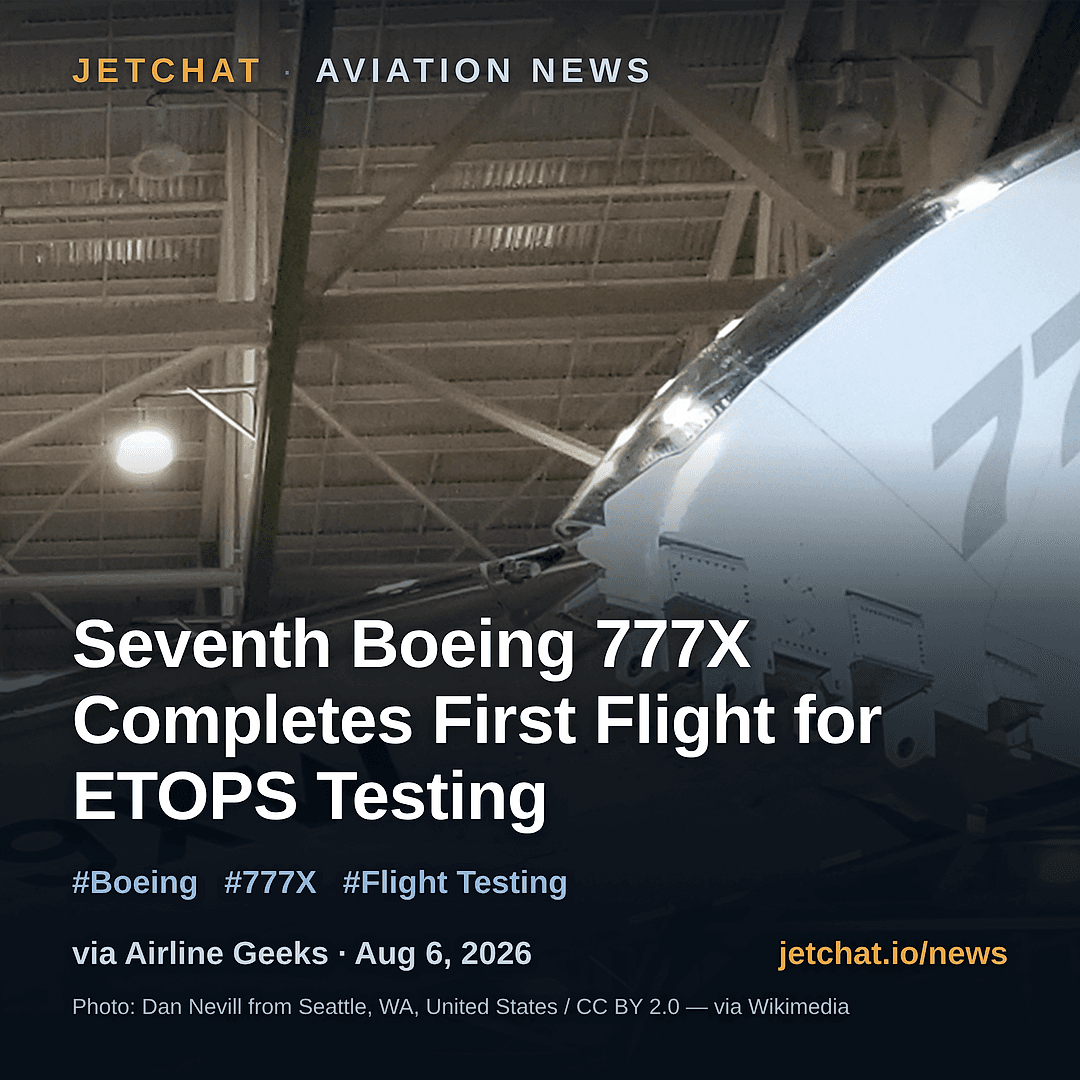
Photo: Dan Nevill from Seattle, WA, United States / CC BY 2.0 — via Wikimedia (CC BY 2.0) · source
Boeing has successfully flown its seventh 777X airframe for the first time as the manufacturer pushes toward final certification. This specific aircraft is slated to handle Extended-range Twin-engine Operations Performance Standards testing, alongside overall function and reliability evaluations. For commercial aviators tracking future fleet developments, this milestone signals steady progress toward bringing the massive twin-engine widebody onto the active flight line.
Read the full take
The successful maiden flight of the seventh 777X marks a critical phase in Boeing's long-delayed certification campaign for its flagship widebody. Tasked specifically with ETOPS and reliability testing, this airframe will undergo grueling evaluation to prove the twin-engine jet can safely operate on long over-water or remote routes on a single engine if necessary. For the aviation community, this phase is where theoretical engineering meets the harsh realities of line operations. Flight crews will be watching these function and reliability trials closely, as they are designed to simulate actual airline schedules and uncover any latent operational quirks before the aircraft enters passenger service. The 777X program has faced immense scrutiny and extended timelines, largely due to heightened regulatory oversight and global supply chain bottlenecks. Getting a seventh test article in the air dedicated to real-world reliability metrics suggests the manufacturer is confident in the core aerodynamic and systems architecture. As the jet progresses through these final rigorous hurdles, aspiring and current airline pilots can start anticipating the unique flight deck features and handling characteristics of the largest twin-engine passenger jet ever built. The industry eagerly awaits the conclusion of these tests, which will ultimately dictate when airlines can begin integrating the massive folding-wing aircraft into their international networks.