FAA mandates structural crack inspections for 471 737 MAXs
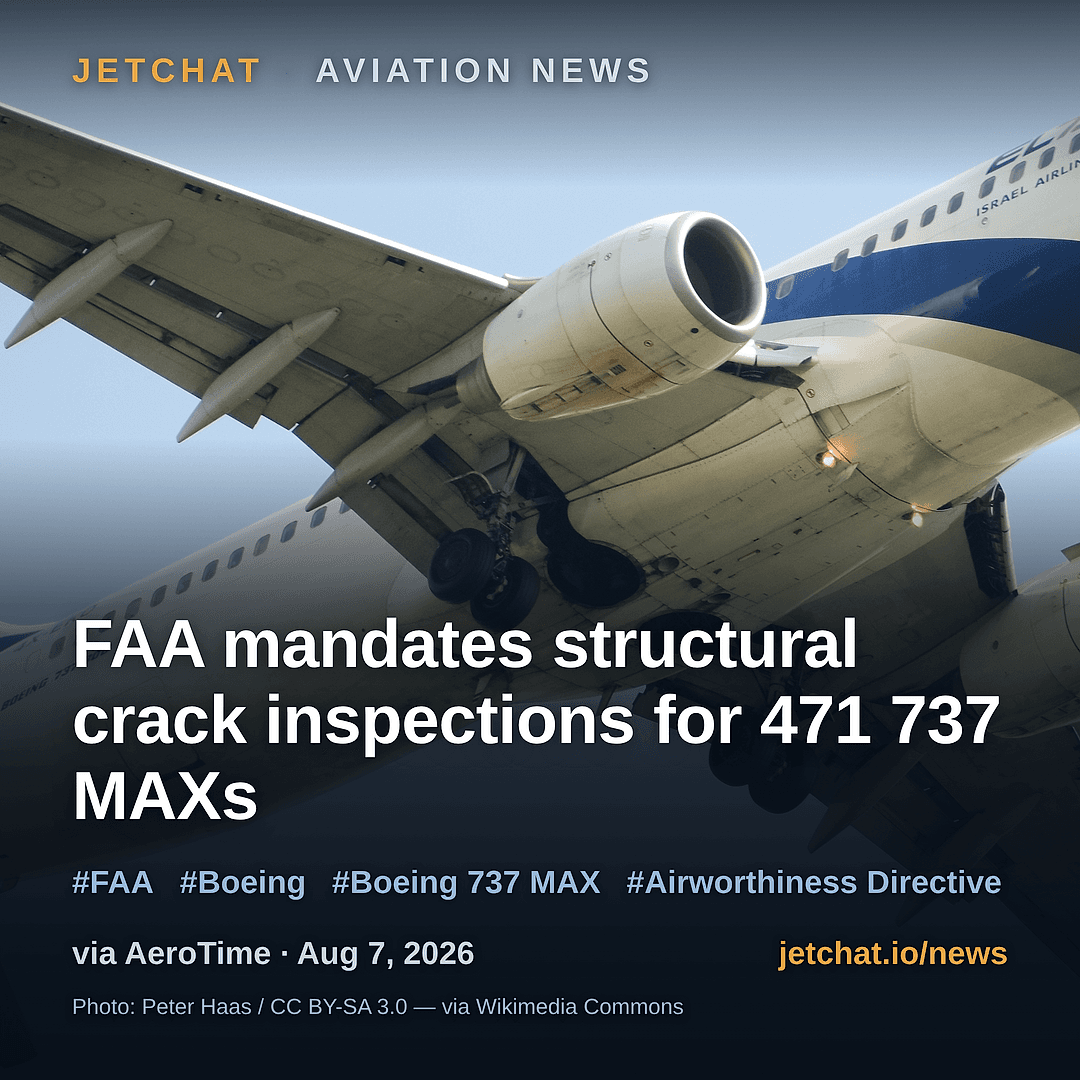
Photo: Peter Haas / CC BY-SA 3.0 — via Wikimedia Commons (CC BY-SA 3.0) · source
The Federal Aviation Administration has issued an airworthiness directive requiring operators to inspect 471 Boeing 737 MAX aircraft for potential structural cracking. Effective September 2026, the mandate targets the fuselage skin and bear strap near the forward galley door, addressing a vulnerability that could compromise the airframe under limit loads. For future and current airline crews, tracking fleet-wide airworthiness directives is a practical lesson in how regulatory oversight directly influences dispatch reliability and everyday line operations.
Read the full take
This latest regulatory mandate highlights the ongoing, microscopic oversight of the Boeing 737 MAX family. Specifically targeting the MAX 8, MAX 9, and the high-density MAX 8200 variants, the directive forces maintenance crews to look closely at the bear strap located near the forward galley door cutout. In aviation engineering, bear straps are crucial structural doublers that reinforce areas around large fuselage openings, handling the intense stress cycles of pressurization and depressurization. If structural fatigue develops and propagates in this reinforced area, the aircraft's primary structure might fail to sustain its certified limit loads. Fortunately for airline operators, the actual compliance burden is relatively light compared to other major structural mandates. The initial visual check for existing repairs requires approximately one hour of labor, while subsequent detailed eddy current inspections will only sideline the narrowbody jet for a few hours. Financially, the fleet-wide impact is minimal, keeping maintenance costs remarkably low. However, the timing adds to a broader narrative of continuous regulatory hurdles for the manufacturer. Just weeks prior, the agency proposed a separate safety directive concerning improperly installed passenger seat assemblies on hundreds of MAX aircraft. For aviation professionals and aspiring commercial pilots, this sequence of events serves as a textbook example of how the commercial airliner lifecycle is governed by a continuous feedback loop of operational data, manufacturer service bulletins, and federal mandates. Understanding this ecosystem is essential, as these localized maintenance actions directly affect fleet availability, airline scheduling, and the overarching safety of the national airspace system.