Boeing Secures 737 MAX 7 Certification Ahead of 2027 Rollouts
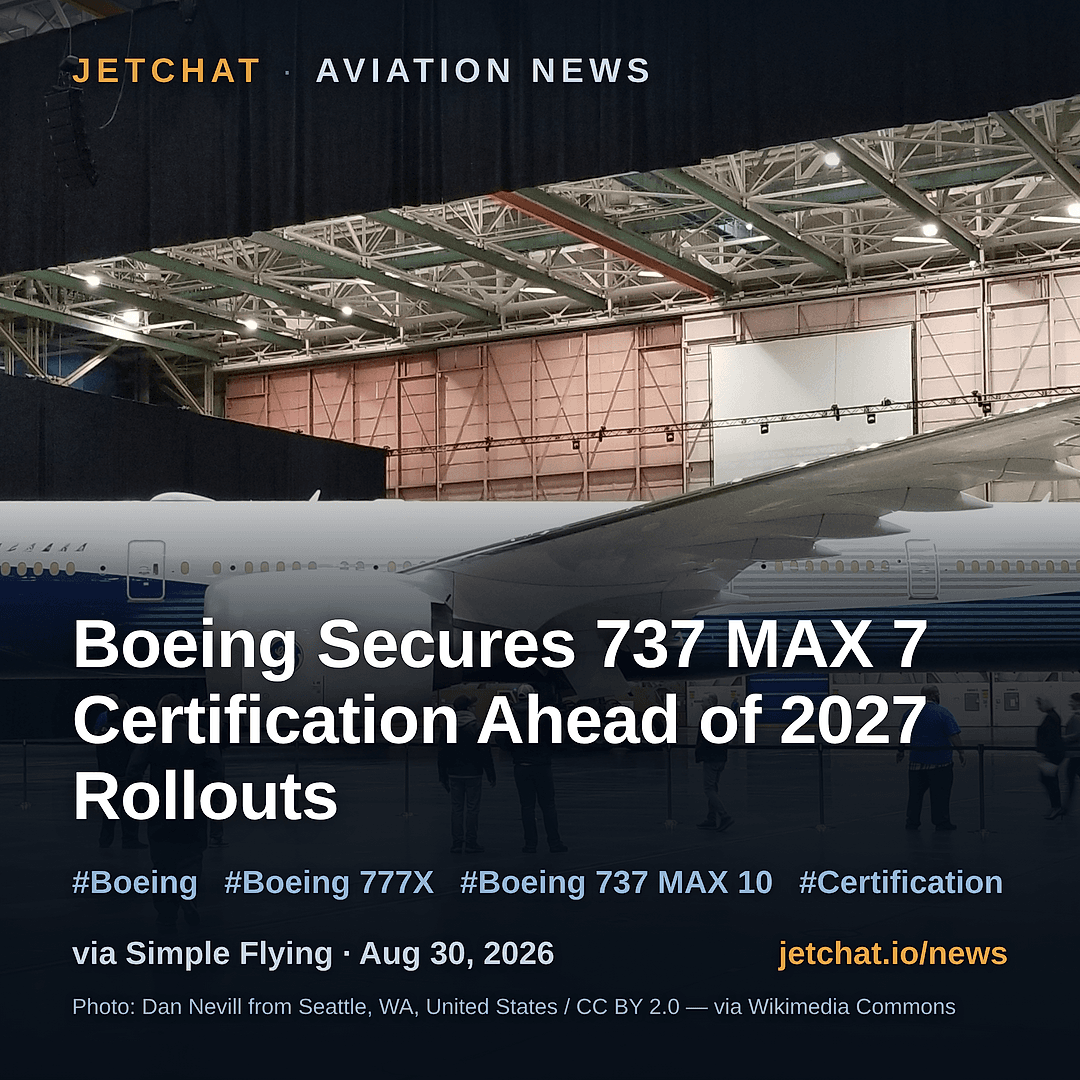
Photo: Dan Nevill from Seattle, WA, United States / CC BY 2.0 — via Wikimedia Commons (CC BY 2.0) · source
Boeing has successfully achieved commercial certification for the 737 MAX 7, marking its first new aircraft approval in years. This clears the runway for Southwest Airlines to begin taking deliveries, while shifting the manufacturer's focus toward certifying the larger 737 MAX 10 and the widebody 777-9 ahead of their targeted 2027 service entry. For aspiring airline pilots, this long-awaited regulatory progress signals stability in the Boeing pipeline and a steady stream of future equipment to fly.
Read the full take
The regulatory green light for the Boeing 737 MAX 7 represents a critical turning point for the American aerospace giant following a prolonged period of intense Federal Aviation Administration scrutiny. While the MAX 7 is primarily geared toward Southwest Airlines, its approval paves the way for Boeing to concentrate its engineering and regulatory resources on two significantly more popular airframes: the narrowbody 737 MAX 10 and the massive 777-9. Both of these highly anticipated models are currently marching toward a projected entry into service in 2027. For the aviation community, particularly commercial pilots and those building hours toward an airline transport pilot certificate, these aircraft represent the future of domestic and long-haul fleet operations. The MAX 10 is designed to compete directly with the Airbus A321neo, offering high-density domestic routes that will require thousands of crew members over the next decade. Meanwhile, the folding-wingtip 777-9 will become the flagship widebody for major global carriers, representing the pinnacle of many pilot career progressions. Moving forward, the industry will closely monitor the flight test campaigns for both the MAX 10 and the 777-9. Boeing must demonstrate flawless compliance with updated certification standards. If they succeed, airlines will have the capacity to expand their route networks, creating a robust hiring environment for the next generation of aviators.