JetChat Newsjetchat.io ↗

Topic

#Certification

← All briefs
industry

Embraer Auto-Takeoff Technology Nears Brazilian Approval This October

Aviation authorities in Brazil expect to grant regulatory approval for Embraer's novel auto-takeoff technology by October. Designed specifically for the E2 commercial jet lineup, the automation precisely executes the rotation and initial climb to maximize aircraft performance on restricted runways. Although human crews will still monitor the sequence and retain full override authority, this advancement represents a major evolution in cockpit automation that will redefine departure workloads for tomorrow's airline pilots.
industry

Boeing Completes Natural Icing Flight Tests for 777X and 737-10

Boeing recently flew its upcoming 777-9 and 737-10 aircraft into supercooled clouds to evaluate handling characteristics during natural ice accumulation. Flight crews targeted up to two inches of buildup on critical aerodynamic surfaces, successfully verifying that both airframes maintain stable performance in adverse weather. Test pilots reported the aircraft flew so normally that the accretion was barely noticeable without onboard instrumentation. For aspiring airline crews, these milestones signal that next-generation flight controls are becoming increasingly resilient to hazardous atmospheric conditions.

ga training

Merlin Advances Autonomous Flight Software Toward New Zealand Certification

Aviation technology developer Merlin has successfully cleared the third Stage of Involvement review with New Zealand regulators for its autonomous flight system. This milestone specifically evaluates the software verification for both the platform's flight control computer and its artificial intelligence-driven automated communication system, which can interpret and respond to air traffic control. The process is being conducted alongside the FAA through a bilateral safety agreement. For working pilots, this progress signals a rapidly approaching reality where fully autonomous Part 23 aircraft share the airspace and communicate seamlessly with standard ATC facilities.

industry

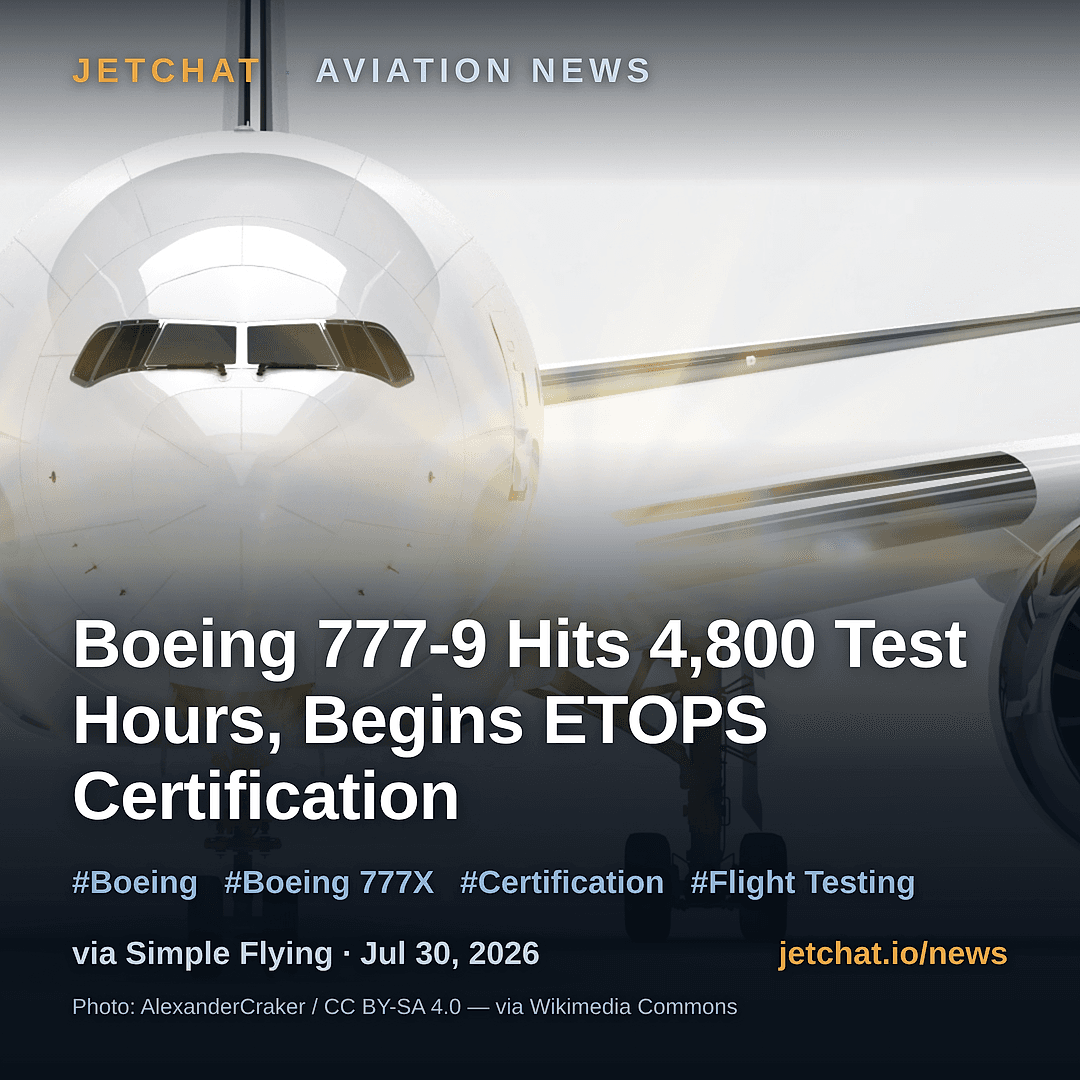
Boeing 777-9 Hits 4,800 Test Hours, Begins ETOPS Certification

The seventh Boeing 777-9 flight test aircraft took to the skies in late July, pushing the heavily delayed 777X certification program past the 4,800-hour mark. This specific airframe will focus exclusively on Extended-range Twin-engine Operational Performance Standards testing, a crucial hurdle before the widebody can legally fly long-haul overwater routes. For aspiring airline pilots, the progress of this folding-wingtip giant signals that long-haul fleet modernization is finally advancing, eventually opening up heavy-jet seat opportunities.

industry

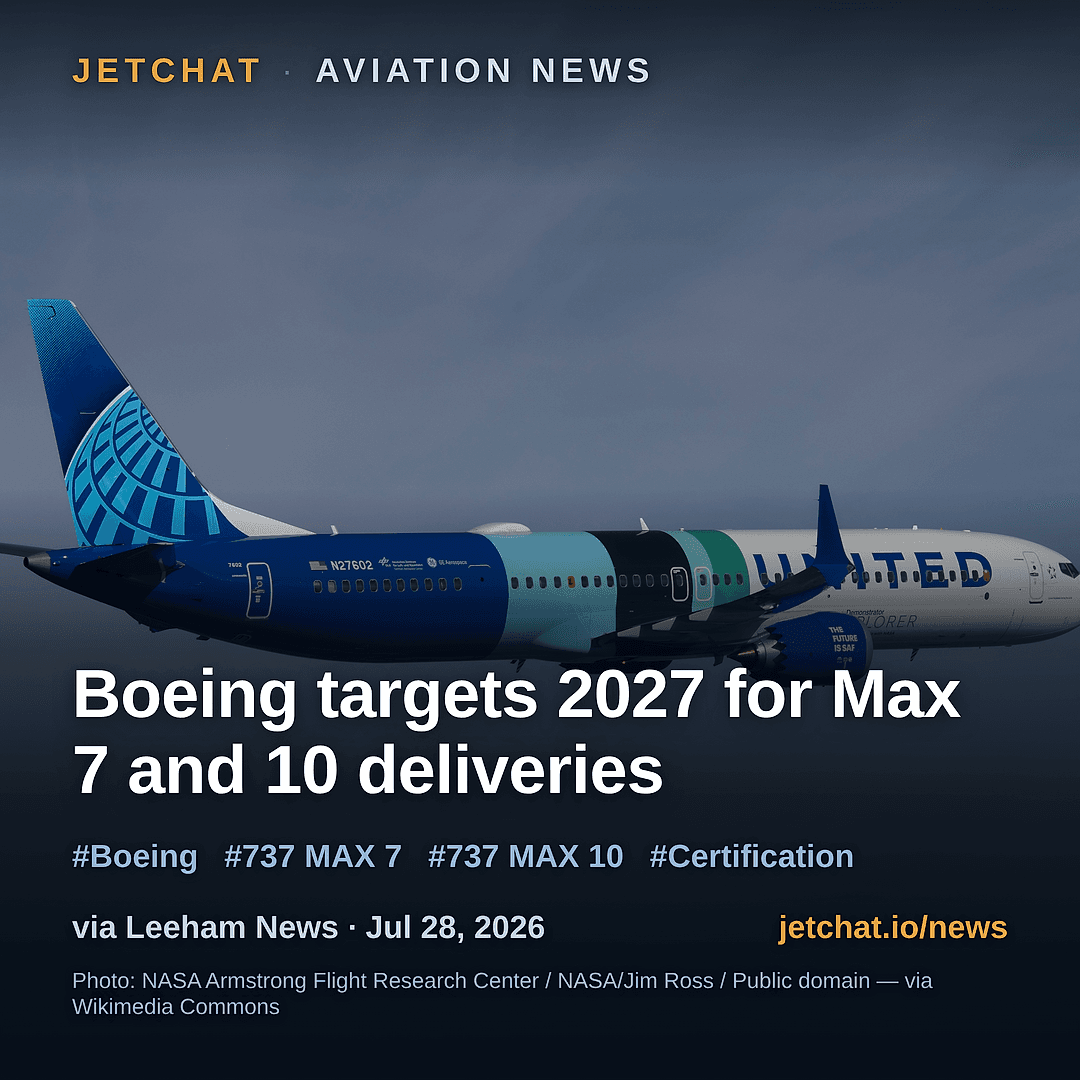
Boeing targets 2027 for Max 7 and 10 deliveries

Boeing chief executive Kelly Ortberg recently outlined a revised timeline for the certification and entry into service of the company's remaining 737 variants. The aerospace manufacturer now anticipates delivering the first Max 7 and Max 10 airframes to customers in 2027, alongside a broader financial forecast predicting depressed profit margins through the end of the decade. For aspiring airline pilots, this timeline provides crucial insight into when major carriers will actually receive these long-awaited narrowbody aircraft and begin hiring to crew them.

industry

GE Pauses 777X Engine Deliveries to Fix Durability Issue

General Electric has temporarily stopped delivering its GE9X turbofan engines to Boeing as it works to resolve a known defect involving a cracked mid-seal. Boeing anticipates that shipments will resume later this quarter once regulators approve the final hardware modifications. Despite the supply chain pause, the airframer maintains that the overall aircraft certification schedule remains on track for initial deliveries next year. For aspiring heavy-jet pilots, this highlights the rigorous and often turbulent regulatory journey new widebody aircraft face during the final phases of flight testing.

industry

Boeing to accelerate next-generation jet development post-Max certification

Boeing intends to significantly increase research and development on its next clean-sheet aircraft design once it secures final approvals for the 737 Max 7, Max 10, and 777-9. By wrapping up these delayed projects and scaling up narrowbody production rates, the manufacturer hopes to free up essential engineering talent and generate the cash needed for a massive new program. For aspiring airline pilots, this timeline suggests the workhorse aircraft you fly at the start of your career will remain the current generation of jets well into the late 2030s.

industry

Boeing's Folding Wingtip: From 1990s Concept to 777X Reality

The upcoming Boeing 777X incorporates a folding wingtip design initially explored by the manufacturer during the 1990s. While the original 777 dominated long-haul routes for decades, increased competition from highly efficient airframes like the Airbus A350 and Boeing 787 necessitated a massive aerodynamic upgrade. By utilizing advanced carbon-composite materials and modern powerplants, the new model achieves unprecedented range and fuel economy. For future airline pilots, mastering the automated wing-fold procedures will become a standard but fascinating part of heavy jet ground operations.

safety

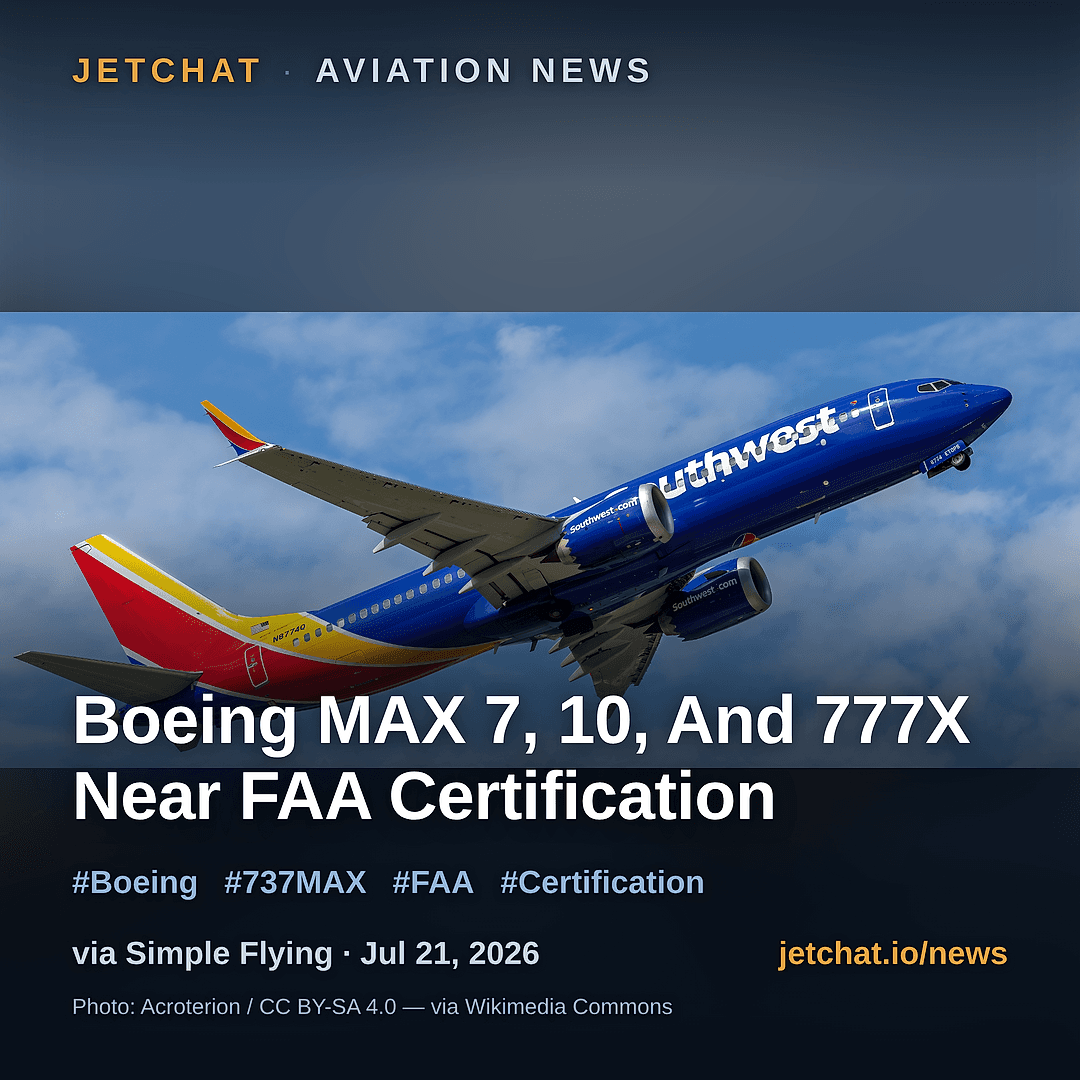
Boeing MAX 7, 10, And 777X Near FAA Certification

The Federal Aviation Administration anticipates approving three highly anticipated Boeing airframes in the near future. Speaking at the Farnborough Airshow, a senior agency official indicated that the 737 MAX 7, MAX 10, and the widebody 777X are all nearing the end of their rigorous regulatory reviews. For aspiring airline pilots and current crews, these impending aircraft introductions signal substantial fleet expansions and a subsequent wave of new type rating training opportunities across major carriers.