Boeing MAX 7, 10, And 777X Near FAA Certification
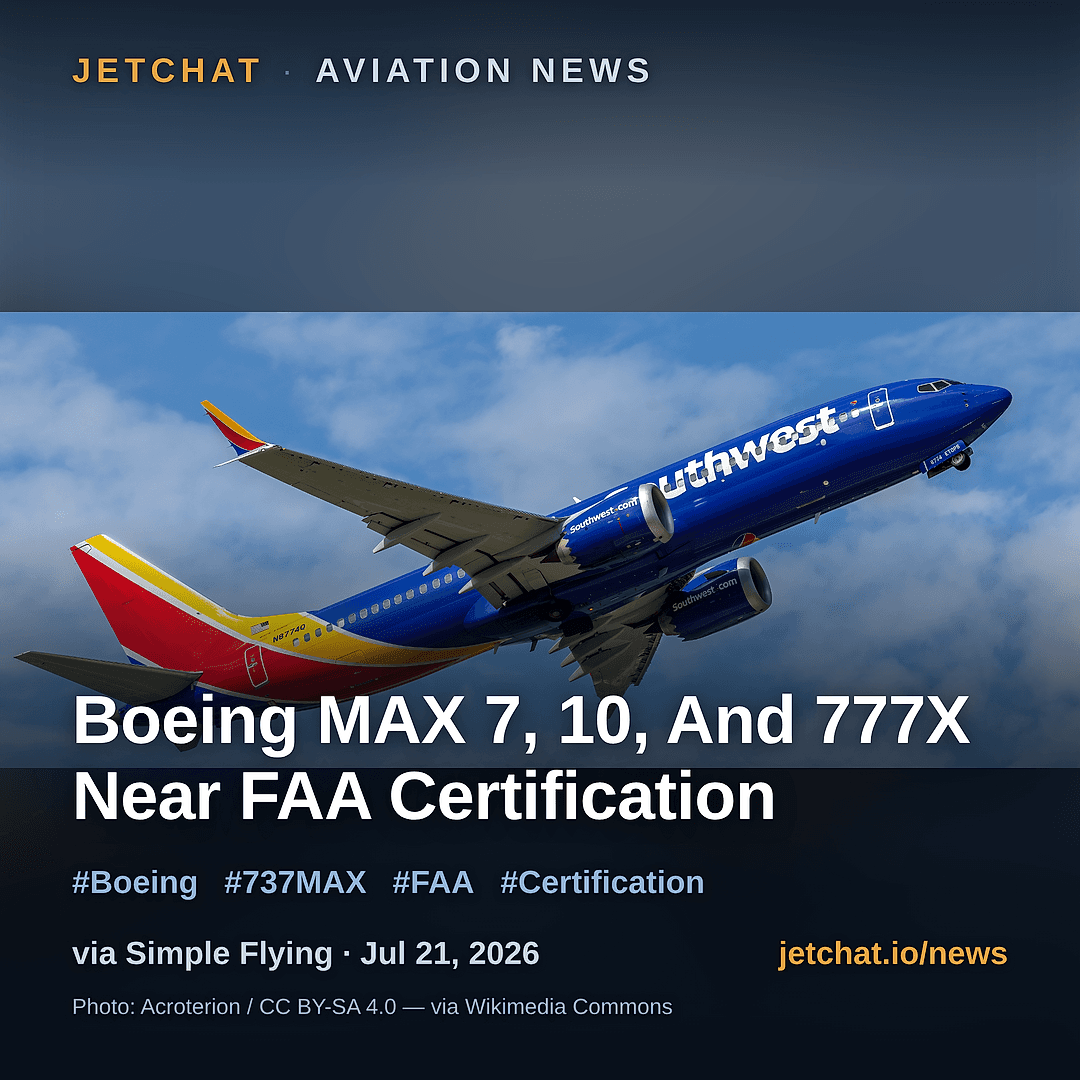
Photo: Acroterion / CC BY-SA 4.0 — via Wikimedia Commons (CC BY-SA 4.0) · source
The Federal Aviation Administration anticipates approving three highly anticipated Boeing airframes in the near future. Speaking at the Farnborough Airshow, a senior agency official indicated that the 737 MAX 7, MAX 10, and the widebody 777X are all nearing the end of their rigorous regulatory reviews. For aspiring airline pilots and current crews, these impending aircraft introductions signal substantial fleet expansions and a subsequent wave of new type rating training opportunities across major carriers.
Read the full take
The aviation industry has been closely watching the regulatory progress of Boeing's remaining 737 MAX variants and its flagship 777X. These aircraft represent a critical step for airlines looking to modernize their fleets with enhanced efficiency and increased passenger capacity. The regulatory journey for these jets has been exceptionally thorough, reflecting a modernized and highly stringent oversight approach following previous industry challenges. With the Federal Aviation Administration signaling that the finish line is approaching, carriers can finally solidify their long-term route planning and pilot hiring strategies. For the professional flying community, the introduction of the MAX 7, MAX 10, and 777X translates directly into upward mobility. The MAX 10, as the largest variant in the narrowbody family, will likely become a staple on high-demand domestic routes, requiring a massive influx of qualified first officers and captains. Meanwhile, the 777X will redefine ultra-long-haul international travel, creating highly coveted widebody command opportunities. Flight schools and training centers will soon need to adapt their simulator schedules to accommodate the wave of transition courses required for these new airframes. As these jets move from the testing phase to line operations, aspiring aviators should pay close attention to which airlines are taking the bulk of the deliveries, as this will heavily influence hiring waves and seniority progression over the next decade.