JetChat Newsjetchat.io ↗

Topic

#Avionics

← All briefs
safety

Bulgaria dismantles vehicle-mounted GPS jammer disrupting Sofia airspace

Security forces in Bulgaria successfully located and dismantled a vehicle-mounted GPS jammer on August 21 that disrupted navigation signals across Sofia airspace for several days. Air traffic controllers noticed the interference when arriving and departing aircraft lost satellite reception near Sofia Airport. Flight operations continued without delay as crews safely transitioned to conventional ground-based navigational aids. For pilots operating in Eastern Europe, this incident highlights the critical importance of maintaining proficiency with traditional VOR and ILS procedures when GNSS signals are compromised.

industry

NASA Awards $30 Million for AI Avionics and Aeronautics Research

The space agency has awarded roughly $30 million to four university-led teams exploring future aviation technologies, including artificial intelligence for aircraft flight decks. A Stanford University group will spend four years designing machine-learning algorithms to manage navigation and communications systems while maintaining strict safety margins. Other funded initiatives will explore Mach 4 hybrid turbofan-ramjet engines, urban noise reduction techniques, and streamlined certification processes. This early-stage research is crucial for pilots because it lays the groundwork for how advanced automation will safely integrate into the national airspace system.

industry

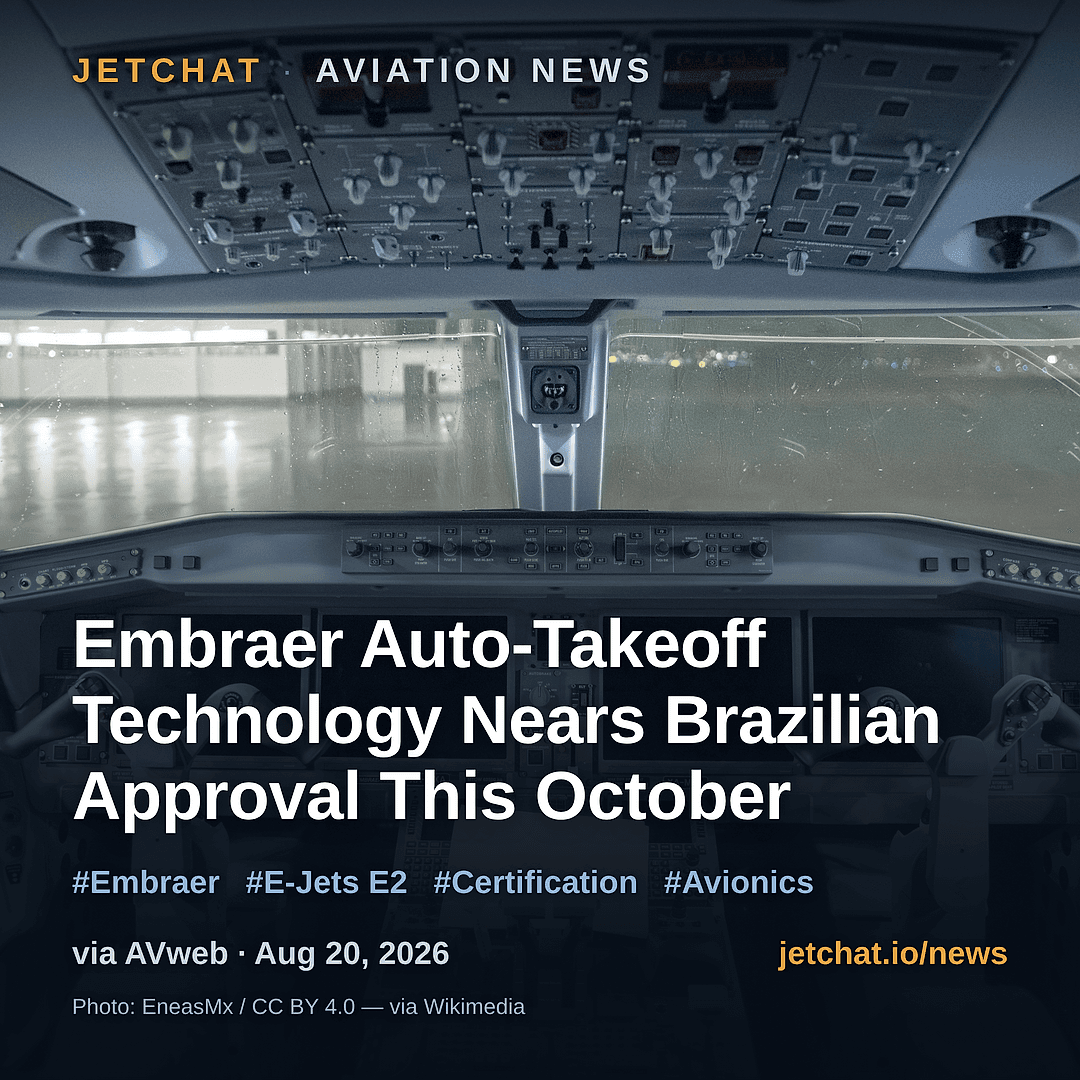
Embraer Auto-Takeoff Technology Nears Brazilian Approval This October

Aviation authorities in Brazil expect to grant regulatory approval for Embraer's novel auto-takeoff technology by October. Designed specifically for the E2 commercial jet lineup, the automation precisely executes the rotation and initial climb to maximize aircraft performance on restricted runways. Although human crews will still monitor the sequence and retain full override authority, this advancement represents a major evolution in cockpit automation that will redefine departure workloads for tomorrow's airline pilots.

safety

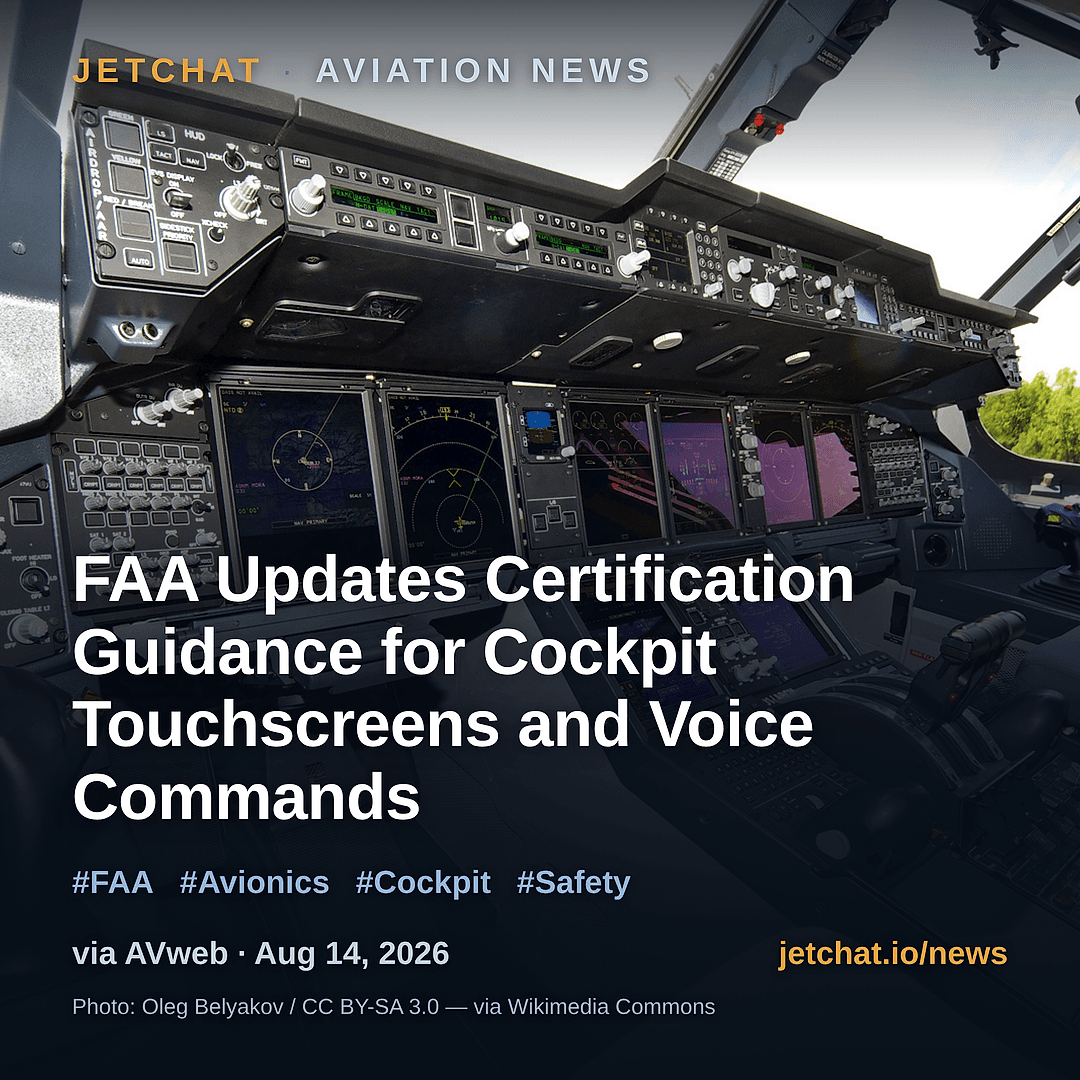
FAA Updates Certification Guidance for Cockpit Touchscreens and Voice Commands

The Federal Aviation Administration is seeking public comments through late September on updated certification guidelines for modern cockpit interfaces, including touchscreens and speech recognition. The proposed draft replaces a decade-old document, introducing strict standards for voice command success rates, manual control overrides, and touchscreen usability during turbulence. For pilots navigating increasingly digital flight decks, these proposed standards ensure that critical avionics remain reliably accessible when workload increases and that everyday cockpit hazards will not disable primary flight displays.

safety

Researchers detail 60-second physical hack targeting Boeing 737 avionics

Security researchers have revealed a proof-of-concept hardware attack capable of manipulating avionics data on Boeing 737 Next Generation and MAX aircraft. By accessing a dormant maintenance port in the forward electronics bay, an infiltrator could theoretically install a malicious device in just one minute to secretly alter critical flight plan and performance calculations. While Boeing maintains that existing operational safeguards severely limit real-world feasibility, this demonstration underscores the growing importance of aviation cybersecurity and the necessity for commercial flight crews to consistently cross-check automation inputs.

safety

Report: A320neo Flight Controls Briefly Failed Before Sudden Plunge

An internal manufacturer document reveals that the flight control computers on an Air India A320neo went offline for about four seconds before a sudden 300-foot drop at cruise altitude last August. The brief loss of elevator and aileron authority caused an uncommanded pitch-up, and the first officer's nose-down inputs were delayed by a temporary hydraulic loss, injuring 24 people. For line pilots, this incident underscores the critical importance of understanding fly-by-wire reversion modes during transient system failures.

ga training

Merlin Advances Autonomous Flight Software Toward New Zealand Certification

Aviation technology developer Merlin has successfully cleared the third Stage of Involvement review with New Zealand regulators for its autonomous flight system. This milestone specifically evaluates the software verification for both the platform's flight control computer and its artificial intelligence-driven automated communication system, which can interpret and respond to air traffic control. The process is being conducted alongside the FAA through a bilateral safety agreement. For working pilots, this progress signals a rapidly approaching reality where fully autonomous Part 23 aircraft share the airspace and communicate seamlessly with standard ATC facilities.

ga training

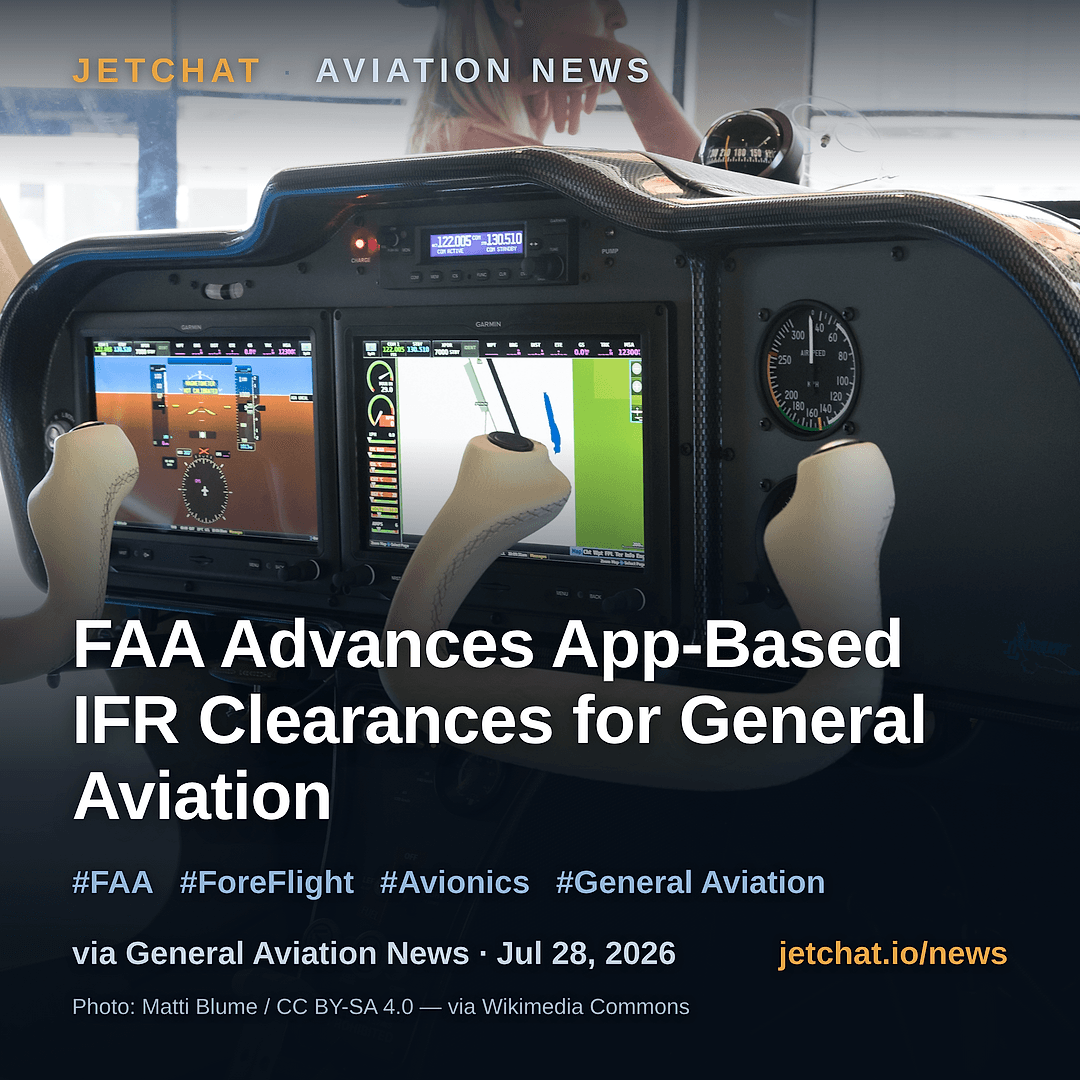
FAA Advances App-Based IFR Clearances for General Aviation

The Federal Aviation Administration is expanding its new Mobile Clearance program, which enables general aviation pilots to receive and cancel instrument flight rules clearances directly through apps like ForeFlight and Garmin. Tested at select airports this summer, the digital system will reach additional cities this fall before a planned nationwide rollout in 2027. For general aviation pilots, this transition from radio to digital text significantly minimizes readback errors and clears up radio congestion, ensuring smoother departures at busy airfields.

ga training

iFly EFB 14.1 Update Adds Dynamic Checklists and VFR Approaches

Adventure Pilot is rolling out version 14.1 of its iFly EFB application to streamline cockpit management. The update introduces context-aware checklists that automatically display relevant frequencies and runway data based on the active flight phase, alongside new VFR visual approach guidance and predictive turn routing. Users will also gain access to MOS weather integration and printable navigation logs. These adaptive tools allow pilots and flight instructors to spend less time navigating app menus and maintain better situational awareness during critical phases of flight.