Boeing 777-9 Hits 4,800 Test Hours, Begins ETOPS Certification
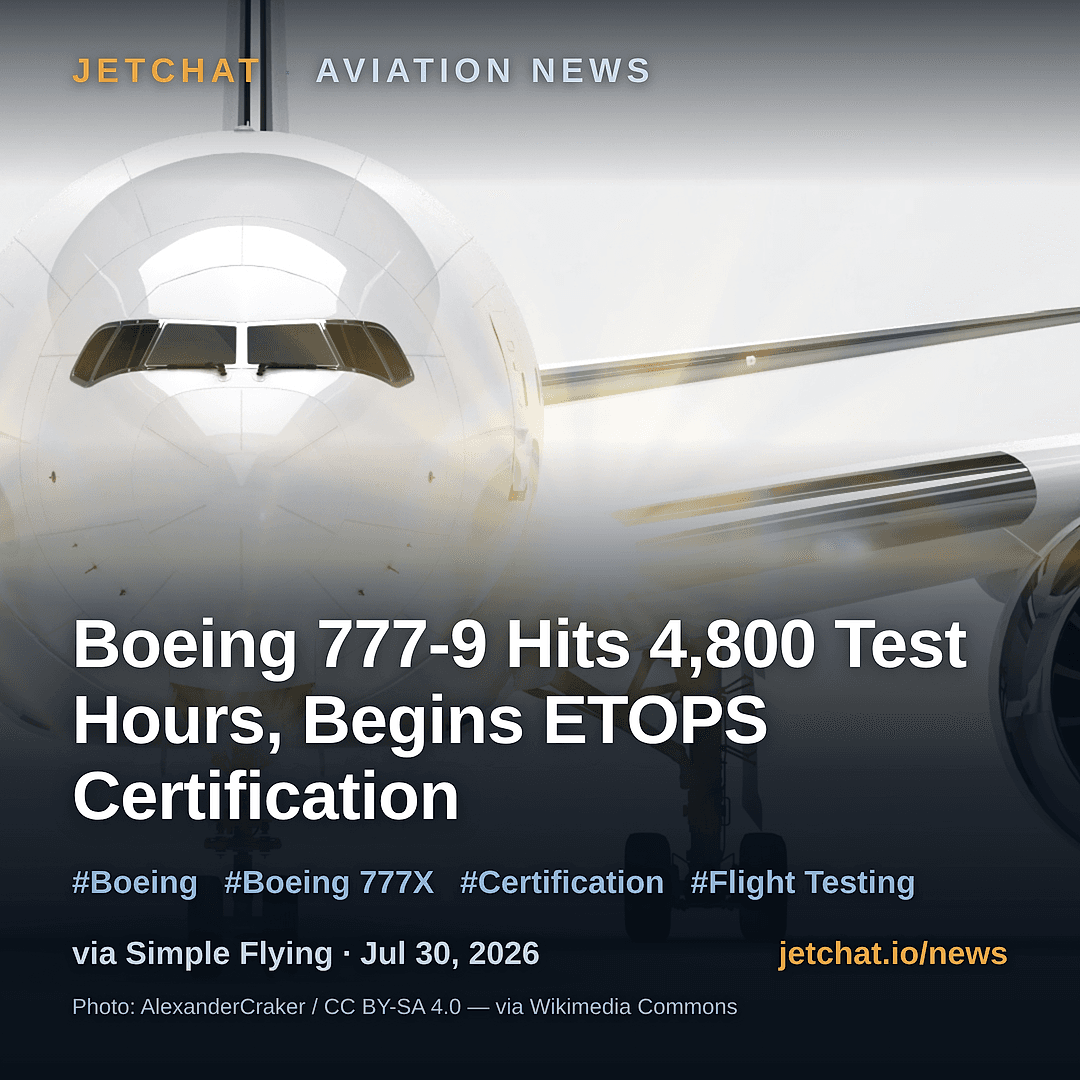
Photo: AlexanderCraker / CC BY-SA 4.0 — via Wikimedia Commons (CC BY-SA 4.0) · source
The seventh Boeing 777-9 flight test aircraft took to the skies in late July, pushing the heavily delayed 777X certification program past the 4,800-hour mark. This specific airframe will focus exclusively on Extended-range Twin-engine Operational Performance Standards testing, a crucial hurdle before the widebody can legally fly long-haul overwater routes. For aspiring airline pilots, the progress of this folding-wingtip giant signals that long-haul fleet modernization is finally advancing, eventually opening up heavy-jet seat opportunities.
Read the full take
The Boeing 777X program has faced a grueling road to certification, running roughly six years behind its initial schedule. However, logging 4,800 test hours and introducing the seventh airframe specifically for ETOPS validation represents a definitive turning point for the manufacturer. ETOPS certification dictates how far a twin-engine aircraft can fly from a suitable diversion airport if one powerplant fails. For a long-haul workhorse like the 777-9, securing a high ETOPS rating is absolutely essential for airlines operating transoceanic or polar routes. The new test aircraft will be subjected to rigorous single-engine performance demonstrations to prove its reliability over remote regions. For the aviation community, particularly commercial aviators eyeing the left seat of a heavy jet, the eventual entry into service of the 777-9 will reshape international route networks. The aircraft features composite wings with signature folding wingtips, allowing it to fit into standard Group V gates while offering immense aerodynamic efficiency in flight. As Boeing pushes through these final certification phases with regulators, the industry will be watching closely to see how the massive GE9X engines perform during the grueling ETOPS validation runs. Once approved, the 777-9 will become a flagship for operators worldwide, offering a modern replacement for aging fleets and expanding career pathways for the next generation of widebody crews.