Boeing Posts Engineering Contractor Jobs Amid Looming SPEEA Strike
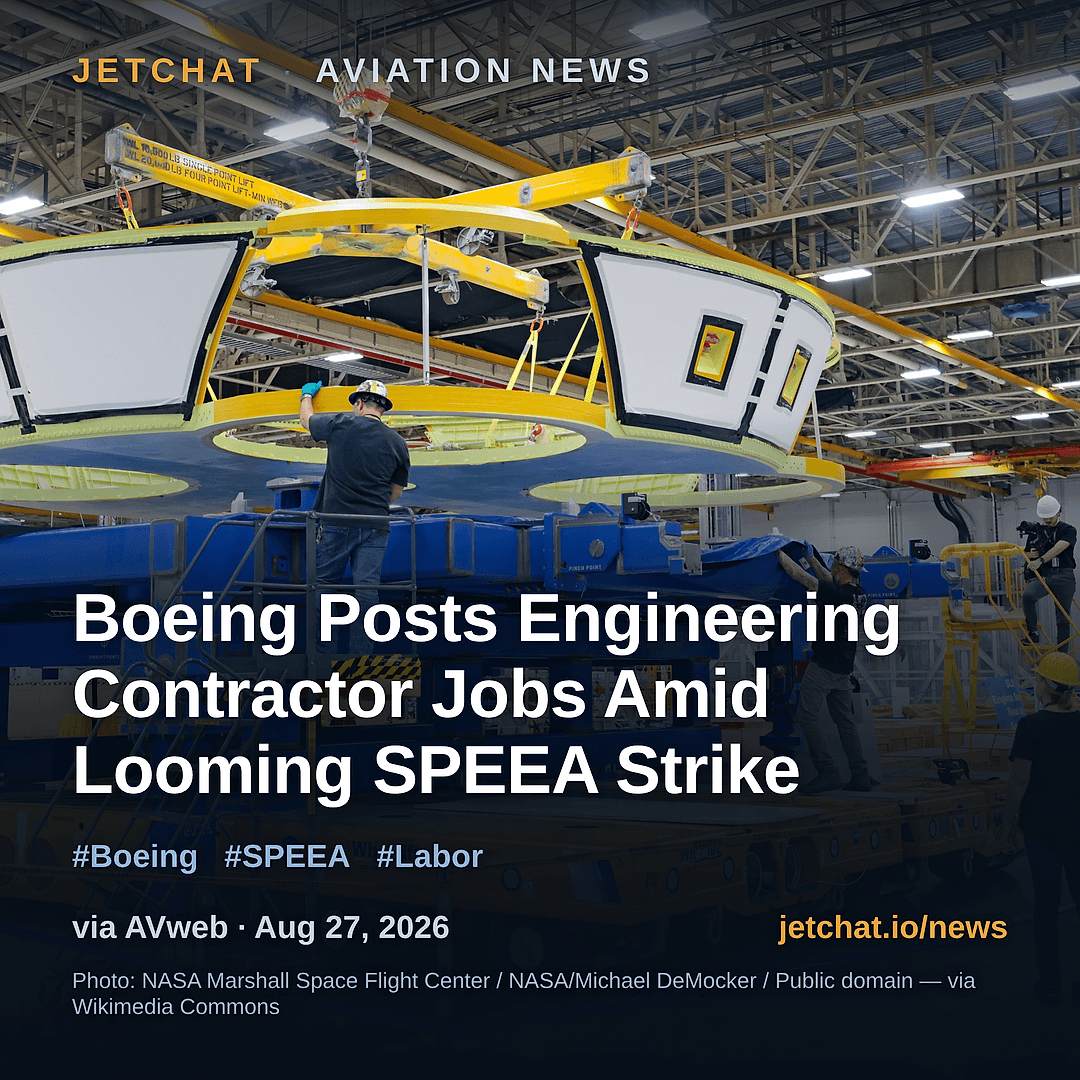
Photo: NASA Marshall Space Flight Center / NASA/Michael DeMocker / Public domain — via Wikimedia Commons (Public domain) · source
Boeing is actively recruiting engineering and technical contractors as a precaution against a potential strike by roughly 17,000 unionized professionals. Members of the Society of Professional Engineering Employees in Aerospace recently rejected a four-year contract offer and authorized a walkout that could begin as early as October 7. The manufacturer claims it is prioritizing business continuity and safety in its contingency planning. For aspiring airline pilots, another work stoppage could further delay the certification and delivery of aircraft like the 737 MAX 10, ultimately slowing airline hiring momentum.
Read the full take
This latest labor friction comes at a particularly vulnerable moment for Boeing, which is still recovering from a massive seven-week machinist strike earlier this year. While the previous walkout brought commercial manufacturing lines to a halt, a strike by the Society of Professional Engineering Employees in Aerospace threatens the intellectual and regulatory foundation of the aerospace giant. These engineers and technical experts are intimately involved in the complex certification processes required to get new airframes approved by the Federal Aviation Administration. A walkout on October 7 would almost certainly stall progress on the heavily delayed 737 MAX 10 and the widebody 777-9 programs. Bringing in temporary contractors might keep the lights on, but specialized aerospace engineering and regulatory compliance are not tasks easily handed off to temporary replacements without losing momentum. The union is already instructing its members on strike protocols, indicating that both parties are digging in for a tough negotiation period. For the broader aviation community, this labor dispute is a critical bottleneck to watch. Airlines are desperate for new airframes to meet capacity demands and cycle out older jets. If Boeing cannot resolve this dispute before the October deadline, the resulting certification delays will cascade through the industry. Slower deliveries mean airlines will be forced to adjust their route networks and fleet planning, which directly suppresses the recruitment of new first officers. Students and flight instructors should monitor this situation closely, as Boeing's labor relations directly influence the hiring waves at major carriers.