Boeing Reaches Positive Cash Flow Amid Rising Q2 Deliveries
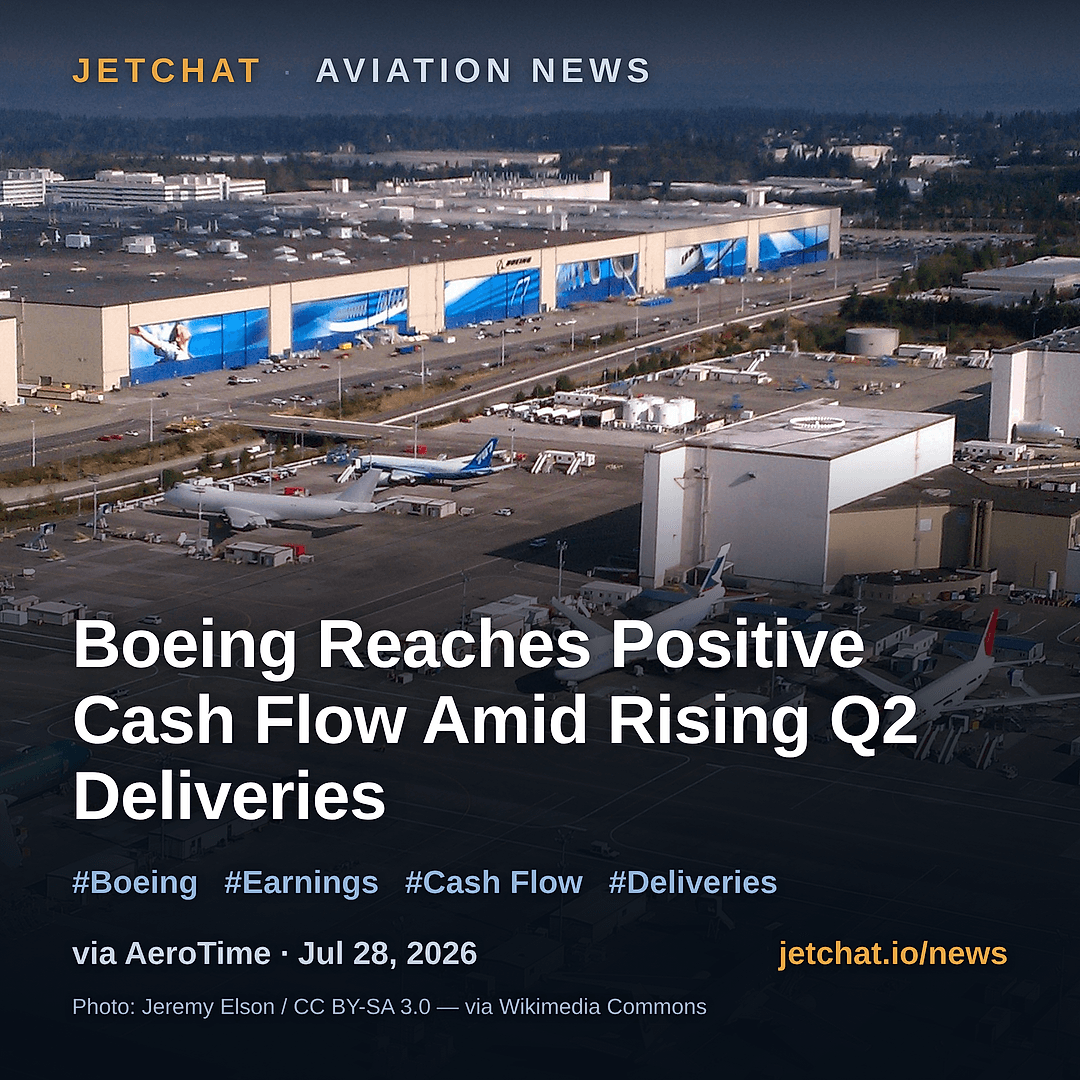
Photo: Jeremy Elson / CC BY-SA 3.0 — via Wikimedia Commons (CC BY-SA 3.0) · source
Boeing achieved a positive free cash flow of $631 million during the second quarter of 2026, driven by an eight percent revenue increase to over $24.5 billion. The aerospace manufacturer handed over 171 commercial jets during this period, marking its strongest quarterly output in eight years and significantly narrowing overall financial losses. For commercial aviation professionals, sustained manufacturing momentum signals robust future hiring demands as airlines finally receive long-delayed fleet additions.
Read the full take
The shift from a massive cash burn earlier this year to a positive cash flow highlights a critical stabilization phase for Boeing’s commercial aviation division. By moving towards a production rate of forty-seven 737 series aircraft per month and firing up a fourth assembly line in Everett, the manufacturer is finally clearing the bottlenecks that have frustrated airline network planners. This industrial recovery directly impacts the career progression of aspiring airline pilots, as fleet growth dictates pilot hiring and upgrade timelines at major carriers. Furthermore, the regulatory milestones achieved this quarter offer a glimpse into the future operating environment. With flight testing concluded for both the 737-7 and the stretched 737-10 models, the industry expects Federal Aviation Administration certification by the end of 2026. Simultaneously, the widebody sector received a boost as the flagship 777X program entered a crucial phase of flight testing, keeping the aircraft on track for its revised 2027 entry into service. Despite these commercial victories, the defense sector remains a persistent financial drag, largely due to continued cost overruns associated with the highly customized presidential transport replacements. However, a record-setting total backlog provides a massive financial buffer. Observers and line pilots alike should watch whether Boeing can maintain this manufacturing rhythm through the second half of the year without sacrificing quality control or stumbling over supply chain disruptions.