Emirates rejects early 777X jets while eyeing larger variant
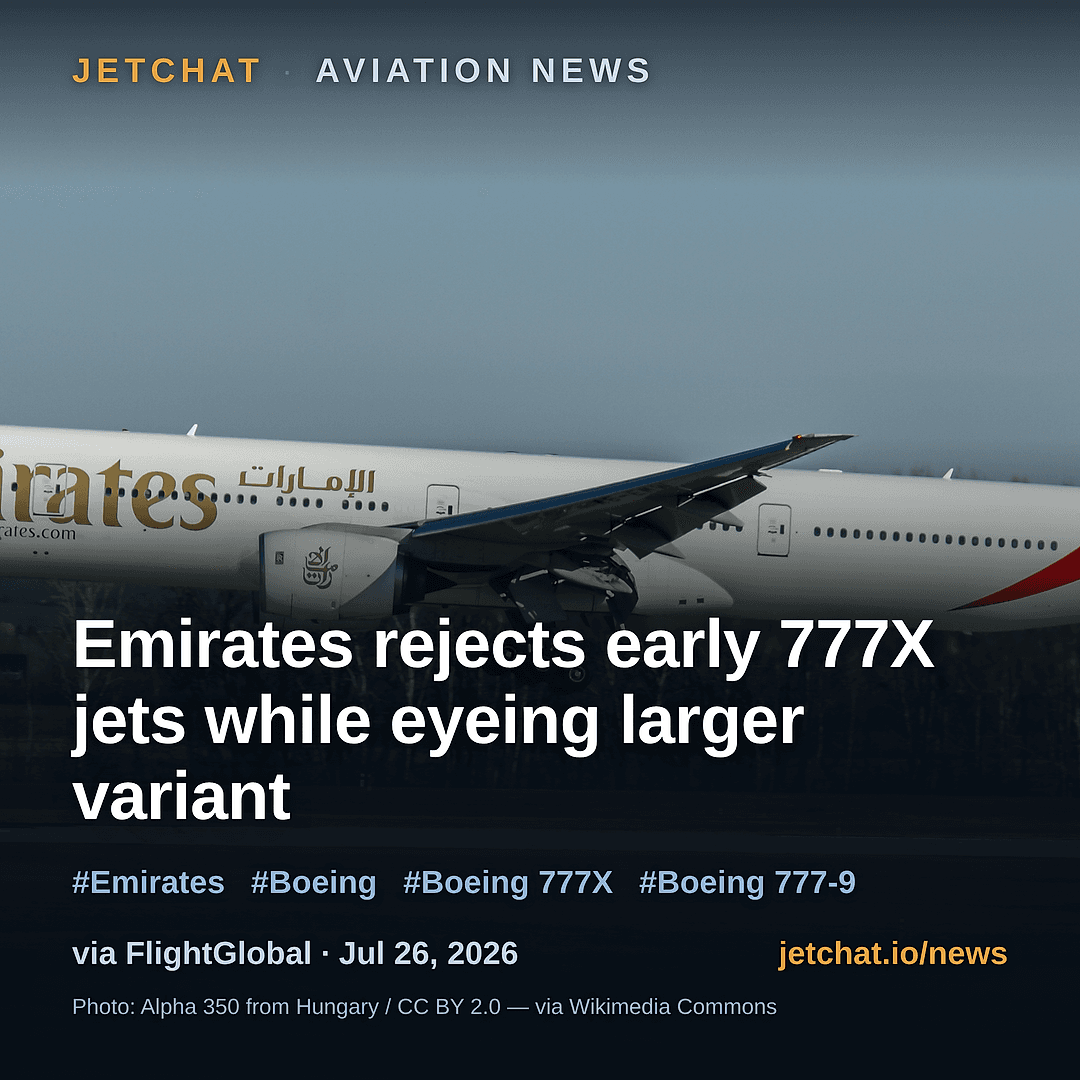
Photo: Alpha 350 from Hungary / CC BY 2.0 — via Wikimedia Commons (CC BY 2.0) · source
Emirates President Tim Clark confirmed the airline will not accept its initial batch of early-build Boeing 777-9s, citing their age and the massive rework required to meet current delivery standards. Instead, the carrier is eagerly anticipating its first fresh 777-9 in mid-2027 and believes Boeing’s prolonged testing data supports stretching the airframe into a larger 777-10 model. For aspiring airline pilots, this saga highlights how certification delays can drastically shift fleet procurement strategies, potentially creating opportunities on entirely new widebody variants.
Read the full take
The saga of the Boeing 777X highlights a harsh reality of aircraft development: protracted certification battles carry immense logistical and financial ripple effects. Boeing constructed dozens of early 777-9 airframes prior to the pandemic, intending to deliver them once flight testing concluded. Now, years later, bringing these jets up to final production standards requires complex, invasive modifications. Emirates, originally slated to take about a dozen of these initial frames, has formally declined them, arguing that receiving eight-year-old jets essentially equates to taking delivery of half-life aircraft. Boeing is now left to either heavily discount these legacy frames or scrap them entirely. Despite the delivery setbacks, Emirates remains deeply invested in the program's future. Extensive delays have inadvertently yielded a silver lining for the manufacturer: thousands of hours of supplementary testing data. This rigorous evaluation has revealed higher maximum takeoff weight limits and enhanced thrust metrics from the GE Aerospace engines. Emirates leadership argues this robust performance profile provides Boeing with the structural foundation necessary to develop a stretched 777-10. The concept has reportedly even pushed rival Airbus to consider stretching its A350 past the -1000 variant to compete. For future airline pilots, the continued evolution of the widebody market promises a dynamic equipment landscape. When the 777-9 eventually enters service around 2027, it will likely do so as one of the most exhaustively vetted airliners in history. Meanwhile, the prospect of even larger twin-engine platforms dominating long-haul routes signifies that mega-twins will define the pinnacle of international flying for decades to come.