First Electric Aircraft Flights Launch Massive FAA Integration Trial
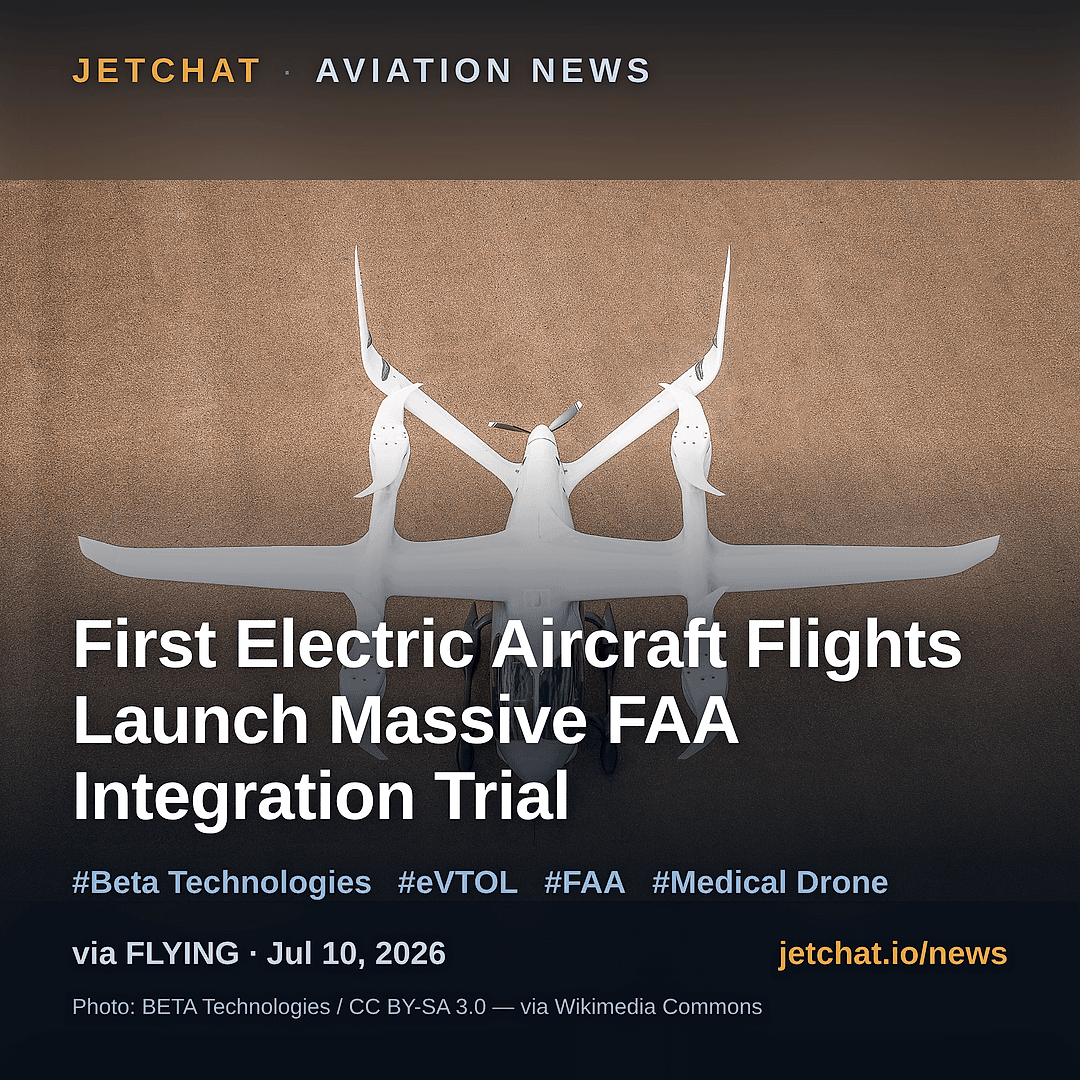
Photo: BETA Technologies / CC BY-SA 3.0 — via Wikimedia Commons (CC BY-SA 3.0) · source
The Federal Aviation Administration and Department of Transportation have officially started a massive three-year trial to test electric and autonomous aircraft across 26 states. Beta Technologies logged the program's inaugural flights, successfully moving medical cargo between airports in Virginia and Maryland using its all-electric Alia CX300. The data gathered from these real-world operations will heavily influence permanent federal aviation regulations. For pilots, these trials matter because they will directly shape the airspace rules and training requirements for flying alongside a new generation of powered-lift aircraft.
Read the full take
The launch of the eVTOL Integration Pilot Program marks a pivotal shift from theoretical rulemaking to practical, real-world data collection. While the aviation industry has heavily anticipated the arrival of electric vertical takeoff and landing aircraft, integrating them into the national airspace system presents major regulatory hurdles. The FAA recently issued a temporary Special Federal Aviation Regulation to outline initial pilot training and operational standards for powered-lift aircraft, but those rules expire in a decade. This new pilot program is designed to provide the concrete data needed to draft permanent, long-term regulations. Beta Technologies kicked off the multi-state initiative by flying medical payloads between regional airports in Maryland and Virginia. Moving forward, the consortium will expand to include a broad spectrum of aviation technology developers, including Joby, Archer, Wisk, and Electra. These companies will test various platforms ranging from hybrid-electric short-takeoff aircraft to autonomous cargo systems in everyday operational environments. The goal is to evaluate how these vehicles handle diverse weather conditions, daily payload demands, and ground infrastructure limitations like battery charging. For the aviation community, this program is the true testing ground for future traffic management. As these trials scale up over the next three years, traditional pilots can expect to see more electric and autonomous aircraft sharing the pattern at regional airports. The insights gathered will determine how air traffic control manages mixed-performance traffic and what kind of certification standards future aviators will need to fly commercial powered-lift missions. It is a critical stepping stone that will define the airspace regulatory landscape for decades to come.