Fractured CFM56 blade caused Malta Air 737 window puncture
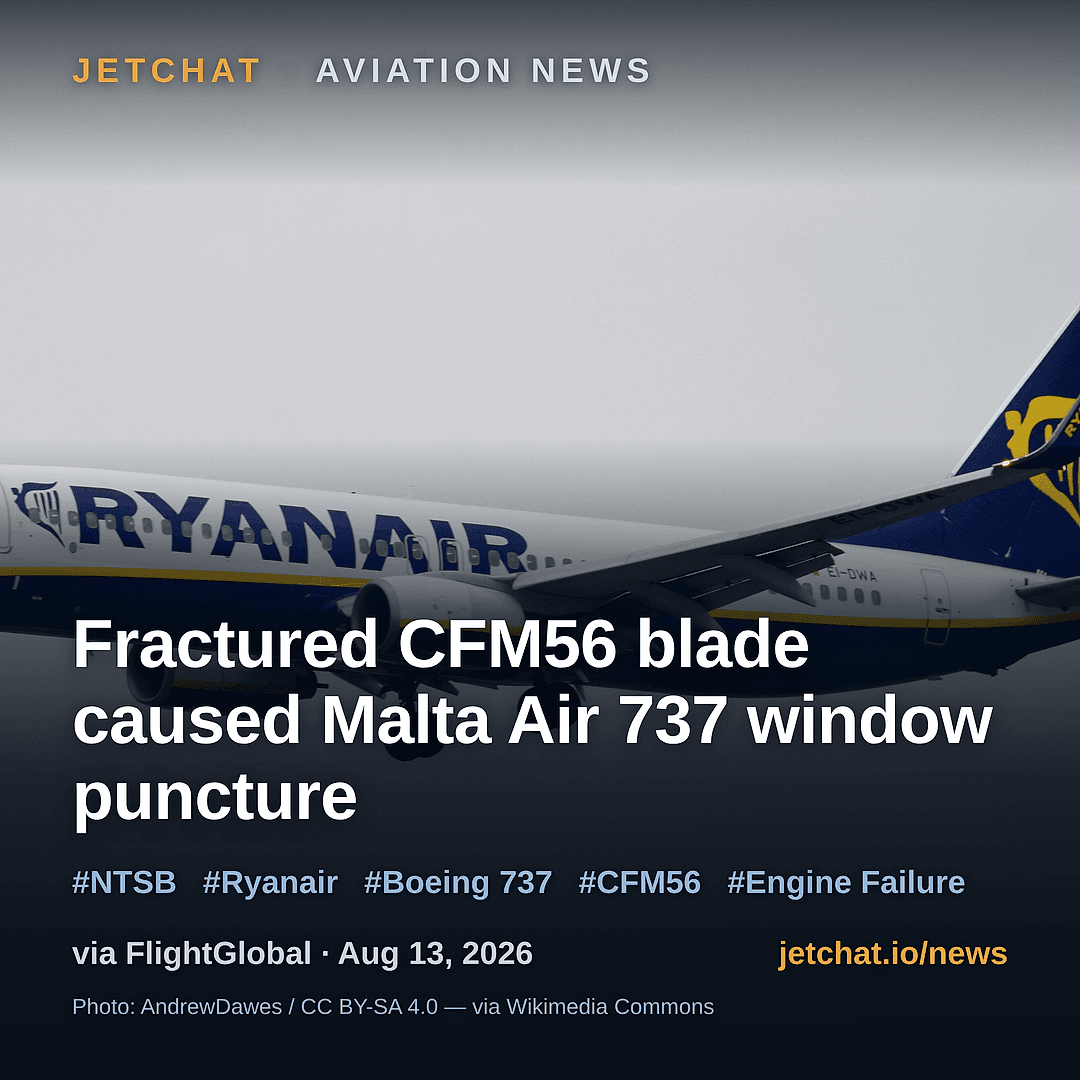
Photo: AndrewDawes / CC BY-SA 4.0 — via Wikimedia Commons (CC BY-SA 4.0) · source
US investigators found that a broken CFM56 fan blade punctured the engine inlet cowl of a Malta Air Boeing 737-800 during a July flight, causing debris to shatter a passenger window and trigger a rapid depressurization. The blade snapped at its root due to suspected metal fatigue, though inspectors also discovered bird remains inside the powerplant. This incident matters to airline crews because it highlights how forward-thrown engine debris can bypass fan-case containment shielding and threaten fuselage integrity, even after routine ultrasonic blade inspections.
Read the full take
The preliminary findings from the National Transportation Safety Board reveal a complex sequence of events that will immediately remind line pilots of the fatal 2018 Southwest Airlines incident. In this recent event involving a Ryanair Group subsidiary, a Boeing 737-800 climbing out of Greece experienced severe right-engine vibrations followed by a catastrophic failure. A fan blade separated at the root and ejected forward. While the engine's primary containment casing successfully prevented radial shrapnel from escaping, the errant blade punctured the forward inlet cowl. The resulting debris struck the fuselage and horizontal stabilizer, shattering a window at row eleven and partially pulling a passenger through the opening during the subsequent rapid depressurization. What makes this investigation particularly significant for commercial operators is the maintenance history of the CFM56 powerplant. The fractured blade exhibited clear signs of metal fatigue at its dovetail root. However, records show this exact engine underwent mandated ultrasonic testing just a few months prior, with zero defects noted. Those testing protocols were specifically implemented across the global fleet following the Southwest tragedy to catch microscopic stress fractures before they could propagate. Further complicating the forensic analysis is the discovery of bird feathers within the engine wreckage. Flight crews had previously reported multiple suspected bird strikes on this specific engine over the preceding year. Investigators are now tasked with determining whether repeated avian impacts accelerated the metal fatigue that ultimately compromised the blade root. For pilots and maintenance professionals, the final report will likely dictate whether current ultrasonic inspection intervals are sufficient or if regulatory agencies will need to mandate stricter diagnostic requirements for the ubiquitous CFM56 engine family.