Proposed FAA supersonic overpressure limits face environmental and industry backlash
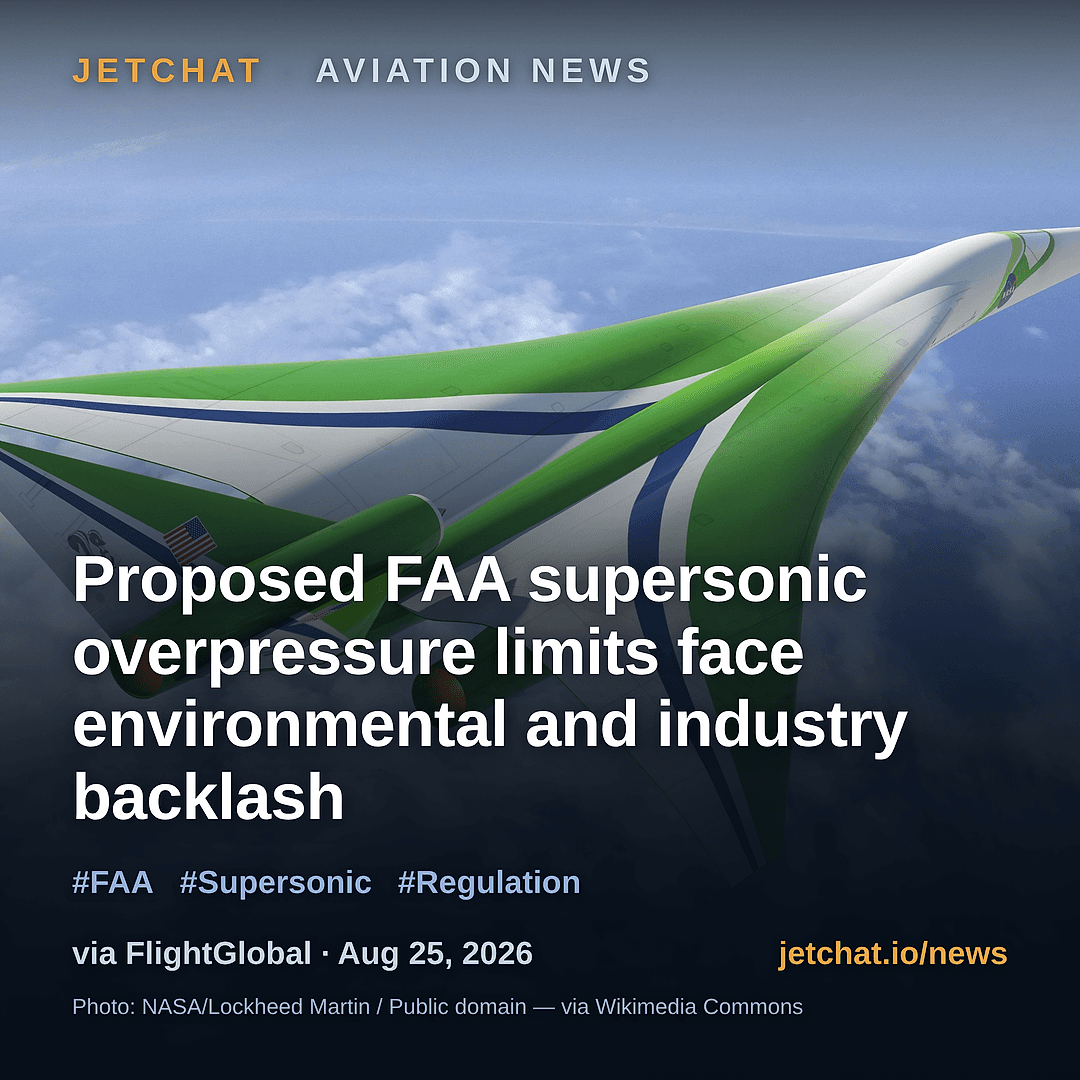
Photo: NASA/Lockheed Martin / Public domain — via Wikimedia Commons (Public domain) · source
The FAA’s proposal to replace the decades-old civilian supersonic flight ban with a pressure-based noise metric is facing steep resistance from environmental groups and aviation stakeholders. The plan would permit supersonic flight over land if the resulting shockwave remains below 0.11 pounds per square foot of overpressure at ground level. However, critics argue this metric fails to capture human annoyance and fluctuates unpredictably with atmospheric conditions, meaning future supersonic pilots could face significant operational liabilities when managing these profiles in shifting weather.
Read the full take
Reversing the 1973 prohibition on civilian supersonic flight over land has long been a holy grail for the modern aerospace sector, but the FAA's strategy for achieving it is under heavy scrutiny. Instead of a blanket speed limit, the agency wants to cap the physical force of a sonic boom reaching the surface, setting an overpressure threshold of 0.11 pounds per square foot. To meet this standard, future supersonic airliners would likely fly in a regime known as Mach cutoff. By managing speeds under specific atmospheric conditions, pilots can theoretically ensure that downward-propagating shockwaves encounter warmer air and refract upward before hitting the ground, leaving only a low rumble below. While aerospace lobbyists praise the framework, opposition is mounting from an unusual coalition of environmental advocates and aviation industry veterans. Organizations point out that measuring raw overpressure ignores how humans actually perceive noise, prompting threats of legal challenges over the lack of acoustic data. More practically for aviators, engine manufacturers and the Air Line Pilots Association have highlighted the sheer difficulty of maintaining a compliant Mach cutoff profile. Because shockwave propagation depends entirely on dynamic variables like temperature, wind shear, and humidity, ensuring a flight does not exceed the overpressure limit in real-world weather presents a massive operational challenge. Critics are urging the FAA to delay final rulemaking until NASA concludes its community overflight tests with the X-59 experimental aircraft, which is specifically designed to gather the exact human-response data the current proposal lacks. Until then, the path to a supersonic renaissance remains tangled in regulatory turbulence.