UPS MD-11 engine separation highlights single point of failure
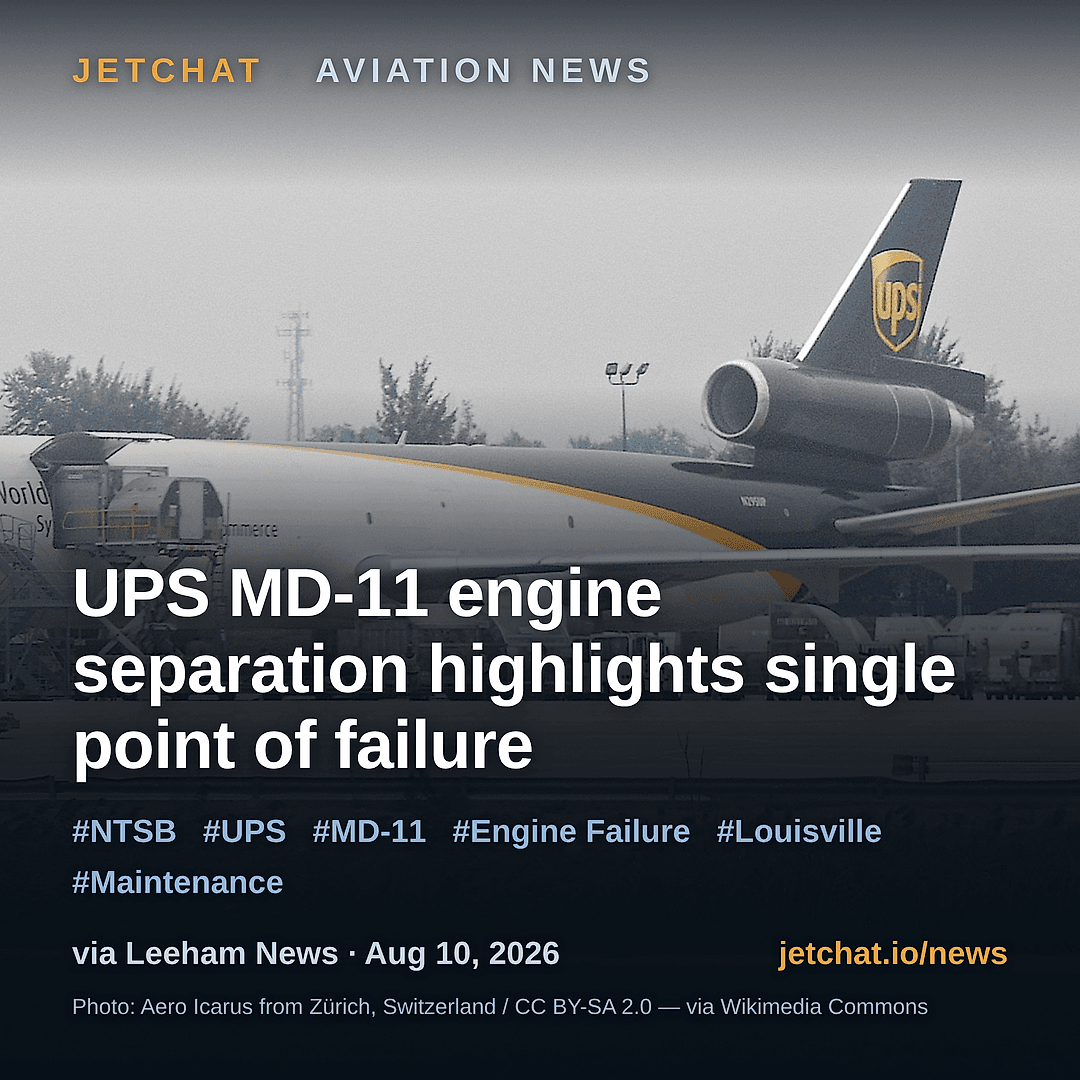
Photo: Aero Icarus from Zürich, Switzerland / CC BY-SA 2.0 — via Wikimedia Commons (CC BY-SA 2.0) · source
On November 4, 2025, a UPS McDonnell Douglas MD-11 freighter experienced a catastrophic engine separation while operating at Louisville Muhammad Ali International Airport. The incident occurred during a normal taxi and takeoff roll on Runway 17R, resulting in the powerplant physically detaching from the aircraft wing. Investigators are treating the event as a stark reminder of the dangers associated with single points of failure in legacy transport category aircraft. For pilots, this underscores the importance of rigorous preflight inspections and remaining vigilant for abnormal engine indications during takeoff.
Read the full take
When an engine physically separates from an aircraft wing, it evokes some of the most profound safety lessons in commercial aviation history. The November 2025 incident involving a UPS McDonnell Douglas MD-11 at Louisville Muhammad Ali International Airport serves as a modern case study in structural integrity and systems engineering. While the MD-11 has a robust operational history, primarily as a global heavy freighter, its design relies on structural shear pins intended to break away cleanly during specific overload scenarios, theoretically preventing the engine from tearing the wing apart. However, unintended engine separations highlight the vulnerabilities of single points of failure within these aging heavy lift platforms. For aspiring airline pilots and current flight crews, this event emphasizes that emergencies are rarely confined to the standard engine failure profiles trained in the simulator. A departing powerplant dramatically alters the aircraft center of gravity, aerodynamic profile, and hydraulic architecture in a matter of seconds. As the investigation progresses, industry safety experts will likely focus on metal fatigue, maintenance practices, and the historical data surrounding pylon mounting structures. Aviation enthusiasts and professionals alike should watch for upcoming airworthiness directives concerning pylon inspections on legacy widebody freighters. The findings will not only dictate future maintenance schedules for the remaining MD-11 fleet but also reinforce how historical design philosophies hold up against the rigors of modern cargo operations. Ultimately, it is a potent reminder that understanding structural limitations is just as vital as mastering the flight management computer.