JetChat Newsjetchat.io ↗

JetChat Aviation News

Short, human-curated aviation briefs for pilots and enthusiasts.

finance

Embraer backlog reaches record $34.5 billion in second quarter

Embraer reported an all-time high order backlog of $34.5 billion for the second quarter of 2026, marking steady financial growth across all four of its primary business sectors. The commercial division experienced a significant boost, officially surpassing 500 total firm orders for the E2 jet family. The manufacturer also secured a major military contract in the Middle East and maintained steady aircraft deliveries. For aspiring airline pilots, this continued production growth signals long-term stability and hiring potential across operators flying modern E-Jet fleets.


safety

Conflicting Crew Accounts Follow Challenger 601 Road Landing Incident

Nigerian authorities are investigating a June incident where a US-registered Bombardier Challenger 601 inadvertently landed on a construction road near Asaba airport following a missed approach. The investigation is plagued by missing air traffic audio, unusable flight recorder data, and starkly differing testimonies between the operating crew and a cockpit observer regarding ground-proximity warnings. This bizarre sequence highlights how confirmation bias and poor crew resource management during instrument meteorological conditions can lead to catastrophic misidentifications.

safety

US air traffic control modernization trails Canada's nonprofit approach

Despite billions of dollars in continued government funding, the United States air traffic control system continues to struggle with severe staffing shortages and outdated technology. Industry observers are pointing to Canada's NAV CANADA as a viable alternative, noting that its transition to a user-funded, nonprofit corporation separated from government regulation three decades ago allowed for faster modernization. For pilots navigating increasingly congested airspace, the debate over infrastructure management directly impacts flight safety, route efficiency, and the daily reliability of clearance delivery.

airlines

Emirates rejects early 777X jets while eyeing larger variant

Emirates President Tim Clark confirmed the airline will not accept its initial batch of early-build Boeing 777-9s, citing their age and the massive rework required to meet current delivery standards. Instead, the carrier is eagerly anticipating its first fresh 777-9 in mid-2027 and believes Boeing’s prolonged testing data supports stretching the airframe into a larger 777-10 model. For aspiring airline pilots, this saga highlights how certification delays can drastically shift fleet procurement strategies, potentially creating opportunities on entirely new widebody variants.

airlines

FAA Certification Looms for Boeing 737 MAX 7 in 2026

The Federal Aviation Administration is expected to certify the Boeing 737 MAX 7 by late July 2026 following extensive modifications to the engine heating mechanisms. This regulatory milestone paves the way for Southwest Airlines to introduce the narrowbody jet into scheduled service during the initial months of 2027. The Dallas-based carrier holds orders for over three hundred airframes to replace its legacy fleet. For aspiring airline pilots, this timeline solidifies hiring and training trajectories at a major carrier committed to maintaining a single-type rating requirement.

airlines

United Airlines Pauses Big Merger Dreams Amid Industry Slowdown

United Airlines Chief Executive Officer Scott Kirby has historically championed massive deals to keep pace with industry giants like Delta and American. However, the appetite for massive airline consolidation has recently hit a wall across the entire sector. With sweeping regulatory pushback chilling recent acquisition attempts, United is shifting its strategy away from blockbuster buyouts. For aspiring airline pilots, stalled mergers mean more distinct regional pathways and separate corporate cultures rather than a rapidly shrinking pool of legacy mega-carriers.

safety

Fatal Kitfox Crash Highlights Crosswind Tailwheel Takeoff Risks

The NTSB determined that a fatal July 2024 Kitfox crash in Pennsylvania resulted from the pilot losing directional control during a crosswind takeoff. Departing a narrow forty-foot asphalt runway, the pilot raised the tailwheel, prompting an immediate hard left turn off the pavement and into a cornfield. While the flying pilot suffered minor injuries, a passenger was killed when the right main landing gear collapsed. This accident serves as a critical reminder for aviators to maintain aggressive rudder inputs and proper aileron deflection during crosswind departures in conventional gear aircraft.

safety

FAA mandates 5G-tolerant altimeters ahead of C-band auction

The FAA will issue a final rule in July 2026 mandating that all aircraft operating in the United States equip with 5G-tolerant radio altimeters. This decision aligns with a newly approved Federal Communications Commission plan to auction additional C-band spectrum directly adjacent to aviation frequencies. The transition features staggered deadlines, prioritizing scheduled air carriers before extending to general aviation, backed by an FCC rebate program to help offset billions in estimated retrofit costs. For pilots, this ensures reliable terrain awareness and low-visibility landing capabilities without future cellular interference.

safety

Two American Airlines 777s Divert Successively on London Route

An American Airlines transatlantic flight originating in Massachusetts experienced two consecutive diversions due to unrelated mechanical failures on July 20. The initial Boeing 777-200ER relocated to New York after its landing gear failed to stow, prompting a swap to a second airframe which subsequently aborted its Atlantic crossing over an engine malfunction and returned to the original departure airport. For professional aviators, this unusual sequence highlights the logistical complexities of widebody dispatch reliability and the critical nature of standard operating procedures during cascading operational disruptions.

industry

Turbotech micro-turbine secures production deals for new light aircraft

A French-designed micro-turbine is transitioning from experimental prototypes to production airframes, securing agreements with manufacturers like Elixir Aircraft and CubCrafters. Turbotech’s regenerative engine captures exhaust heat to pre-warm incoming air, reducing fuel consumption to levels comparable with traditional piston powerplants. Offering multi-fuel capability, digital push-button starts, and a projected 3,000-hour time between overhauls, this technological shift promises flight schools and backcountry pilots significantly simplified engine management and lower maintenance downtime.

ga training

ATP JETS Inks Deal for Boeing 737NG Manuals and Simulators

ATP Flight School’s Part 142 training division has secured a licensing agreement with Boeing to utilize the manufacturer's official 737NG technical publications. Announced during EAA AirVenture, the deal also grants ATP JETS students access to Boeing’s Miami-based simulators for Airline Transport Pilot Certification Training Program and 737NG type rating courses. This marks the first time Boeing has licensed its 737NG course materials to an independent Part 142 center. For aspiring airline pilots, this means transitioning to the flight deck with direct exposure to authentic, OEM-standard procedures and high-fidelity simulator environments.

safety

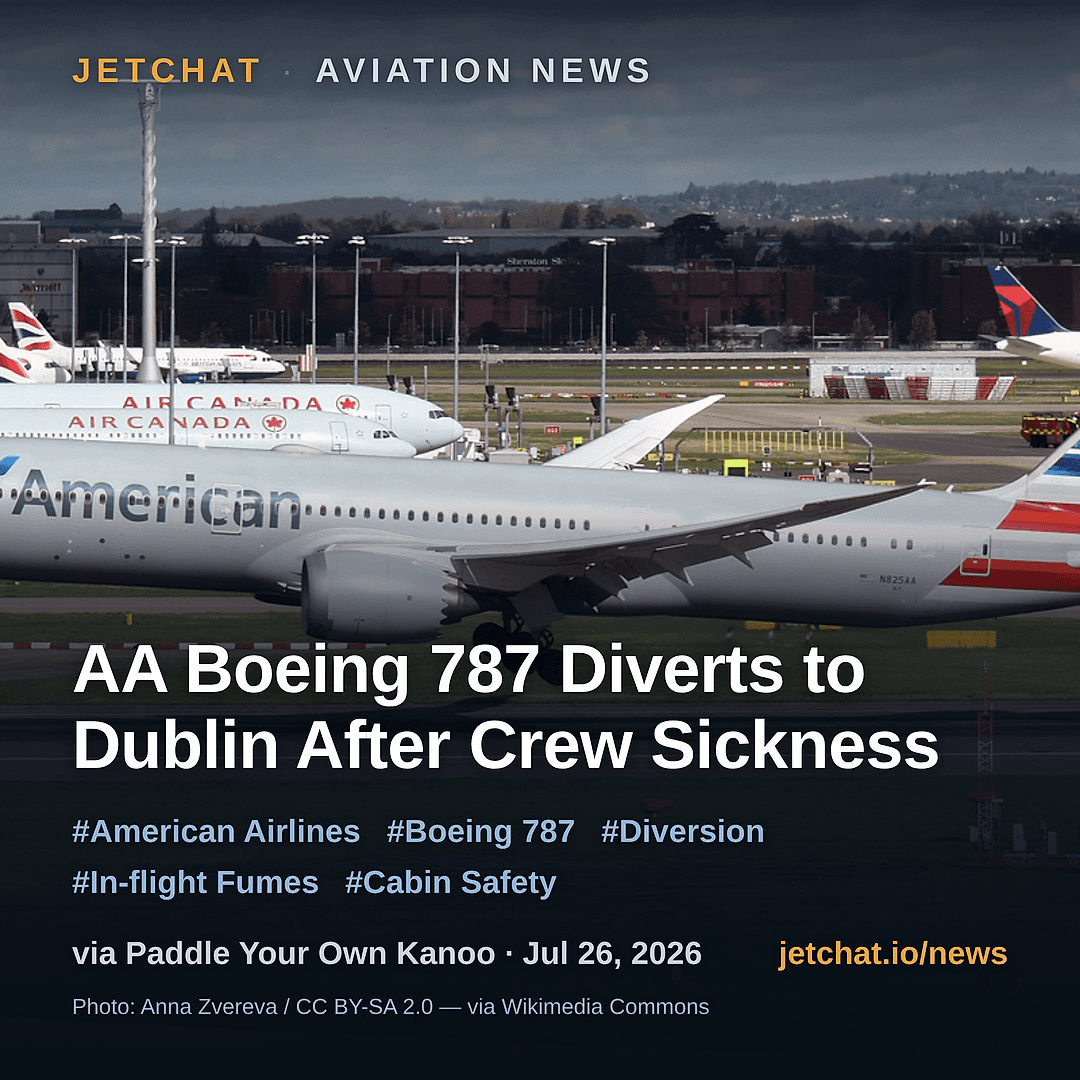
AA Boeing 787 Diverts to Dublin After Crew Sickness

An American Airlines Boeing 787-9 traveling from Rome to Philadelphia diverted to Dublin on Saturday when six flight attendants simultaneously reported dizziness and general illness. The aircraft was over the Atlantic Ocean roughly three hours into the flight before pilots initiated the diversion due to the medical emergency. With no replacement crew available in Ireland, the transatlantic leg was canceled. For flight crews, this incident highlights the subtle onset of environmental anomalies in flight and the importance of monitoring physiological symptoms among active crew members.

safety

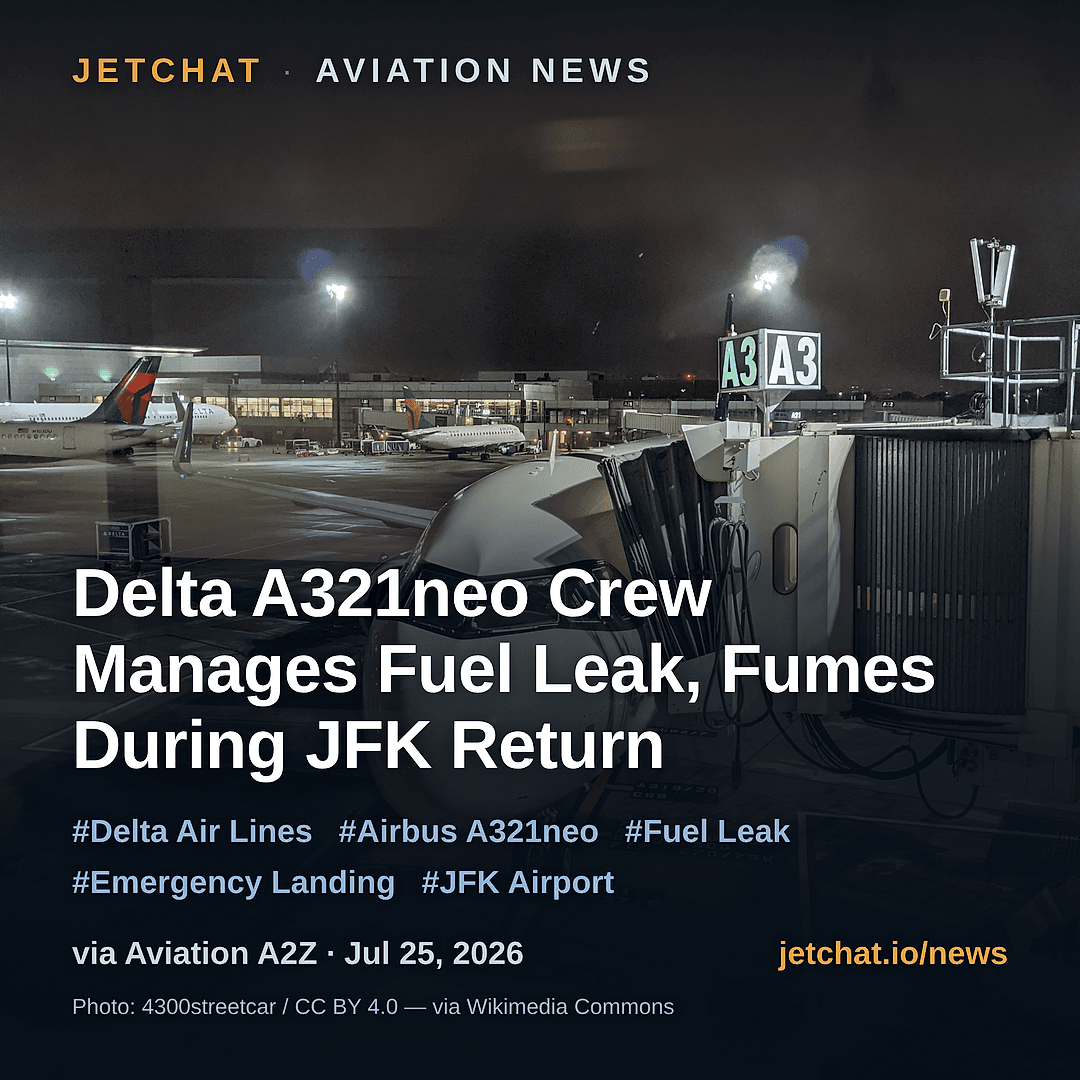
Delta A321neo Crew Manages Fuel Leak, Fumes During JFK Return

A Delta Air Lines Airbus A321neo bound for San Juan made an emergency return to New York's JFK airport after the flight crew detected a fuel leak and cockpit fumes. Capping their climb at 23,000 feet, the pilots donned oxygen masks and coordinated an overweight landing on Runway 31L without the use of thrust reversers. The aircraft safely vacated the runway where emergency crews inspected it for fire and overheating brakes. This incident highlights the critical importance of crew resource management when compounding failures escalate approach workloads.

safety

Aeroméxico Equips 737 Fleet With Honeywell Runway Collision Alerts

Aeroméxico is upgrading its Boeing 737 fleet with Honeywell surface alert technology to prevent runway incursions. The system utilizes real-time data to visually and aurally warn flight crews if they are on a collision course with another aircraft on the runway. As airport congestion increases globally, this cockpit-based technology provides a critical final layer of defense for pilots navigating complex taxiways and active runways.

safety

Eleven Survive Kenmore Air DHC-3 Otter Crash in San Juans

A Kenmore Air de Havilland DHC-3 Otter carrying 11 people crashed near Washington's Sucia Island on Thursday, with all aboard surviving despite the aircraft catching fire. The floatplane was en route from Seattle to Roche Harbor when it went down along the shoreline, leaving occupants with non-life-threatening injuries including broken bones and lacerations. For pilots operating in maritime environments, this accident underscores the critical importance of swift egress procedures and emergency preparedness during over-water operations near unforgiving terrain.

safety

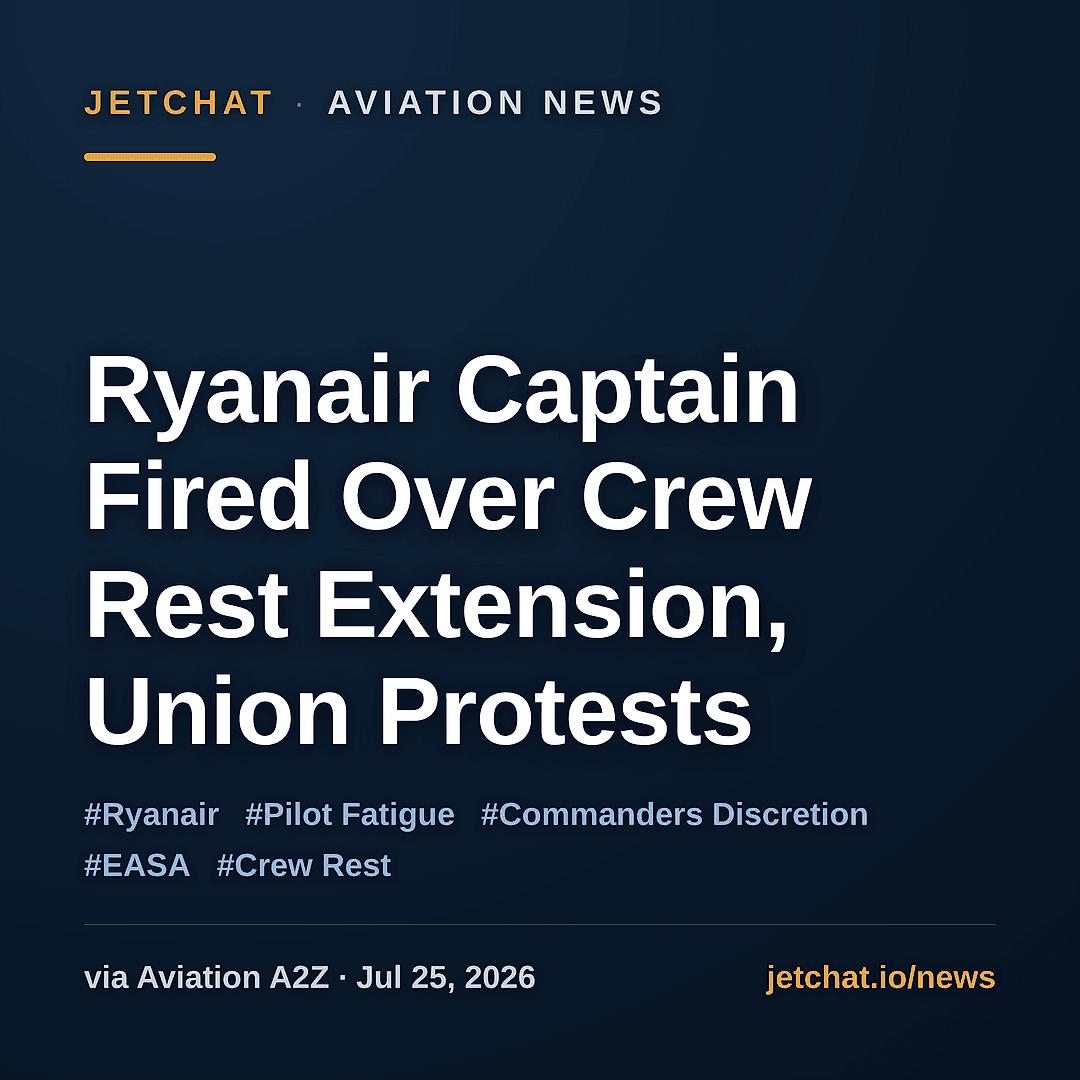
Ryanair Captain Fired Over Crew Rest Extension, Union Protests

A Barcelona-based Ryanair captain was reportedly terminated after utilizing European Aviation Safety Agency provisions to extend a cabin crew's minimum rest period following operational delays. Spain's SEPLA pilots union strongly condemned the dismissal, arguing the airline penalized a commander for exercising legal authority to mitigate fatigue. The union is actively pursuing legal action for reinstatement. This dispute matters to pilots because it highlights the tension between operational scheduling pressures and a captain's ultimate authority to manage fatigue without fear of corporate retaliation.

safety

NTSB: Controller Forgot Takeoff Clearance In Boston Runway Incursion

A recently released preliminary report from the National Transportation Safety Board indicates that an air traffic controller at Boston Logan International Airport forgot they had cleared an American Airlines Boeing 737 for takeoff, leading to a close call with an arriving Delta Air Lines Airbus A319. The incident, which occurred late last month, was narrowly avoided thanks to the prompt reaction of the incoming Delta flight crew. This serves as a stark reminder for pilots to always maintain high situational awareness and independently verify clearances during surface operations.

airlines

IndiGo Signs Record Order for 1,000 CFM LEAP-1A Engines

India’s flagship low-cost carrier, IndiGo, has reached a monumental agreement with CFM International to acquire more than 1,000 LEAP-1A engines, equipping 510 upcoming Airbus A320neo family jets. Revealed during the Farnborough International Airshow, the historic deal also provisions for a dedicated maintenance, repair, and overhaul center to streamline the airline's future fleet upkeep. For aspiring airline pilots, this massive engine procurement guarantees sustained fleet expansion at one of the globe's fastest-growing carriers, translating directly to thousands of future flight deck opportunities on modern narrowbody equipment.

ga training

Elixir unveils three-tier trainer lineup and teases larger Equinox

French manufacturer Elixir Aircraft debuted its new Elixir+ family of composite two-seat trainers for the US market at EAA AirVenture 2026, offering three variants starting around $275,000. The lineup includes the primary-focused Essential, the IFR-capable Expert, and the turbocharged Elite designed for hot-and-high conditions and faster cruising. For flight schools and student pilots, this introduces a modern, purpose-built training alternative with integrated avionics that spans from first solo flights to advanced instrument ratings.

industry

Airbus preps first A380 to test CFM open fan engine

The very first Airbus A380 ever manufactured is getting a second life as a flying testbed for a radical new propulsion system. Airbus is teaming up with engine maker CFM to evaluate an open-fan powerplant design, utilizing the superjumbo for its ample cabin volume and four-engine redundancy. Engineers will mount the futuristic engine on the massive double-decker to gather critical in-flight performance data. This matters to the aviation community because open-fan architecture could drastically reduce fuel burn and reshape the aircraft designs tomorrow's commercial aviators will fly.