JetChat Newsjetchat.io ↗

JetChat Aviation News

Short, human-curated aviation briefs for pilots and enthusiasts.

finance

LATAM Secures $505 Million for 11 Airbus and Embraer Jets

South American carrier LATAM will expand its modern fleet with eleven factory-fresh narrowbody aircraft scheduled for delivery in late 2026. The airline recently finalized a half-billion-dollar funding agreement spearheaded by BNP Paribas to acquire one Airbus A320neo, four A321neos, and six Embraer E195-E2 regional jets. Notably, the majority of this capital involves financial terms strictly tied to the company meeting specific carbon reduction targets. For aspiring airline pilots, this fleet modernization signals sustained regional hiring and fresh right-seat opportunities on highly efficient next-generation flight decks.

finance

Air India Seeks $1.5 Billion Capital Infusion Following Record Losses

Air India is asking its primary shareholders, Tata Sons and Singapore Airlines, for a $1.5 billion capital infusion to offset a massive $2.33 billion annual net loss. The beleaguered flag carrier is currently navigating significant operational headwinds, including airspace restrictions, surging fuel costs, and persistent supply chain bottlenecks that are delaying its fleet overhaul. For commercial pilots, this ongoing restructuring is a crucial storyline, as the airline's financial stability will ultimately determine the pace of its future aircraft deliveries and long-term hiring demands.

safety

FAA Opens Public Comment on Priority Space Launch Corridors

The Federal Aviation Administration has opened a sixty-day public comment period to gather industry input on managing dedicated airspace for spacecraft launch corridors. Prompted by the 2026 National Space Transportation Policy, the agency is exploring how to transition from temporary hazard areas to formalized corridors as domestic launches rapidly increase. With projections of up to ten thousand space operations annually by 2035, this process matters to pilots because establishing permanent priority launch zones will directly impact daily routing and airspace efficiency near major spaceports.

industry

Proposed FAA supersonic overpressure limits face environmental and industry backlash

The FAA’s proposal to replace the decades-old civilian supersonic flight ban with a pressure-based noise metric is facing steep resistance from environmental groups and aviation stakeholders. The plan would permit supersonic flight over land if the resulting shockwave remains below 0.11 pounds per square foot of overpressure at ground level. However, critics argue this metric fails to capture human annoyance and fluctuates unpredictably with atmospheric conditions, meaning future supersonic pilots could face significant operational liabilities when managing these profiles in shifting weather.

ga training

Aviation Workforce Challenges Extend Beyond a Simple Pilot Shortage

Industry data indicates that the ongoing aviation workforce constraint is no longer just a straightforward lack of qualified aviators. Instead, a complex bottleneck is forming throughout the training pipeline, affecting everything from flight instructor retention to maintenance technician availability. For student pilots and flight instructors, this means navigating a rapidly shifting training environment where resource limitations could directly impact scheduling and career progression timelines.

safety

Bulgaria dismantles vehicle-mounted GPS jammer disrupting Sofia airspace

Security forces in Bulgaria successfully located and dismantled a vehicle-mounted GPS jammer on August 21 that disrupted navigation signals across Sofia airspace for several days. Air traffic controllers noticed the interference when arriving and departing aircraft lost satellite reception near Sofia Airport. Flight operations continued without delay as crews safely transitioned to conventional ground-based navigational aids. For pilots operating in Eastern Europe, this incident highlights the critical importance of maintaining proficiency with traditional VOR and ILS procedures when GNSS signals are compromised.

industry

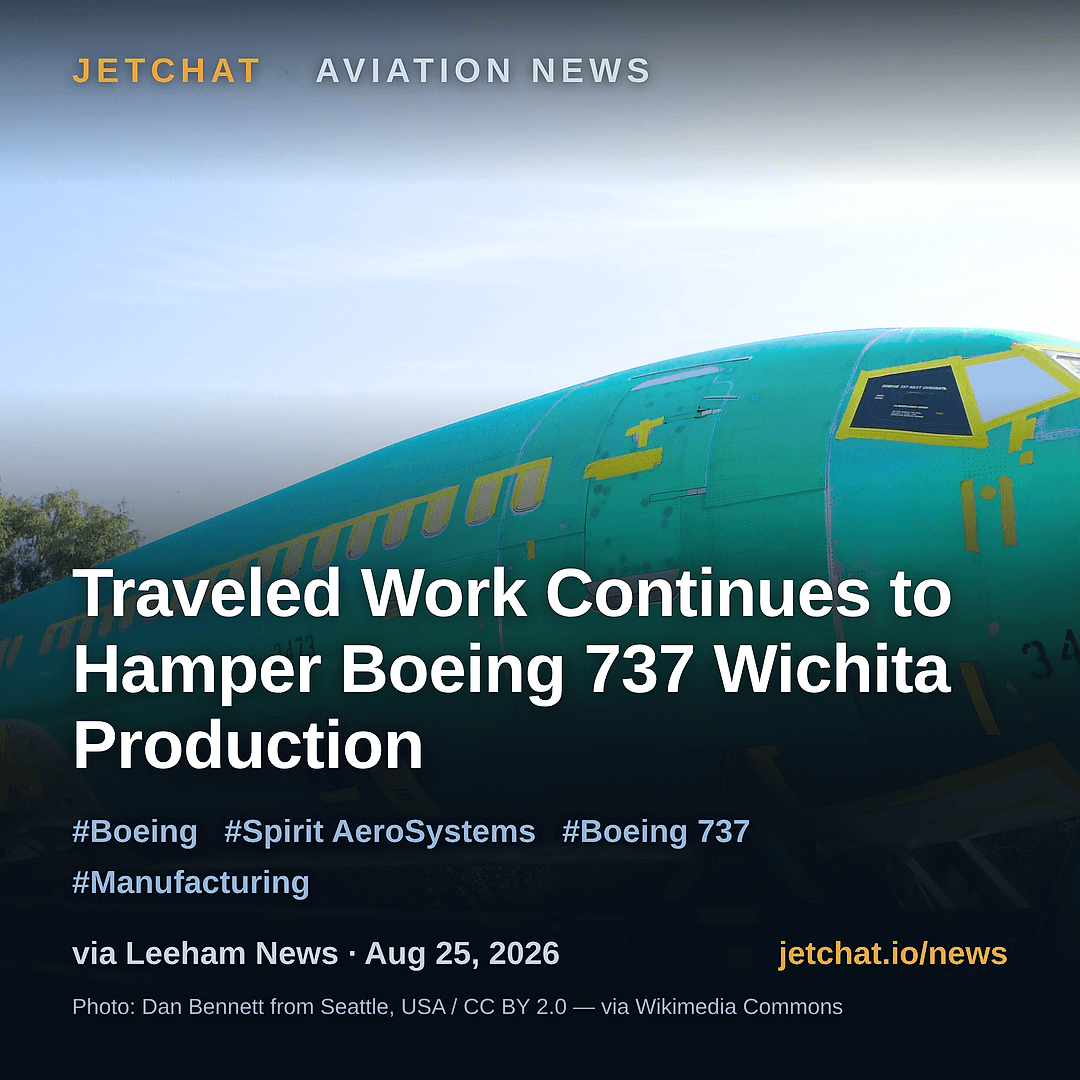
Traveled Work Continues to Hamper Boeing 737 Wichita Production

Out-of-sequence manufacturing, commonly known as traveled work, continues to present significant hurdles at the former Spirit AeroSystems facility in Wichita, Kansas. Boeing recently reacquired the plant to tighten quality control and stabilize the 737 assembly line, but workers report that out-of-order tasks remain a stubborn issue. Eliminating these manufacturing bottlenecks is essential for Boeing to safely increase its narrowbody production rates. For commercial pilots waiting on fleet expansions, these factory delays translate directly into slower delivery schedules and prolonged capacity constraints at major airlines.

airlines

United Airlines Expands Route Network With Ten New Cities

United Airlines is expanding its route network by adding flights to ten new cities from five of its major United States hubs. The legacy carrier confirmed that it will maintain its current network capacity while introducing these additional domestic routes. For aspiring airline pilots and current flight crews, this route expansion signals continued growth and points toward sustained hiring and career progression opportunities within the major airlines.

safety

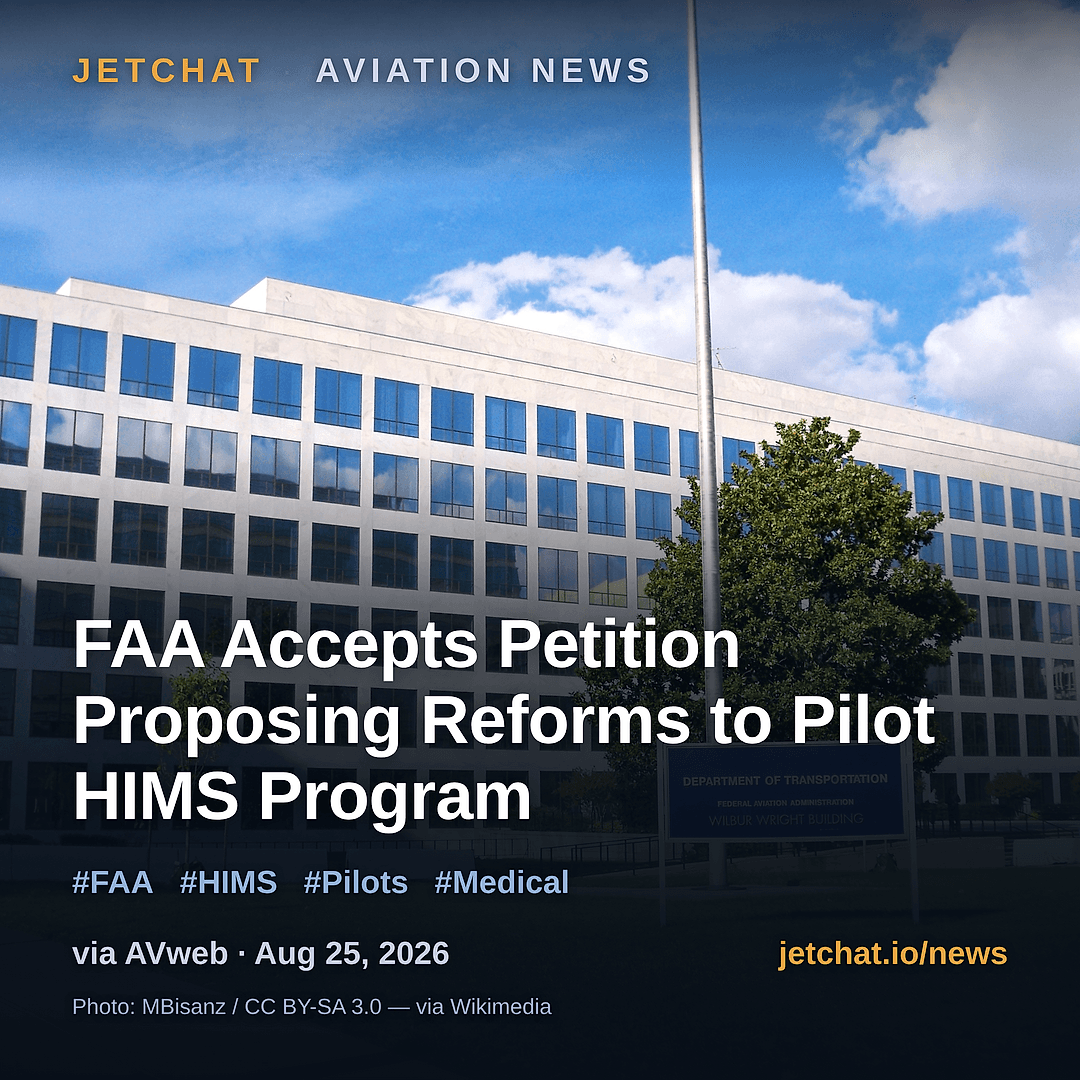
FAA Accepts Petition Proposing Reforms to Pilot HIMS Program

The Federal Aviation Administration has formally agreed to review a petition seeking significant overhauls to the Human Intervention Motivation Study program. The proposal demands standardized monitoring timelines, clear pathways to unrestricted medical certificates, and independent appeals for disputed medical decisions. While the agency’s acceptance only guarantees a review rather than immediate rule changes, the move coincides with an ongoing federal audit of the aeromedical system. For pilots navigating complex mental health or substance evaluations, these potential reforms could mean faster processing and more transparent standards.

safety

Air France 777 Returns to JFK After Cockpit Burning Smell

The crew of an Air France Boeing 777-300ER declared a PAN-PAN and returned to New York's JFK Airport after reporting a possible bird strike and a burning cockpit smell during their initial climb. Bound for Paris, the pilots donned oxygen masks, halted their ascent, and executed an overweight ILS landing on Runway 22L. The widebody touched down safely and was met by emergency equipment for a brake inspection. This event serves as a practical reminder of the importance of prompt decision-making when facing compounding anomalies shortly after rotation.

airlines

United CEO Scott Kirby Outlines Vision for AI and Megadeals

United Airlines Chief Executive Officer Scott Kirby recently outlined his long-term vision for the major carrier during an extensive interview reflecting on his decade of leadership. Topics included potential major industry acquisitions, the integration of artificial intelligence into operations, and strategic route planning involving major hubs like John F. Kennedy International Airport. For aspiring airline professionals, understanding a major executive's strategy provides valuable insight into where future hiring and fleet growth may be concentrated over the next several years.

airlines

Orlando passenger discovers secret multibillion-dollar TSA privatization initiative

A stray document left at Orlando International Airport recently revealed a covert federal initiative to privatize screening operations at major terminals. Dubbed GoldPlus, the nearly thirteen-billion-dollar proposal had been quietly pitched to industry executives for months without notifying lawmakers or the national screener workforce. The unexpected discovery highlights a massive shift in how passenger checkpoints might be managed in the coming years. For airline crews and frequent flyers, this could mean navigating completely revamped screening procedures and varying contractor policies across different hubs.

safety

Montreal Airport Signaller Seriously Injured After Aircraft Strike

A ground worker at Montreal-Pierre Elliott Trudeau International Airport sustained severe injuries following a collision with a widebody jet on August 24, 2026. The employee, reportedly working as a signaller, was hit on the apron while a French bee Airbus A350-900 was preparing for a delayed departure to Paris. Quebec workplace safety officials and local police are currently investigating the circumstances surrounding the apron collision. This incident serves as a stark reminder for flight crews to maintain hyper-vigilance regarding ramp personnel during taxi and pushback operations.

airlines

Three South Korean Low-Cost Carriers Merge Into Single Airline

Three of South Korea's budget airlines are consolidating to form a massive low-cost carrier under the umbrella of the nation's flag carrier. This merger aims to streamline an Asian aviation market currently saturated with competing discount brands. By combining operations, the new mega-carrier will centralize its resources and route networks. For aspiring airline pilots, this corporate restructuring could mean streamlined hiring pipelines, unified seniority lists, and shifts in regional fleet assignments.

industry

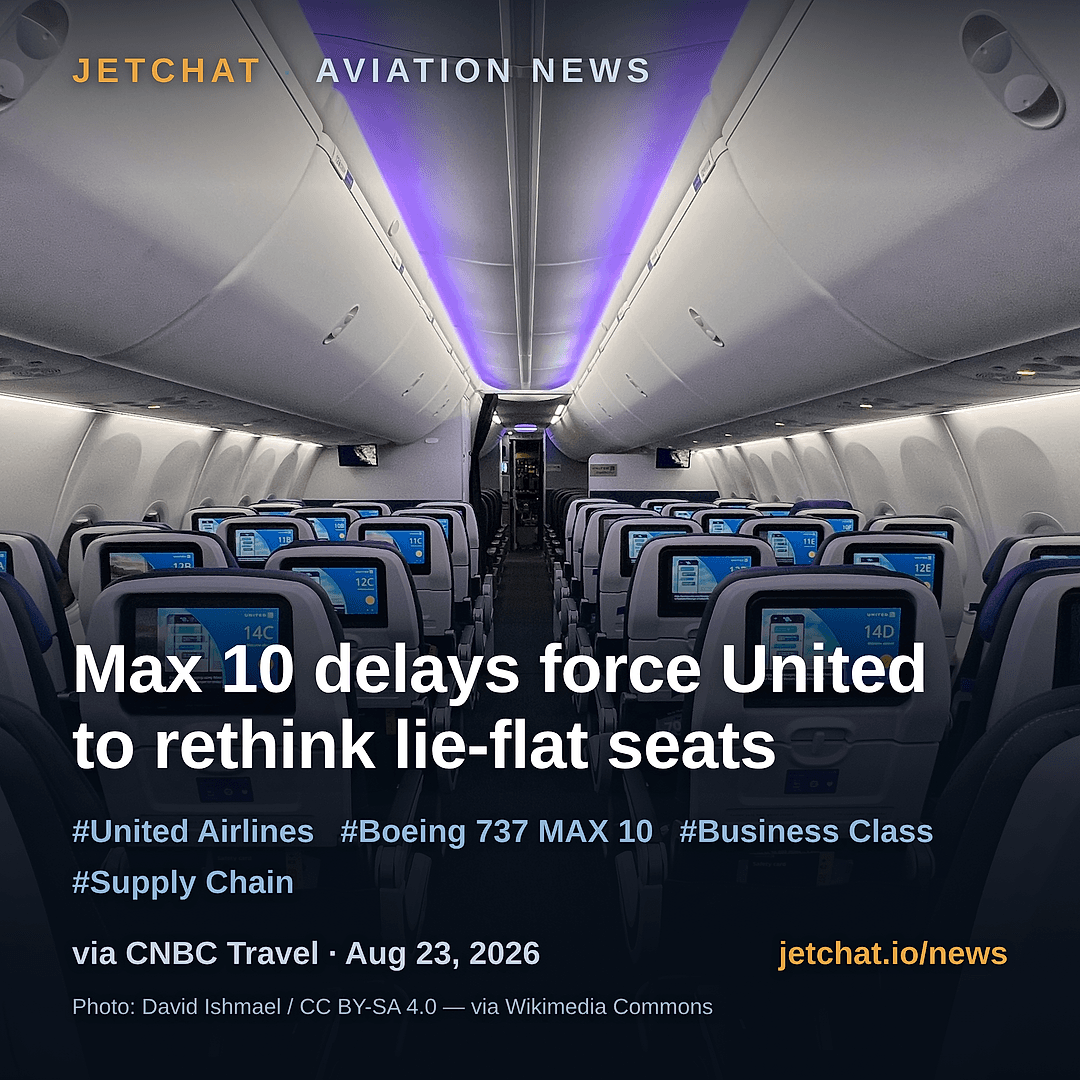
Max 10 delays force United to rethink lie-flat seats

United Airlines is facing a logistical hurdle regarding its upcoming Boeing 737 Max 10 fleet due to prolonged certification delays. The carrier had originally planned to equip the highly anticipated narrowbody aircraft with premium lie-flat seats, which were ordered well in advance. With the timeline for the Max 10 entering service pushed back by several years, the airline must now decide how to handle the grounded interior hardware. For pilots eyeing airline careers, this delay highlights how ongoing manufacturer bottlenecks directly impact fleet strategies and route planning.

industry

Boeing Could Require Second 737 North Production Line By 2028

Recent industry analysis indicates that Boeing may need to open a second 737 assembly line at its northern facilities as early as 2028 to keep up with surging demand. Prior to the protracted 2019 fleet grounding, the manufacturer had been strategizing significant manufacturing expansions, which are now becoming critical again as order backlogs swell. For aspiring airline pilots, sustained increases in narrowbody production signal long-term stability in commercial fleet growth, ensuring robust hiring and accelerated upgrade opportunities at major carriers.

industry

Boeing engineers reject contract offer and authorize potential strike

Members of the union representing roughly 17,000 Boeing engineers and technical workers have voted to reject a proposed four-year contract. In addition to turning down the deal, nearly 90 percent of voting members authorized union leaders to call a strike if upcoming negotiations fail to yield better terms. Workers cited lagging compensation, outsourced jobs, and concerns over corporate leadership prioritizing production schedules over engineering safety recommendations. A work stoppage could further complicate aircraft delivery schedules for aspiring airline pilots awaiting fleet expansions.

industry

Severe mechanic shortages and aging fleets threaten airline schedules.

Global aviation is facing a massive shortage of qualified maintenance technicians, heavily impacting aircraft availability. With commercial fleets aging and newer engines requiring complex repairs, facilities are struggling with record backlogs and a desperate need for tech-savvy mechanics. Industry projections indicate hundreds of thousands of new maintenance professionals will be required over the next two decades to keep planes flying safely. For flight crews, this growing maintenance bottleneck directly translates into increased groundings, unexpected aircraft swaps, and frustrating schedule disruptions.

industry

Rolls-Royce Widebody Engine Fixes Save Airlines $450,000 Annually

After facing years of severe durability problems that grounded widebody jets worldwide, Rolls-Royce has successfully overhauled its troubled long-haul engines. Recent modifications have effectively doubled the time these powerplants can remain on the wing before requiring major maintenance, translating to annual savings of roughly $450,000 per aircraft. For professional flight crews, this mechanical turnaround means fewer unexpected equipment swaps, reduced dispatch delays, and a much more predictable flying schedule on international routes.

airlines

American Airlines Pilots Launch Contract Negotiations A Year Early

American Airlines pilots have officially initiated negotiations for a new collective bargaining agreement nearly a year ahead of schedule, utilizing a specific provision in their 2023 contract. With base compensation already largely aligned with industry standards, the upcoming talks are expected to center on quality-of-life improvements such as scheduling rules, enhanced profit-sharing, and stricter contract enforcement. For aspiring airline pilots, tracking these negotiations provides valuable insight into the evolving compensation and lifestyle expectations at legacy carriers.